Raffle Prize Ideas That Actually Sell Tickets
Most people think the prize is the raffle. After 20+ years and thousands of events, the truth is more specific: the right prize — clearly named, visually compelling, emotionally obvious — consistently outperforms a more expensive prize that nobody can picture winning. This guide covers what those prizes look like, why they work, and how to build them on any budget.
The best raffle prizes are not the most expensive ones — they are the ones supporters can picture winning in under three seconds. After 20+ years of basket raffle campaigns, the pattern is clear: themed basket raffles (spa, wine, pet, family game night, coffee, gourmet food), experience-based prizes (restaurant nights, concert tickets, weekend getaways), and curated gift card bundles consistently outperform higher-cost random prize collections. The reason is prize clarity — a supporter who instantly pictures themselves winning "Spa Day for One" will allocate tickets heavily. The same supporter looks at "Assorted Items Basket" and moves on. The prize itself is the first promotion asset. If it doesn't sell itself in a glance, no amount of external promotion will fully compensate.
The Prize Clarity Rule: Understood in 3 Seconds or It Doesn't Sell
There is a three-second test for every raffle prize. A supporter walking past your prize table — or scrolling past your raffle listing online — has about three seconds to decide whether a prize registers as something they want. In those three seconds, they are not reading a description. They are having a reaction. Either the prize creates an instant mental picture of themselves winning and using it, or it doesn't.
This is why "Spa Day for One" earns more tickets than "Wellness Gift Basket" — even with identical contents. "Spa Day for One" creates an immediate scene: a Saturday, a robe, a massage appointment, an afternoon off. The buyer doesn't need to evaluate the contents because the experience is already vivid. "Wellness Gift Basket" creates nothing except a list-assessment task the buyer has to perform before they can decide if they want it.
"We had good prizes but ticket sales were disappointing across every single basket."
The Best Raffle Prize Types — Ranked by Ticket Performance
Not all prize types convert equally. After thousands of events, the same categories consistently appear at the top of ticket volume rankings — and the same categories consistently underperform. The ranking below reflects what happens across diverse event types: school PTAs, church fundraisers, community raffles, galas, and fire department events.
 #1 Ranked
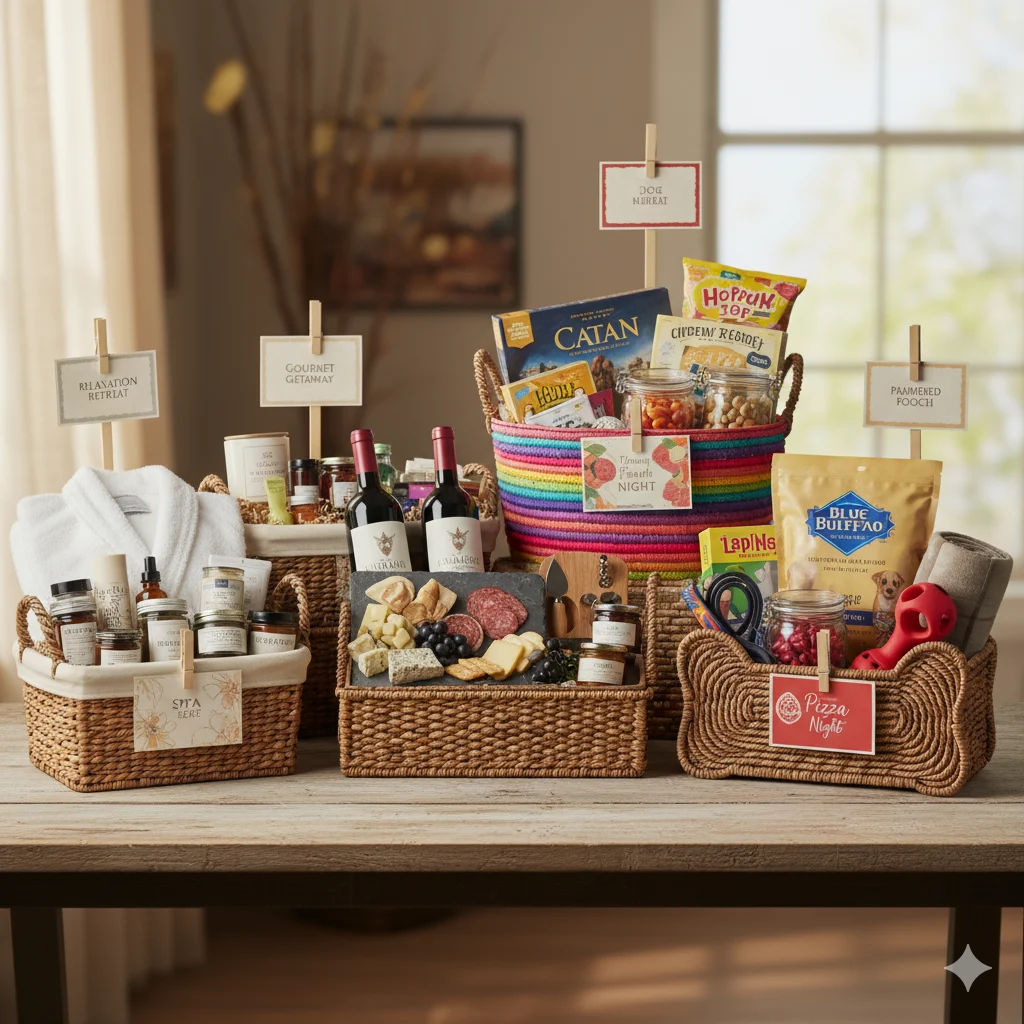
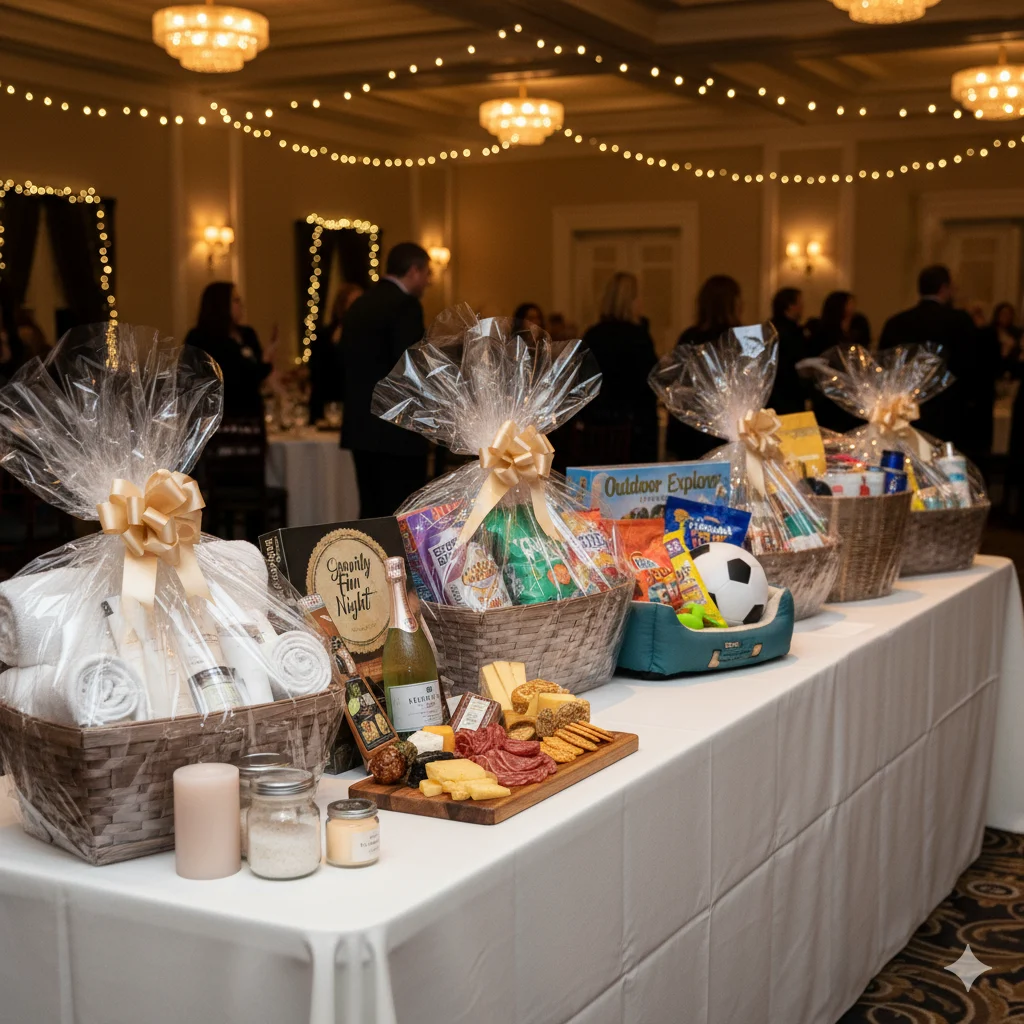
Themed Basket Raffles
The highest-converting raffle prize type across every event category — school, church, community, gala. Baskets win because they combine visual display, story, emotional hook, and perceived value in a single physical object that sells itself from across the room.
- Spa Day for One — massage gift card + robe + candle
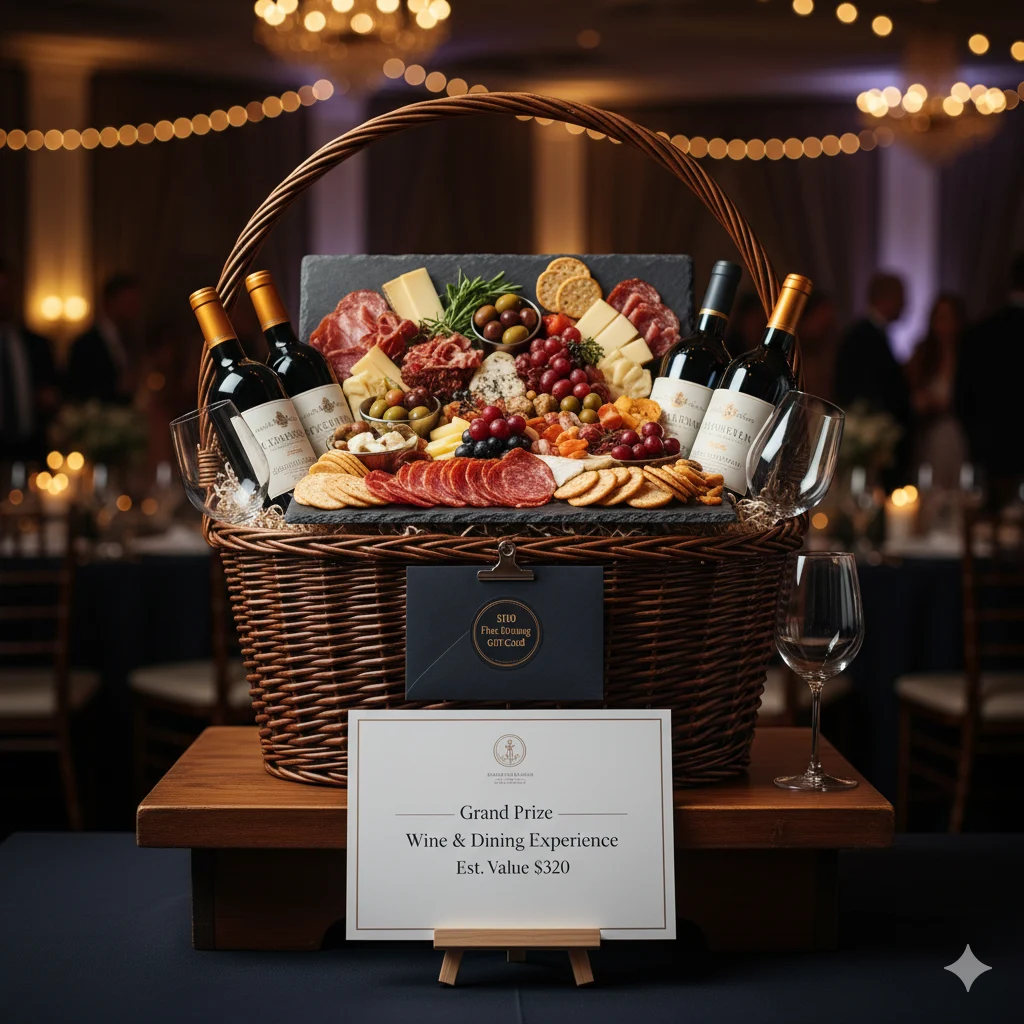
- Wine & Cheese Night for Two — wine + charcuterie board
- Family Game Night — pizza gift card + games + snacks
- Dog Lover Bundle — pet store gift card + premium toys
- Gourmet Charcuterie Night — artisan board + meats + cheeses
- Coffee Lover's Morning Kit — French press + café gift card
 #2 Ranked
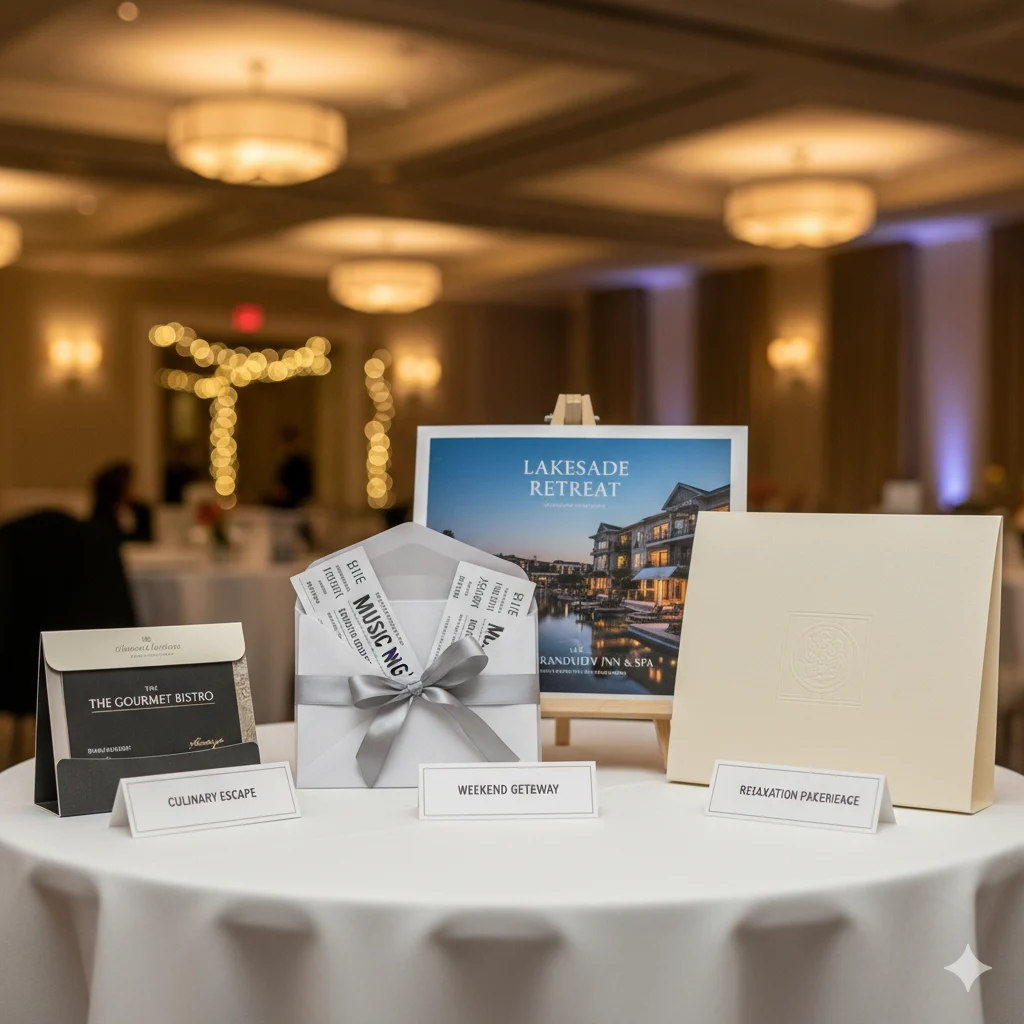
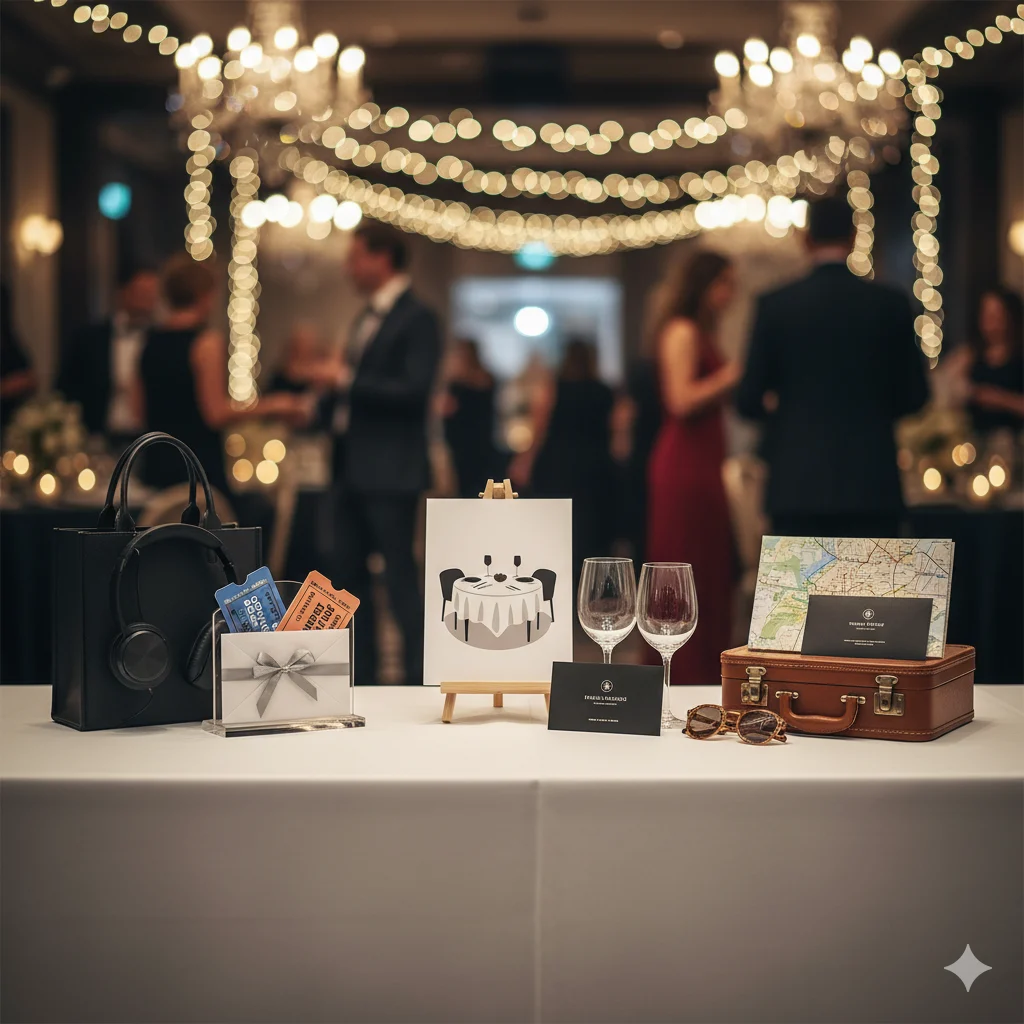
Experience-Based Prizes
Experiences consistently feel more valuable than items of equivalent retail cost because they create an anticipation response — the supporter is buying the feeling of something they'll enjoy in the future, not just an object. Experience prizes work best when paired with supporting physical items that make them visible on the prize table.
- Restaurant gift card ($75–$100 fine dining) + supporting items
- 4 movie theater passes + popcorn + candy in a movie night basket
- Concert or sports event tickets (2–4) for a local team or venue
- 1-night hotel stay + dining credit as a weekend getaway package
- Spa day package — massage + facial + product credit
- Cooking class or escape room tickets for 2–4
 #3 Ranked
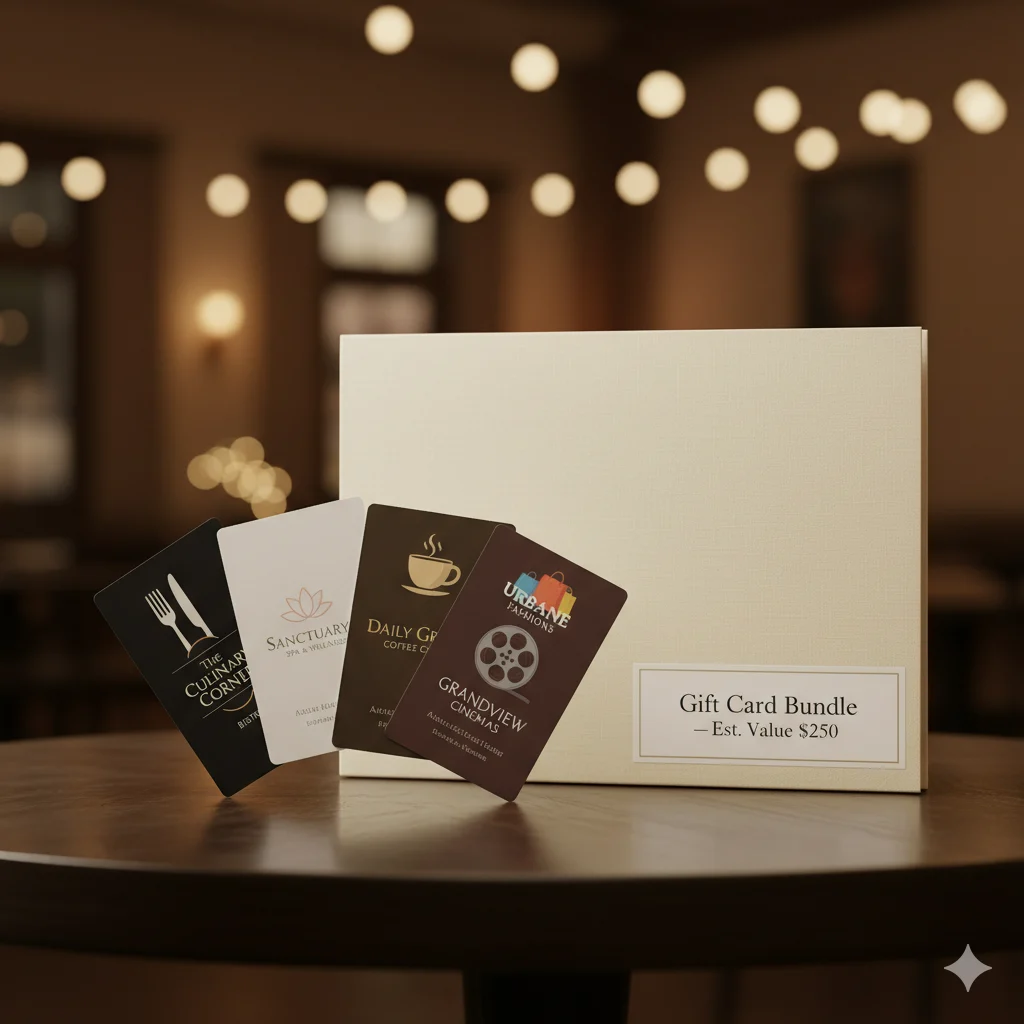
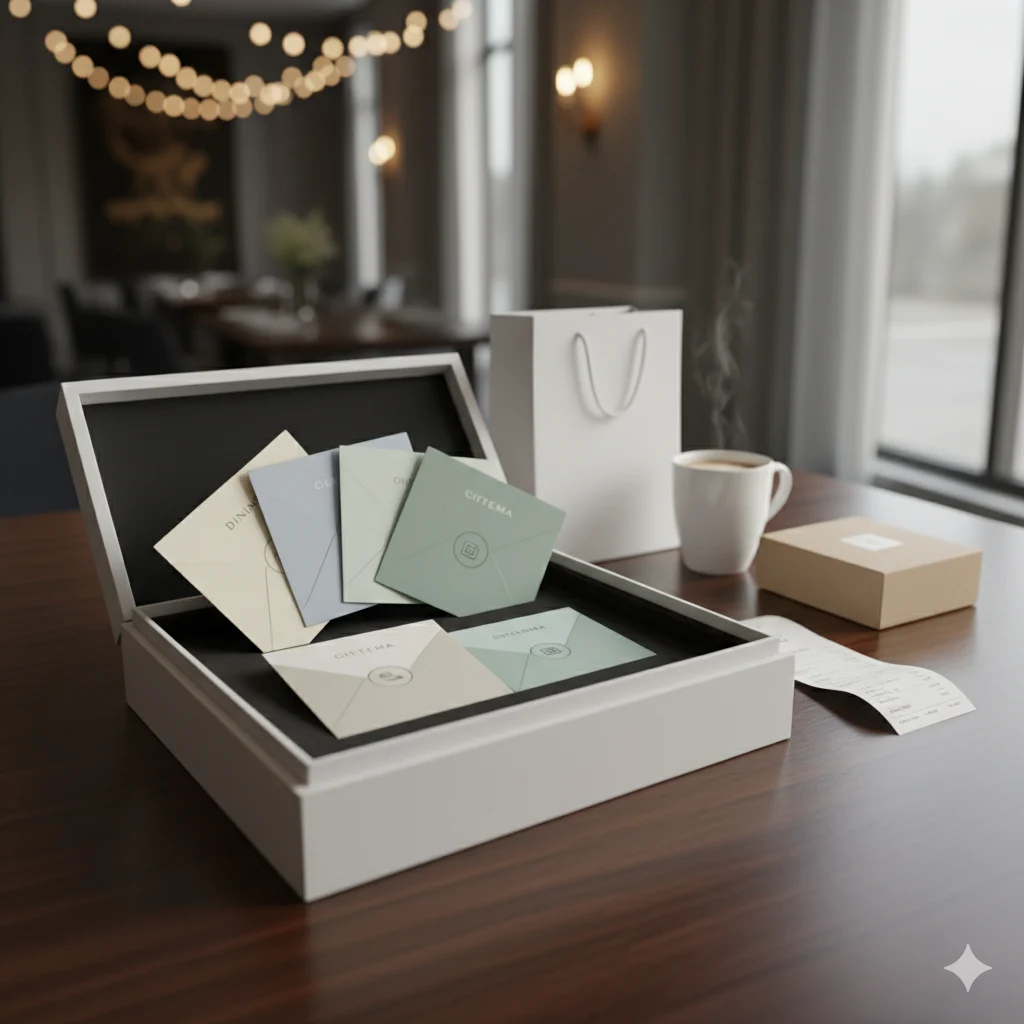
Curated Gift Card Bundles
A standalone gift card has limited visual appeal. A curated bundle of 5–8 local gift cards — restaurant, coffee, spa, movie, retail, activity center — displayed as a premium package creates the "something for everyone" appeal that generates broad ticket allocation across diverse event audiences.
- "Local Night Out Bundle" — 5 local restaurant gift cards ($25–$50 each)
- "Shop Local Bundle" — gift cards to 6 locally-owned businesses
- "Pamper Package" — spa + salon + massage + product store
- "Family Fun Pack" — movie theater + activity center + pizza + bowling
- "Weekend Pack" — hotel + restaurant + entertainment + gas card
 #4 Ranked
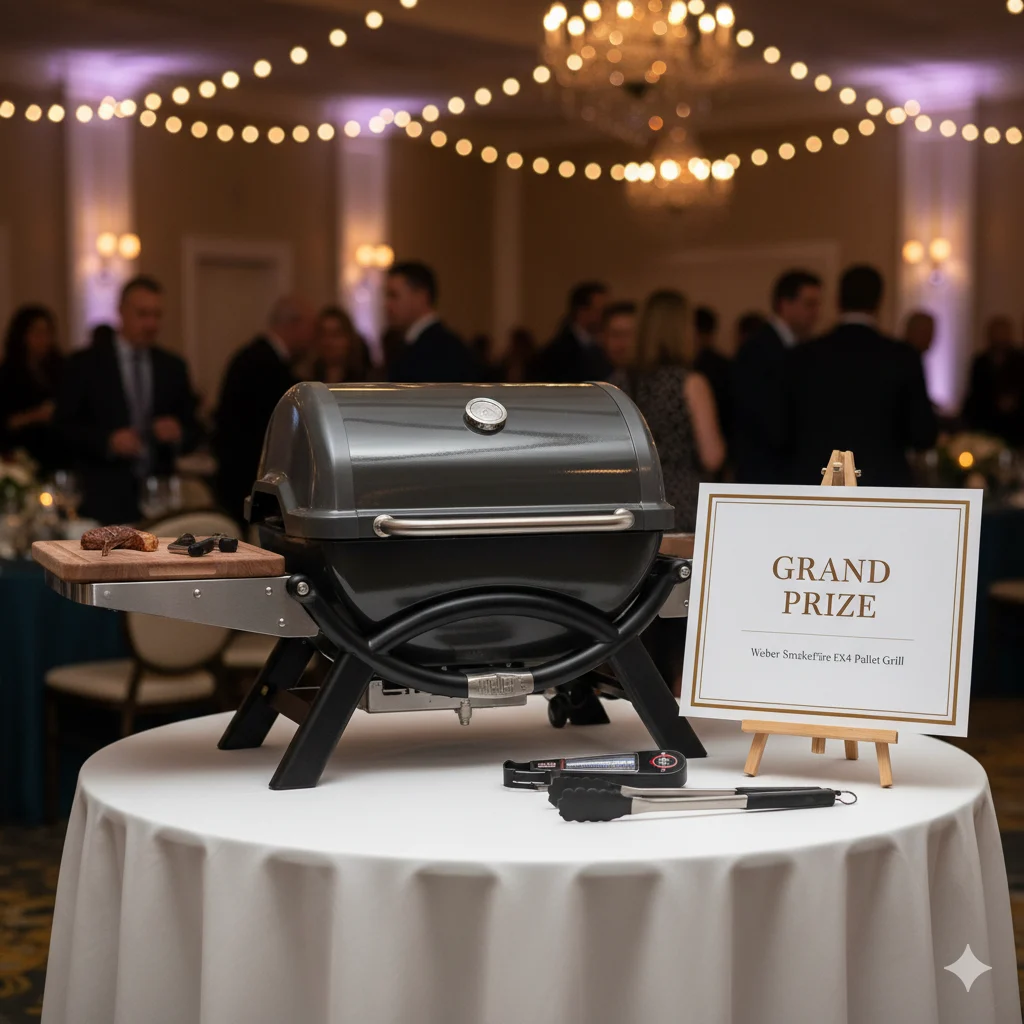
High-Value Single Prizes
A single premium prize — a grill, a premium cooler, electronics, a premium experience package — serves as the "grand prize" that creates buzz about the entire raffle. These work best as an anchor that elevates the perceived value of everything else at the event. They require strong promotion and visual prominence to earn their ticket revenue.
- Traeger or Weber portable grill + accessories bundle
- Yeti cooler + gear set (strong at outdoor and sporting events)
- Premium electronics bundle (iPad, AirPods, accessory kit)
- Luxury wine or spirits collection (12+ bottles, curated)
- Weekend travel package — 2 nights + flights + activities
Experience Prizes — Why They Consistently Outperform Their Retail Value
The psychology behind experience prizes is well-documented in consumer research: people consistently value anticipated experiences more highly than items of equivalent monetary cost. A supporter evaluating a $100 restaurant gift card doesn't think "this is worth $100." They think about the specific dinner, the occasion, who they'll go with, what they'll order. That mental elaboration is the purchase trigger — and it's why a $100 restaurant gift card in a "Date Night for Two" basket consistently earns more ticket revenue than $150 of physical products in a basket without a clear occasion name.
The key rule for experience prizes in basket raffles: never display a gift card or certificate alone. Always pair it with physical supporting items that make the experience visible on the prize table. A lone gift card envelope earns moderate interest. The same gift card in a basket with wine, chocolates, and candles — named "Date Night for Two" — earns significantly more, because the physical items make the experience tangible.
Restaurant Nights
The most versatile experience anchor. Works at every event type. Fine dining for galas, casual dining for community events, pizza for school raffles. Local restaurants are the easiest businesses to approach for donations.
Entertainment Packages
Concert tickets, theater passes, sporting event tickets, comedy club — all create excitement disproportionate to their cost. Supporters buy raffle tickets for the chance to do something they'd never buy for themselves.
Weekend Getaways
Even a 1-night local hotel stay feels luxurious as a prize because supporters rarely book them for themselves. Local hotels donate regularly to community fundraisers in exchange for event marketing exposure.
Spa & Wellness Days
The #1 standalone experience prize for adult audiences. A massage appointment certificate generates immediate purchase intent from a large portion of any adult audience. Universal "I deserve this" response.
Cooking & Classes
Cooking classes, pottery, painting nights, escape rooms — experiential activities that groups rarely do for themselves but universally want to try. Strong gifting motivation extends the buyer pool beyond direct users.
Season Passes & Memberships
Museum memberships, zoo passes, sports season tickets, park passes — these generate high perceived value because supporters understand the cumulative cost of repeated visits. Strong at family-oriented events.
"We bought a $400 piece of electronics as our premium prize. It's getting almost no tickets compared to a $120 basket nearby."
The Anchor Prize — One Prize That Elevates Everything Around It
What an anchor prize does — and why most organizers underinvest in it
Every basket raffle has one prize that does disproportionate work: the anchor. It is the most talked-about, most photographed, most shared prize at the event. Supporters who aren't interested in any other basket will buy tickets just to be in the drawing for the anchor. Its presence signals to every supporter at the event that this raffle is worth competing for — which elevates ticket allocation to every other basket around it.
The mistake most organizers make: spreading their prize budget evenly across all baskets. The better strategy is to concentrate quality into one undeniable anchor prize that creates buzz, gets shared on social media before the event, and generates conversation at the event itself. The anchor doesn't have to be the most expensive prize — it has to be the most emotionally compelling one.
This is the 80/20 principle applied to basket raffles — and it has a specific implication for prize building strategy. If your anchor prize is weak, your top ticket concentration will be on a mid-tier basket that wasn't designed for it, and the psychological signal of "this event has serious prizes" never fires. Invest in the anchor first. Build everything else around it.
What makes a great anchor prize
An anchor prize has three characteristics that separate it from the rest of the lineup: it is immediately recognizable as the most desirable prize at the event, it photographs well for pre-event promotion, and it creates a moment when supporters hear about it or see it for the first time.
The "moment" is the tell. When you describe your anchor prize to a volunteer and their response is "Oh, that's good," you probably don't have an anchor. When their response is "Oh, people are going to love that" — you do. That gap in reaction is the gap in ticket volume.
Prize Tier Architecture — How to Build a Lineup That Captures Every Buyer
A basket raffle lineup that has only premium prizes misses the supporter who wants to spend $20. A lineup with only entry-level prizes fails to create excitement. The right structure has three tiers — each serving a different buyer psychology — and together they create a self-reinforcing engagement environment where every supporter can find their entry point.
Premium Tier — The Anchor Prize(s)
1–3 prizes that generate the most excitement and ticket concentration. These are your most visually impressive, most emotionally compelling baskets — the ones people talk about before the event and photograph during it. Premium prizes justify higher-value ticket bundles and signal to every supporter that this raffle is serious.
Mid-Tier — Themed Experience Baskets
The core of your lineup. 4–8 themed baskets that each target a specific demographic or interest — wine, spa, family, pet, coffee, food. Every supporter should find at least one mid-tier basket they immediately want. This tier is where most of your total ticket volume is generated.
Entry Tier — Accessible, Fun, High Perceived Value
2–4 smaller prizes that lower the participation barrier for supporters who want to join but don't want to invest heavily. A $40–$60 coffee basket, a gift card bundle, or a small themed prize set keeps the table feeling abundant and gives every supporter a low-risk entry point.
"We had three great prizes. But the table looked empty and participation was low."
How Many Prizes — The Right Number for Your Event Size
What Makes a Prize High-Converting
Across thousands of raffle events, four attributes consistently predict whether a prize drives strong ticket allocation or sits ignored. Prizes with all four attributes consistently earn 3–5× the tickets of prizes with only one or two. The checklist is simple enough to run on any prize in under a minute.
Instant Clarity
The prize is understood in under 3 seconds without reading a description. The name tells the complete experience. If a supporter has to read the contents to understand what they're winning, the name needs rewriting.
Visual Appeal
The prize looks valuable from across the room or in a thumbnail photo. Gift cards are visible and readable. Labels face forward. Height creates abundance. The prize photographs well because it is well-presented.
Emotional Hook
The prize activates a specific desire — relaxation, family time, food enjoyment, pet love, entertainment. Generic prizes activate vague interest. Specific emotional hooks activate purchasing intent.
Perceived Value ≥ Ticket Cost
The supporter believes winning this prize is worth spending their ticket allocation on it. A well-presented $75 basket that passes all three above attributes consistently outperforms a $300 prize that fails them.
Prize Ideas to Avoid — What Fails Consistently and Why
Avoid These Prize Patterns
- Random item collections with no clear theme or name
- "Assorted gifts" — nobody can picture what they're winning
- Mixed-audience prizes (dog + cat + bird = nobody's basket)
- Single gift card displayed in an envelope with no supporting items
- Overly complex prizes with multiple choices or redemption steps
- Low perceived-value items regardless of actual cost
- Prizes requiring specific knowledge to appreciate (obscure wines, niche gear)
- Re-gifted or used items presented as prizes
Use These Prize Patterns
- Named experience baskets with clear occasion themes
- Experience prizes paired with physical supporting items
- Demographically specific baskets — dog OR cat, not both
- Gift cards anchored in themed baskets with supporting items
- Simple, clear prizes that require no explanation
- Locally sourced items from recognizable businesses
- Universal appeal within a specific category — wine, spa, food
- New, well-presented items that look like they were curated
"We created a 'choice' prize — winners could pick from 15 different items. It was the worst-performing prize we had."
The Prize Build System — Step by Step Before Your First Event
Know your audience demographics before selecting themes
A VFW post audience needs different baskets than a school PTA audience. Before choosing themes, ask: What percentage have pets? Have children at home? Enjoy entertaining? Drink wine? Exercise regularly? Your prize lineup should cover the two or three largest demographic segments in the room with at least one basket each — and your anchor prize should appeal to the broadest cross-section.
Choose your anchor prize first — build everything else around it
Start with the one prize you want people to be talking about. This is your highest-quality, most photographable, most emotionally compelling basket. Spend more here, even if it means other baskets are slightly smaller. The anchor's energy elevates every basket around it. A weak anchor means the whole table feels average.
Build 4–8 themed mid-tier baskets — one per demographic segment
Wine, spa, family game night, pet lover, coffee, gourmet food, date night, sports fan. Each basket targets a specific audience and should pass the three-second clarity test independently. Assign an experience name before you select a single item — the name determines what goes in, not the other way around.
Add 1–3 entry-tier prizes to fill demographic gaps
After your mid-tier lineup, look at who doesn't have something specifically for them. Add smaller prizes to close those gaps. A $40 coffee gift card basket costs almost nothing to build and gives coffee-drinker attendees who don't connect with any other basket an entry point they're excited about.
Photograph every prize before the event — three photos each
Full basket hero shot, anchor item close-up with readable label, contents spread flat. These three photos are your entire promotional content strategy. Poor photography is a prize problem — if supporters can't see what they're winning, the prize might as well not exist for online and social promotion purposes.
Display with printed labels and estimated values — always
Print a label for every basket with the experience name and the estimated total value. "Spa Day for One — Est. Value $220" communicates more in four seconds than any other single presentation element. Supporters routinely underestimate the value of artisan and specialty items — the stated value directly increases ticket allocation.
20-theme basket build sheets, prize tier architecture template, ticket pricing calculator, and the 60-day event checklist. Everything your committee needs to go from blank table to full prize lineup.
Download Free →What's inside
✓ 20 themed basket build sheets
✓ Prize tier architecture template
✓ Ticket pricing calculator
✓ 60-day event checklist
✓ Donor outreach email templates
Frequently Asked Questions
The Prize Is Only the Beginning — These Guides Cover the Rest
The right prize lineup can be completely undermined by single-ticket pricing, a tip-prompt platform, insufficient promotion, or poor presentation. These guides cover the structural decisions that determine how much revenue your prizes actually generate.
Basket Raffle Ideas Hub
100+ themed basket ideas organized by audience, season, and value tier — each with build notes, revenue ranges, and anchor item recommendations.
Browse all themes →Basket Raffle Pricing Strategy
The $11 vs $64 bundle pricing analysis. The prizes you build need a pricing structure that captures the full willingness to spend they create.
Read the guide →Raffle Promotion Strategy
Your best prizes need to be seen. The 4-phase promotion system, basket spotlight technique, and copy formulas that show prizes to the right people at the right time.
Read the guide →Basket Raffle Software Guide
The platform determines whether per-basket ticket allocation actually works. Eight questions to ask before committing — most platforms fail at least three.
Read the guide →Why Basket Raffles Fail
Great prizes with bad pricing, bad promotion, or bad platforms still underperform. The 8 failure points and how to fix each one before launch.
Read the guide →How to Source Basket Donations
Scripts for local businesses, the marketing-partnership framing, and how to build a $150 basket at near-zero organizational cost.
Read the guide →Per-basket ticket pools. Zero checkout friction.
"The best prize lineup we've ever seen still needs the right platform to earn its full potential. That's why we built Chance2Win — for organizations who take their prizes seriously." — The Chance2Win Team