Spa Basket Raffle Ideas That Actually Raise Money
Spa baskets consistently rank among the top three revenue-generating baskets at most events — but only when they're built correctly. The difference between a spa basket that earns $250 and one that earns $900 is usually one item. This page shows you what that item is, how to build around it, how to source it for free, and how to avoid the platform mistakes that throw away the revenue.
Spa baskets perform extremely well because people feel they deserve them — and that psychological framing drives ticket allocation harder than almost any other prize category. Unlike a luxury item that feels optional, a massage or spa gift card feels like something a supporter has earned. The critical insight: product-only spa baskets earn $200–$400. Add one real experience — a local spa gift card for $50–$75 — and the same basket earns $800–$1,500. Pair it with bundle ticket pricing and $2,000 is achievable on a 100-person event. The fix is almost embarrassingly simple once you understand why it works.
Why Spa Baskets Win
Wine baskets win because supporters instantly know what they want. Spa baskets win for a different reason: supporters feel they deserve what they're looking at.
The average person running a school fundraiser, organizing a church raffle, or attending a community event has been giving to everyone around them all week. A spa basket is permission to stop and take care of themselves. That emotional framing doesn't just attract ticket buyers — it creates repeat allocators. Supporters who put tickets in the spa basket often come back and add more.
At real events, this shows up as three specific behaviors that don't appear with other basket types:
-
✓Higher ticket concentration per buyer. Spa baskets attract buyers who decide early they want to win it — then keep adding tickets throughout the event. A supporter who puts 3 tickets in the spa basket often puts 8 by the time drawing closes.
-
✓Strong appeal across every age group. Wine baskets skew toward adults who drink. Sports baskets skew toward fans. A spa basket works for a 32-year-old PTA mom and a 68-year-old grandmother equally. Broad demographic appeal means more total competition for the prize.
-
✓Social purchasing. Spa baskets routinely trigger group behavior — friends saying "let's all put tickets in that one" or a committee member buying tickets for a colleague. This is relatively rare with other basket types and it drives revenue above what single-buyer allocation models predict.
That's the upside. Here's what kills it: product uncertainty. A spa basket built entirely from unknown lotion brands, bath bombs, and mystery beauty products creates hesitation — and hesitation kills ticket allocation. We'll cover exactly what to include and avoid later, but the core problem is always the same: if a supporter has to guess whether they'll actually use it, they don't buy tickets.
The One-Item Fix That Tripled Revenue
"Same event next year, we added one thing. One thing."
The Anchor Item Principle
Every spa basket needs one item that resolves all uncertainty before a supporter reads anything else. That item is a real experience — a gift card to a local spa, massage studio, nail salon, or facial specialist. It doesn't need to be a large amount. $50 is enough. The gift card is not just a prize item — it is the signal that the entire basket is trustworthy, usable, and worth competing for. Everything else in the basket supports it. Nothing else replaces it.
"Everyone said it looked great. But it got almost no tickets."
4 Spa Basket Builds That Consistently Perform
Every build below follows the anchor item principle — the gift card comes first, everything else supports it. ★ marks the anchor item in each contents list.
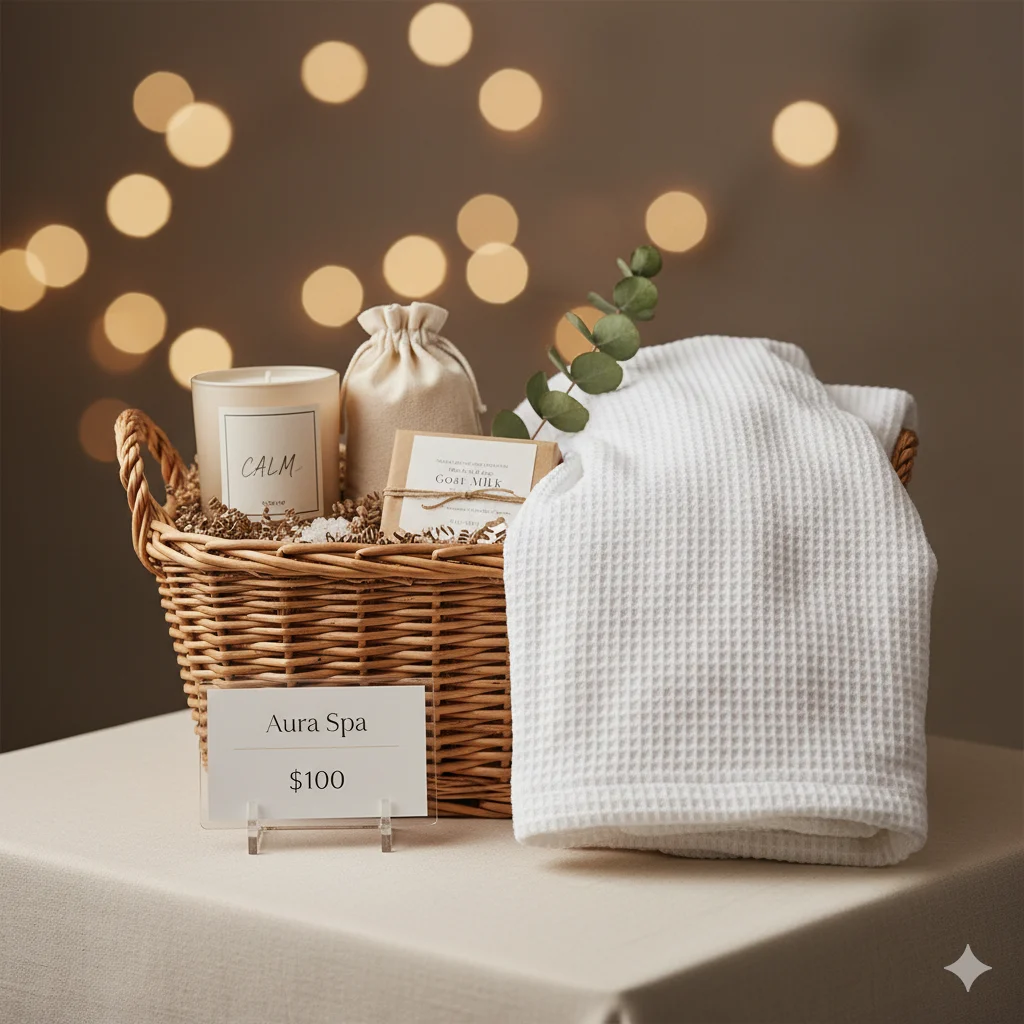 Top Performer
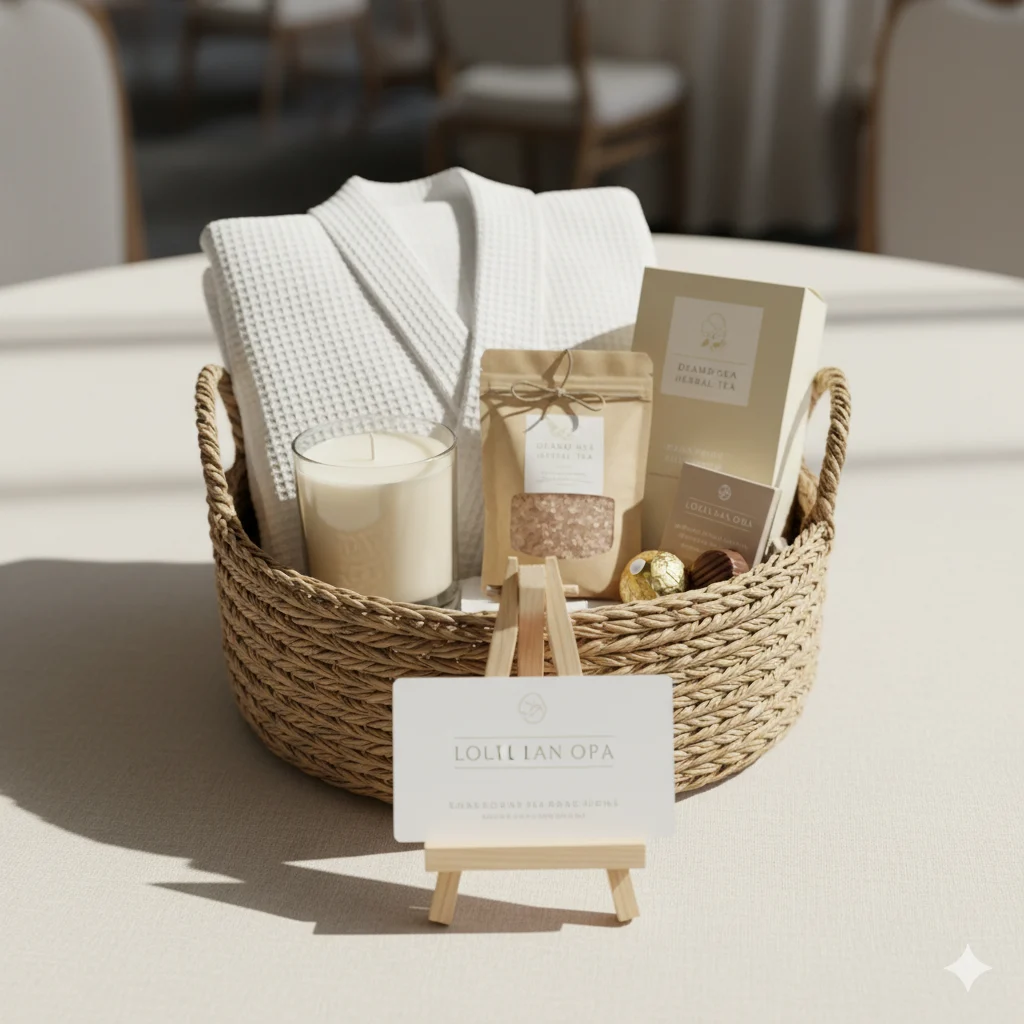
Spa Day for One
- $75–$100 local massage or facial gift card
- Plush robe or cozy throw blanket
- Neutral candle (Paddywax, Voluspa, or local equivalent)
- Premium chocolates (Lindt, Vosges, or local chocolatier)
- Herbal or chamomile tea selection
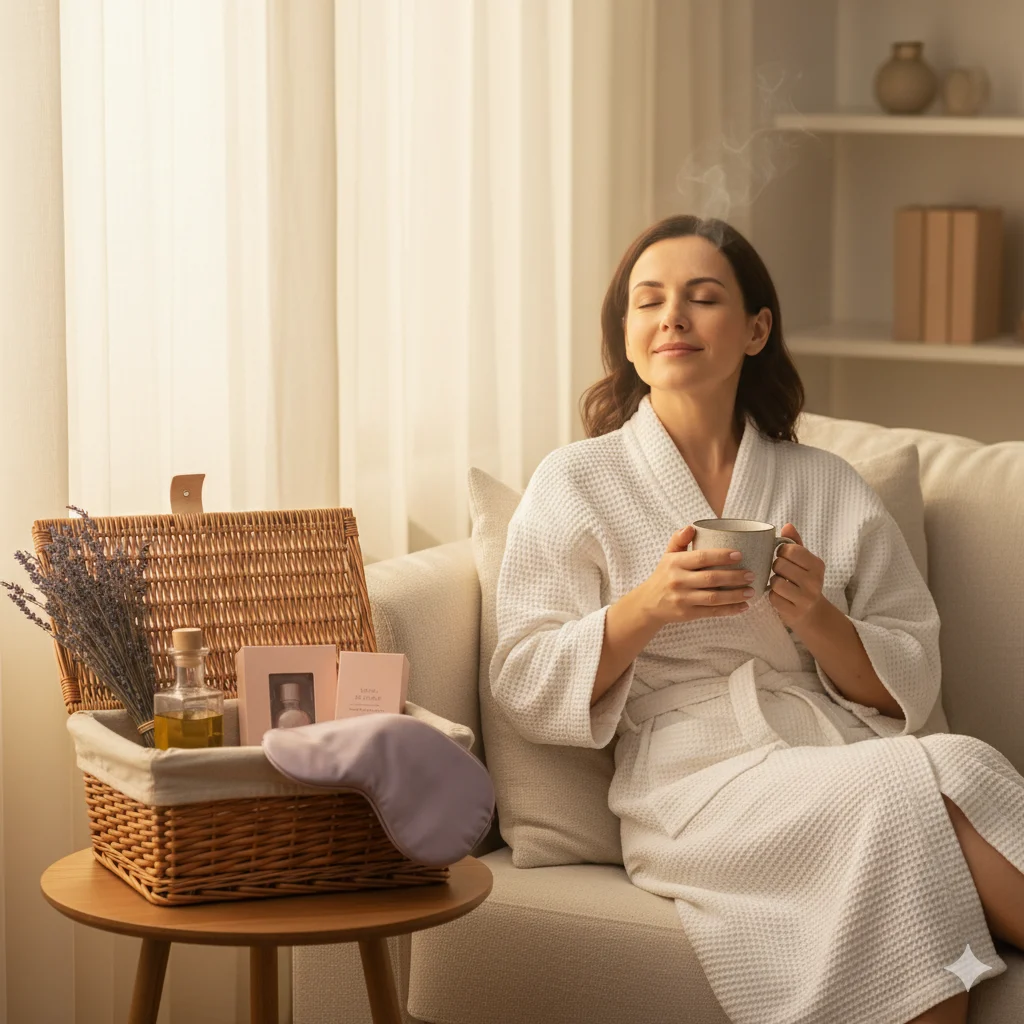 Emotional Pull
Girls Night Relaxation
- $50 local spa or nail salon gift card
- 2 face mask sets (sheet mask style — no scent issue)
- 1 bottle Rosé or sparkling wine
- Premium chocolate assortment
- Cozy blanket or fluffy socks set
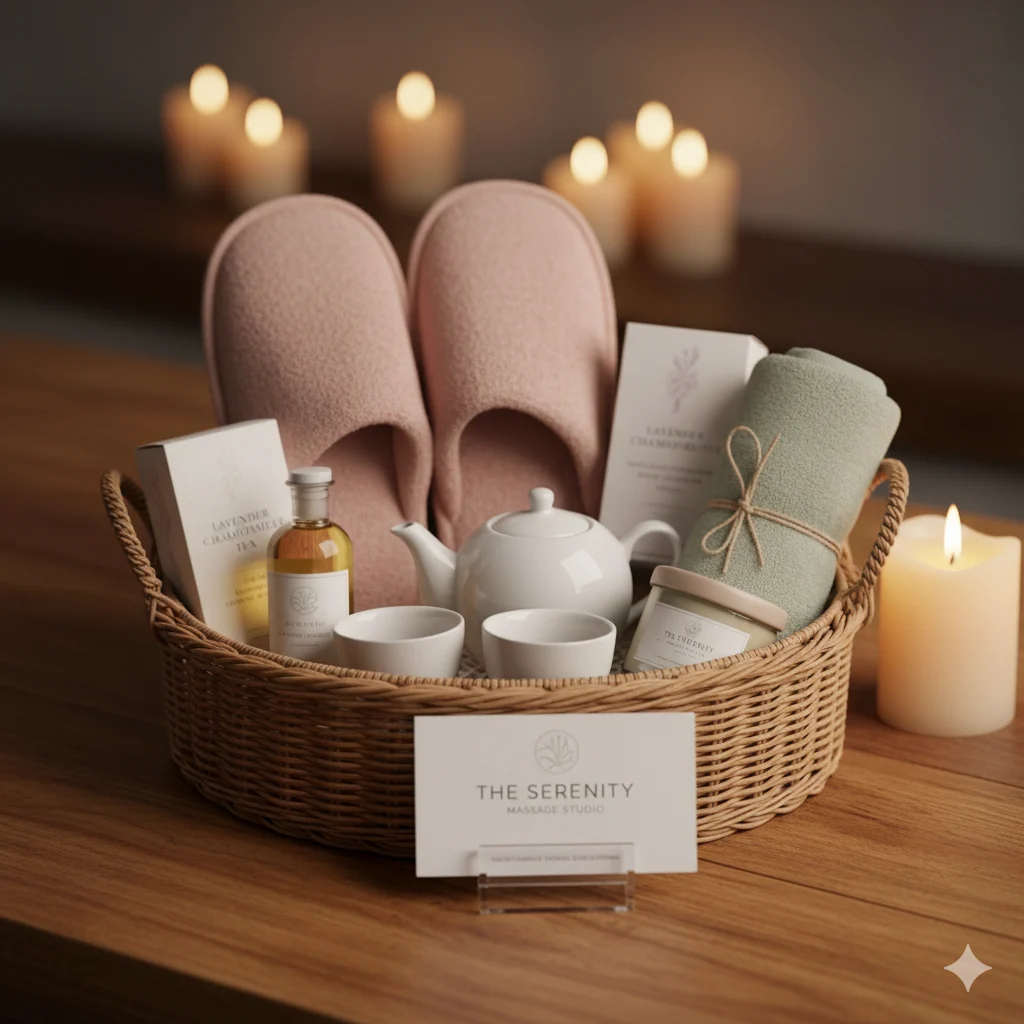 Date-Night Crossover
Couples Spa Night
- 2 massage vouchers (60-min each) from a local studio
- 1 bottle wine or sparkling cider
- Artisan chocolates or dessert item
- 2 robes or 2 sets of cozy socks
- Neutral candle for atmosphere
 Anchor Basket
Luxury Spa & Wellness
- $150–$200 full spa package gift card (mani/pedi + facial)
- Premium robe (waffle weave or hotel quality)
- Known-brand skincare set (Kiehl's, L'Occitane, or comparable)
- Premium candle (Diptyque or equivalent)
- Luxury chocolate box + sparkling water selection
What to Include and What to Avoid
The difference between a spa basket that earns $900 and one that earns $200 is often not the value — it's whether the contents eliminate hesitation or create it. Before adding any item, ask: Will every adult in this room immediately know they want this?
- Local spa, massage, or nail salon gift card (the anchor — always)
- Plush robes or cozy throw blankets (universally wearable)
- Known-brand or local-brand candles (recognizable = trusted)
- Premium chocolates from a recognizable or local chocolatier
- Herbal or chamomile tea (neutral, universally appealing)
- Sheet face masks in sealed packaging (no scent issue)
- Fluffy socks or slippers (soft goods — no allergy risk)
- Sparkling water or non-alcoholic beverage (inclusive)
- Heavily scented lotions or bath oils (sensitivities exclude half your room)
- Unknown beauty product brands (uncertainty kills allocation)
- Bath bombs with strong fragrance (same problem)
- Generic gift assortments with no clear theme
- Too many items — clutter reduces perceived value
- Nail polish sets (color preferences exclude buyers)
- Products that require specific skin types to use
- Anything that needs to be "figured out" before use
Before adding any item to a spa basket, ask: "If someone in this room has a fragrance sensitivity, can they still use this?" If the answer is no, replace it with something neutral. You are not building a gift for one person — you are building a prize that 100+ people need to want to compete for.
If someone has to figure out whether they'll use it — they won't buy tickets. That single sentence should guide every content decision you make.
Common Spa Basket Mistakes
Most spa basket underperformance comes from the same five mistakes. All of them are fixable before the event. None of them require spending more money.
Presentation Strategy — What Works and What Fails
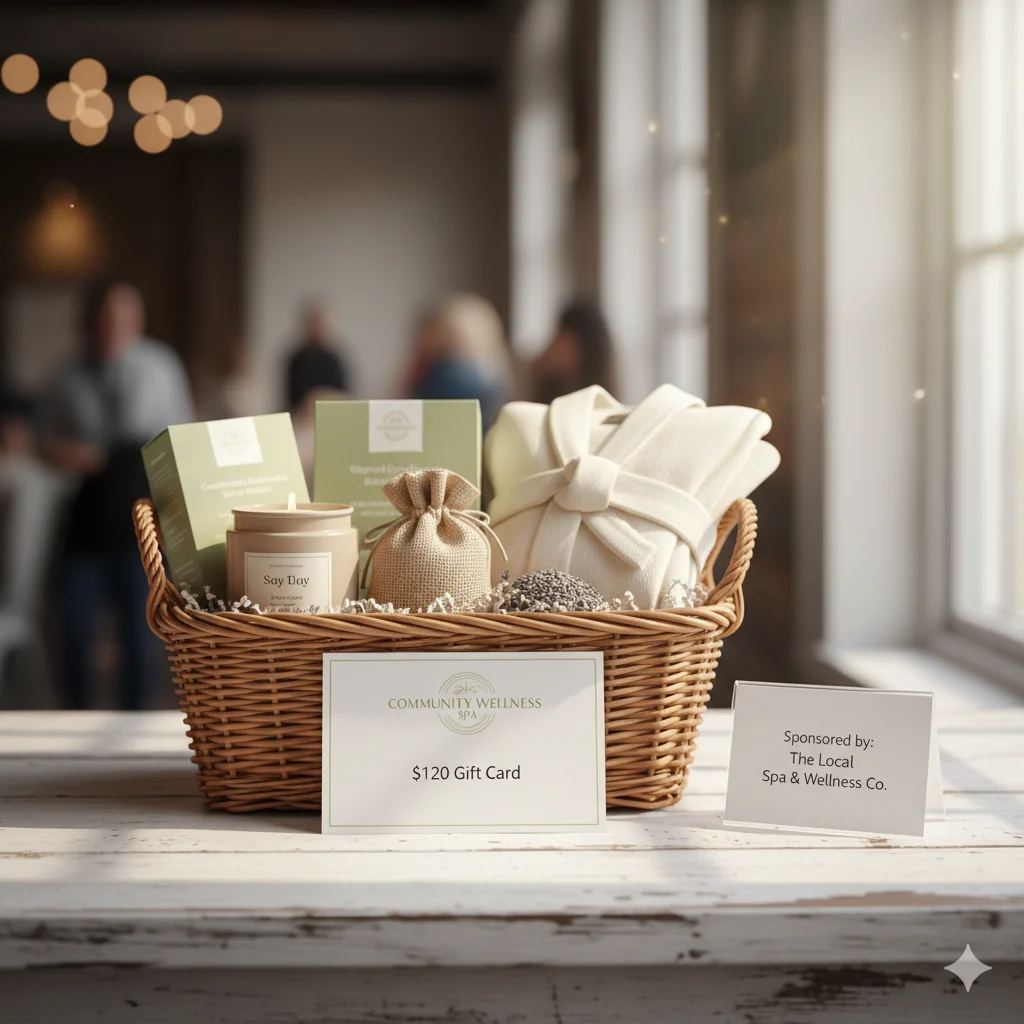
Two spa baskets with identical contents can generate dramatically different ticket revenue based entirely on how they are presented. Perception drives action. If a basket looks like a $200 prize, supporters treat it like one. If it looks like a bag of items, they move on.
- Elevated height — use a riser or layered filler to make items visible from across the table
- Clean cellophane or organza wrap — structure holds the visual, loose wrap kills it
- Large basket or container — undersized containers reduce perceived value
- Clear printed label with the basket name and estimated value
- Anchor item (gift card, robe) placed front and center — not buried
- Balanced color palette — spa baskets should feel calm, not cluttered
- Three photos minimum for online events: full basket, gift card close-up, contents spread
- Flat layouts — items lying down lose visual impact entirely
- Cluttered arrangements — more items does not equal more value in the eye
- Poor or no lighting — dark photos kill online ticket sales
- No signage — supporters who don't know what they're winning don't buy tickets
- Mixing non-spa items "to fill the basket" — thematic consistency beats volume
- Handwritten labels — undermines the premium positioning of the basket
- Gift card hidden at the back — the anchor item must be the first thing seen
If your basket looks like it belongs on a gift shop shelf, it performs like a raffle prize. If it looks like a collection of items someone grabbed from a closet, it performs like one. The goal is not to spend more — it is to arrange what you have so the perceived value matches or exceeds the actual value. Professional filler, structured wrap, and a printed label cost almost nothing and change everything.
The Sourcing Script That Actually Works
Local spas, massage studios, and nail salons receive donation requests constantly. Most are generic asks for charity. Here's how to make a fundamentally different ask — one that positions your request as a business opportunity rather than a favor.
💆 Local Massage Studios
These businesses live on referrals and local word-of-mouth. A service voucher in a featured raffle basket puts their name in front of exactly the audience they're trying to reach. Offer a display card on the basket with their name, phone number, and website.
Hook: "We'll make sure every attendee knows the massage comes from your studio."💅 Nail Salons
Nail salons have lower per-service revenue than spas and are often more willing to donate smaller vouchers ($35–$50) for the exposure. Many will provide a mani/pedi certificate that photographs well and displays prominently in the basket.
Hook: "Your certificate will be displayed prominently and we'll list you as a basket sponsor in the event program."🧖 Day Spas & Wellness Centers
Full-service day spas can provide higher-value vouchers ($75–$150) for facial, body wrap, or package services. These anchor the luxury basket tier. Frame the donation as a sampling opportunity — new clients discovered through a raffle become regulars.
Hook: "This is how we can introduce your spa to 300+ potential new clients in one evening."🕯 Local Candle & Gift Shops
For the supporting items — candles, robes, spa accessories — local gift shops often donate products in exchange for basket display credit. They get their product in front of an audience that's already proven to love self-care items. Ask for products at or near retail value in exchange for prominent sponsor mention.
Hook: "Your candle on that basket will be photographed and shared across all our event promotions."Revenue Math — What Actually Drives the Gap
Spa baskets that underperform aren't losing because the prize is wrong. They're losing because the structure is wrong. Here's what the numbers look like across different configurations.
| Spa Basket Configuration | Event Size | Typical Revenue |
|---|---|---|
| Products only, no gift card, single-ticket pricing | 100–150 | $200–$400 |
| Products only, no gift card, bundle pricing | 100–150 | $400–$600 |
| $50 gift card added, single-ticket pricing | 100–150 | $500–$800 |
| $50–$75 gift card, bundle pricing, clear name | 100–150 | $800–$1,500 |
| Luxury build, $150 gift card, bundle pricing | 100–150 | $1,500–$3,000+ |
A product-only spa basket with single-ticket pricing earns $200–$400. A well-built basket with a local gift card and bundle pricing earns $800–$1,500 or more from the same 100–150 people. The prize is the same category. The structure is completely different. This is the pattern across every basket category — structure determines revenue, not prize value alone.
The Platform Problem With Spa Baskets
Spa baskets expose the same platform architecture problem that every basket raffle does — but there's an additional issue specific to spa and wellness prizes that's worth understanding before you choose a platform.
-
!No per-basket ticket allocation. On most "free" platforms, all ticket entries go into a single shared pool. There's no mechanism for supporters to put tickets specifically into the spa basket. The allocation psychology that makes spa baskets high-earners — where supporters concentrate tickets on the prize they most want — disappears entirely. You're running a multi-prize raffle with basket-themed names. That's a fundamentally different product.
-
!Cash buyers at wellness events can't enter the pool. Spa basket raffles are disproportionately popular at in-person events — parish dinners, school nights, community galas. At these events, a meaningful number of supporters pay cash at the door. On Zeffy, RallyUp, BetterWorld, and Givebutter, those cash buyers cannot be entered into the digital drawing pool. They're either excluded or require a separate manual process. Either outcome is unfair and operationally messy.
-
!Tip-based checkout abandons spa buyers specifically. Spa basket buyers — predominantly women at community events — are particularly likely to abandon at a surprise tip prompt. They came to support a cause they care about. An unexpected 17–29% "optional" tip at checkout feels like a second ask at the worst moment. At church and school events, tip-based platforms drive 30–40% checkout abandonment. A fixed disclosed fee at 12% loses 1–2%. That gap is the difference between your spa basket earning $900 and earning $540.
-
!No drawing tool means a spreadsheet at event close. Zeffy has no drawing tool at all. When the spa basket drawing needs to happen, the process is: export the sales data, filter the CSV by basket, paste into a third-party name picker, record the winner, repeat for every basket. At a live event with supporters in the room, this is a 20–30 minute manual process that kills event momentum exactly when you want people feeling the excitement of drawings.
Someone putting tickets in the spa basket has already made their purchase decision. They want the massage. They want the robe. They are in buying mode — not donation mode. A tip prompt forces them back into donation mode at exactly the wrong moment. Many of them just leave. Your spa basket revenue walks out the door with them.
The math is not subtle. Tip-based platforms run 30–40% checkout abandonment at church and community events. A fixed disclosed fee runs 1–2%. On a $1,200 spa basket event, that gap is $360–$480 in lost revenue — from the checkout screen alone, before you've changed a single thing about the basket itself.
Transparent, fixed pricing keeps buyers in buying mode from browse to purchase. That's the whole argument. That's why it matters which platform you choose before you build a single basket.
Add the anchor item first.
A $50–$75 local spa gift card transforms a product collection into an experience. Everything else supports it. Nothing replaces it. Source it as a marketing partnership, not a charity ask.
Build for the whole room, not one person.
Remove anything that excludes a meaningful portion of your audience — heavily scented products, unknown brands, items that require guessing. Every content decision should pass: "Will every adult in this room know they want this?"
Add bundle pricing. It's the second biggest lever.
Without bundles, average order size runs $10–$15. With bundles (5 for $20, 15 for $50), it runs $60+. The spa basket that earns $800–$2,000 is the same basket that earns $300 under single-ticket pricing.
Choose a platform with real per-basket pools.
If all tickets go into one shared pool, supporters can't concentrate their tickets on the spa basket — and the entire psychology that makes spa baskets high-earners disappears. Verify the architecture before you commit.
20-theme build sheet with cost estimates, the ticket pricing calculator, a donor outreach email template, and the 60-day event checklist. Everything your committee needs — before it turns into a spreadsheet emergency.
Download Free →What's inside
✓ 20 basket theme build sheets
✓ Ticket pricing calculator
✓ Donor outreach template
✓ 60-day event checklist
✓ Common mistakes to avoid
Learn How to Maximize This Basket
Most raffles don't fail because of the prize. They fail because of pricing and promotion. These guides cover everything that happens around the basket — and they matter just as much as the basket itself.
Basket Raffle Pricing Strategy
The $11 vs $64 bundle pricing analysis. Why single-ticket pricing quietly caps your revenue — and the exact tier structure that fixes it.
Read the guide →How to Run a Basket Raffle
Complete 60-day planning guide — from basket building to drawing night. Covers online, in-person, and hybrid events.
Read the guide →How to Run a Basket Raffle Online
Step-by-step setup, the per-basket pool requirement, cash entry support, and what to do when a platform can't handle it.
Read the guide →Basket Raffle Software Guide
Eight questions to ask any platform before committing. Most fail at least three — including the most popular "free" options.
Read the guide →Basket Raffle Ideas Hub
Browse 100+ basket themes organized by audience, season, and value tier. Find what works for your specific crowd.
Browse all themes →Why Basket Raffles Fail
The 7 most common problems — platforms that break, pricing mistakes, no photos, cash buyers excluded. Real cases, real losses avoided.
Read the guide →More Basket Ideas That Actually Sell Tickets
These baskets work best when combined in a multi-prize raffle. A spa basket alongside a wine basket, coffee basket, and family basket gives every supporter at least one prize they immediately want — which drives total ticket volume up across all baskets.
The only platform built for true per-basket ticket pools
"We didn't add basket raffles to a donation tool. We built the raffle first. And we still answer the phone." — The Chance2Win Team