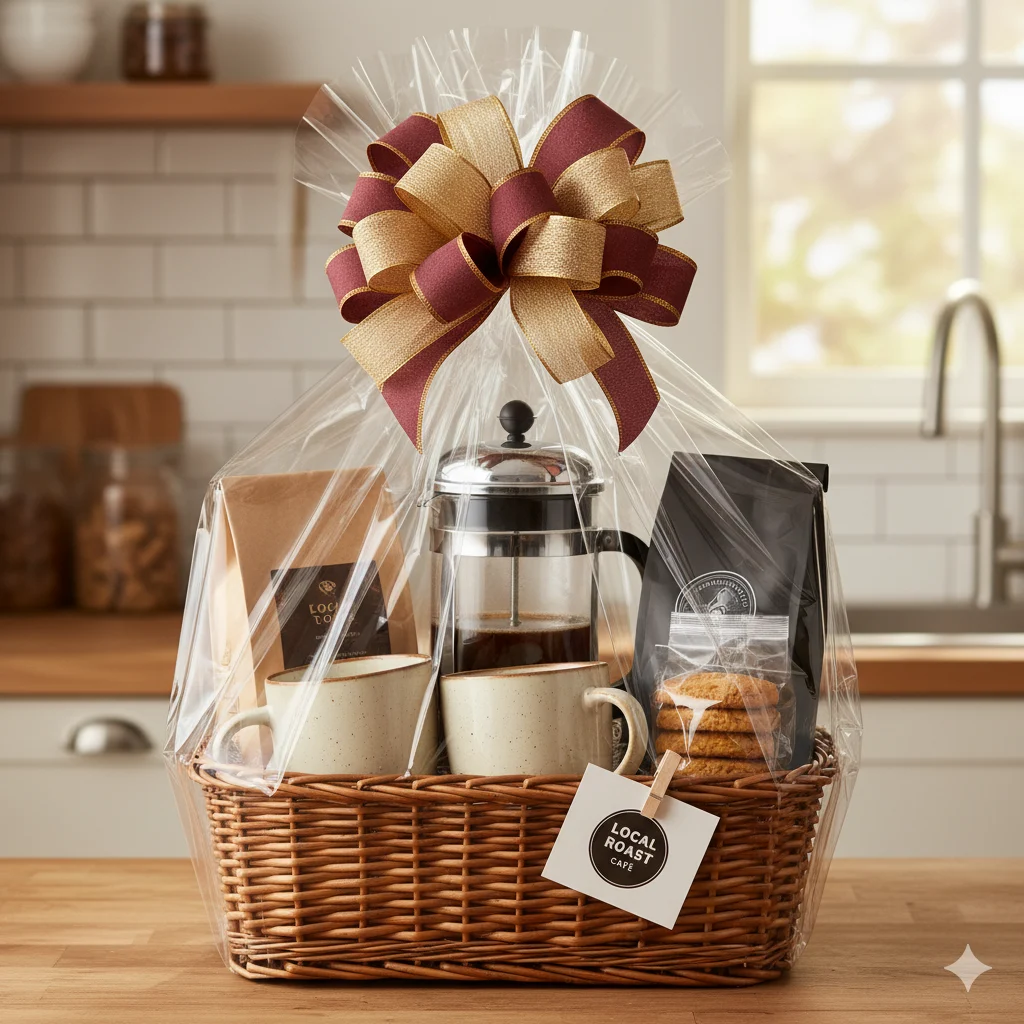
Quick AnswerCoffee raffle baskets work because they align with something supporters already do every day. Unlike most raffle prizes that require imagination — "will I use this? do I want this?" — coffee removes the question entirely. The best-performing coffee baskets combine a defined theme, a brewing method, 2–3 premium coffee bags, and a visible local café gift card. When a basket feels like a complete experience instead of a mix of products, ticket allocation increases dramatically. The gift card is the anchor. Everything else supports it.
The psychology behind the performance
Why Coffee Baskets Work So Well
Most raffle prizes require a supporter to answer a question they didn't expect: do I want this? Will I use it? Is it worth the ticket price?
Coffee doesn't require that question. Roughly 70% of American adults drink coffee daily. At a school PTA night, a church fundraiser, or a community gala, the overwhelming majority of your audience already has an existing coffee habit and an existing emotional connection to it. The basket isn't asking them to want something new — it's offering them more of something they already love.
That's what makes coffee different from novelty items, gadgets, or even wine. Coffee is habitual. And habitual products create predictable buyer behavior: supporters see it, recognize it, and allocate tickets before they finish reading the description.
What well-built coffee baskets do at events
-
✓
Broad appeal across every demographic. Coffee works for the 28-year-old teacher and the 65-year-old grandparent equally. Sports baskets skew to fans. Spa baskets skew to women. Coffee doesn't skew — it just works. This means more total competition per basket and higher aggregate ticket revenue.
-
✓
Instant comprehension. A supporter reads "Morning Routine — French Press, Stumptown Dark Roast, Artisan Mug, Café Gift Card" and immediately understands exactly what they're winning, when they'd use it, and how much they want it. No imagination required. Clarity drives allocation.
-
✓
Strong performance at school and church events specifically. School events skew heavily toward parents and staff — two of the most coffee-dependent demographics on the planet. Coffee baskets consistently rank in the top 3 revenue earners at PTA nights, booster club dinners, and parish fundraisers.
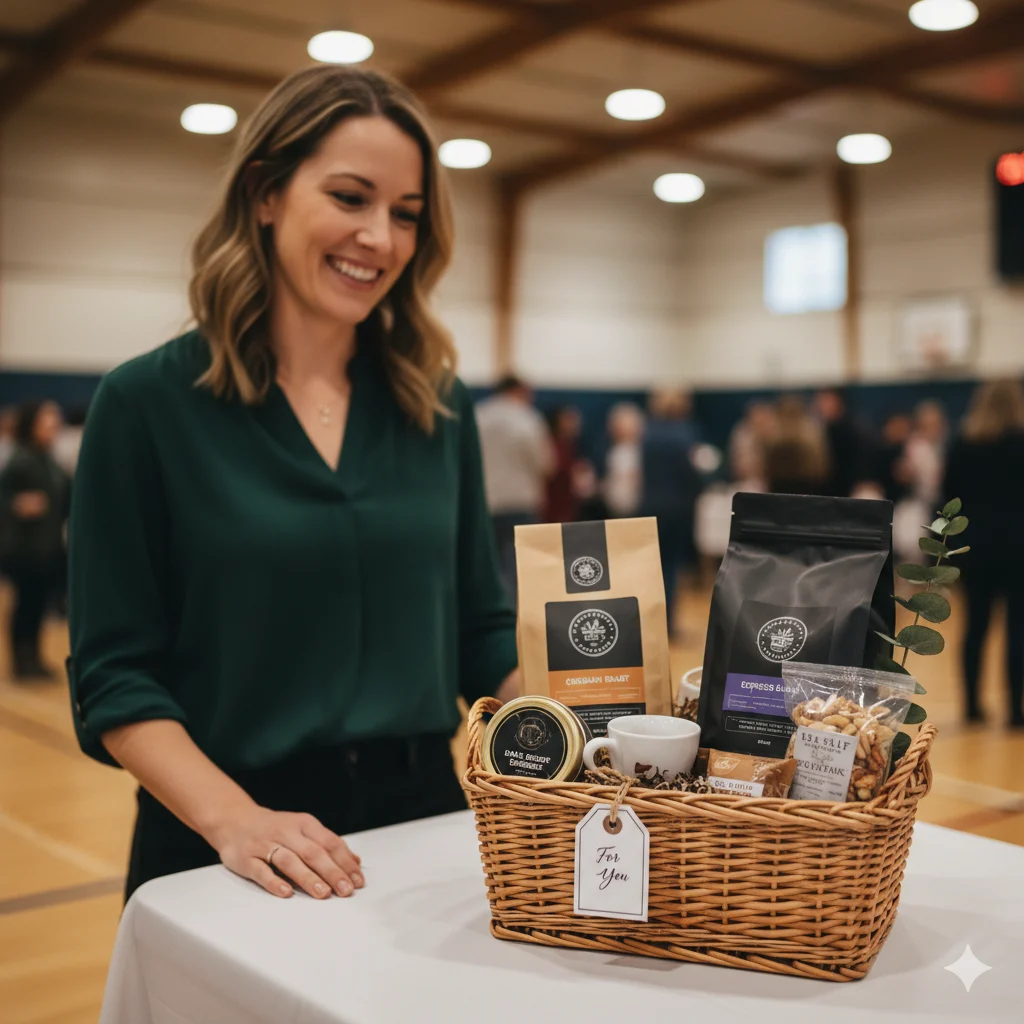
Instant recognition — the moment a supporter sees a well-built coffee basket, the decision is already made.
The "For You" tag, visible coffee brands, and ceramic cup signal a complete experience, not a product pile.
Why some coffee baskets fail
The Difference Between a Basket That Sells Out and One That Doesn't
Most underperforming coffee baskets have the same problem: they're not actually a "basket." They're a pile of items. Random coffee brands with no visual hierarchy, no theme, no gift card, and no clear story.
Supporters don't allocate tickets based on logic first. They allocate based on recognition, clarity, and perceived value. A basket that requires analysis kills momentum. A basket that tells a story in one glance drives allocation.
High-Performing Coffee Basket
- Defined theme — "Morning Routine" or "Coffee Lover Kit"
- A brewing method front and center (French press, pour-over)
- 2–3 recognizable coffee brands or a local roaster
- Visible gift card — the anchor item that signals experience
- Clean presentation — 5–7 items max, no clutter
- A food pairing (artisan biscuits, chocolates, nuts)
Low-Performing Coffee Basket
- No clear theme — random assortment of coffee things
- No brewing method — just bags of beans or pods
- Unknown or generic coffee brands
- No gift card — product-only baskets feel incomplete
- Overcrowded — too many small items reduce perceived value
- No food pairing — feels utilitarian, not celebratory
The pattern we see on every callAn organization describes their coffee basket: ground coffee, some pods, a mug, and a couple of flavored syrups from the grocery store. We ask what the basket earned. Usually $150–$200. Then we ask: was there a gift card? Usually no. Was there a brewing method? Usually no. Did it have a clear name? Usually "Coffee Basket."
The basket wasn't bad. It was just a product pile with no story. Add a French press, a local café gift card, and a name like "Morning Ritual" — and the same items triple their revenue.
Proven builds from real events
4 Coffee Basket Builds That Consistently Perform
Each build below follows the same principle: a defined theme, a brewing method or anchor item, recognizable coffee, and a gift card. ★ marks the anchor item in each list. Every build includes a realistic revenue range based on real events with bundle pricing in place.
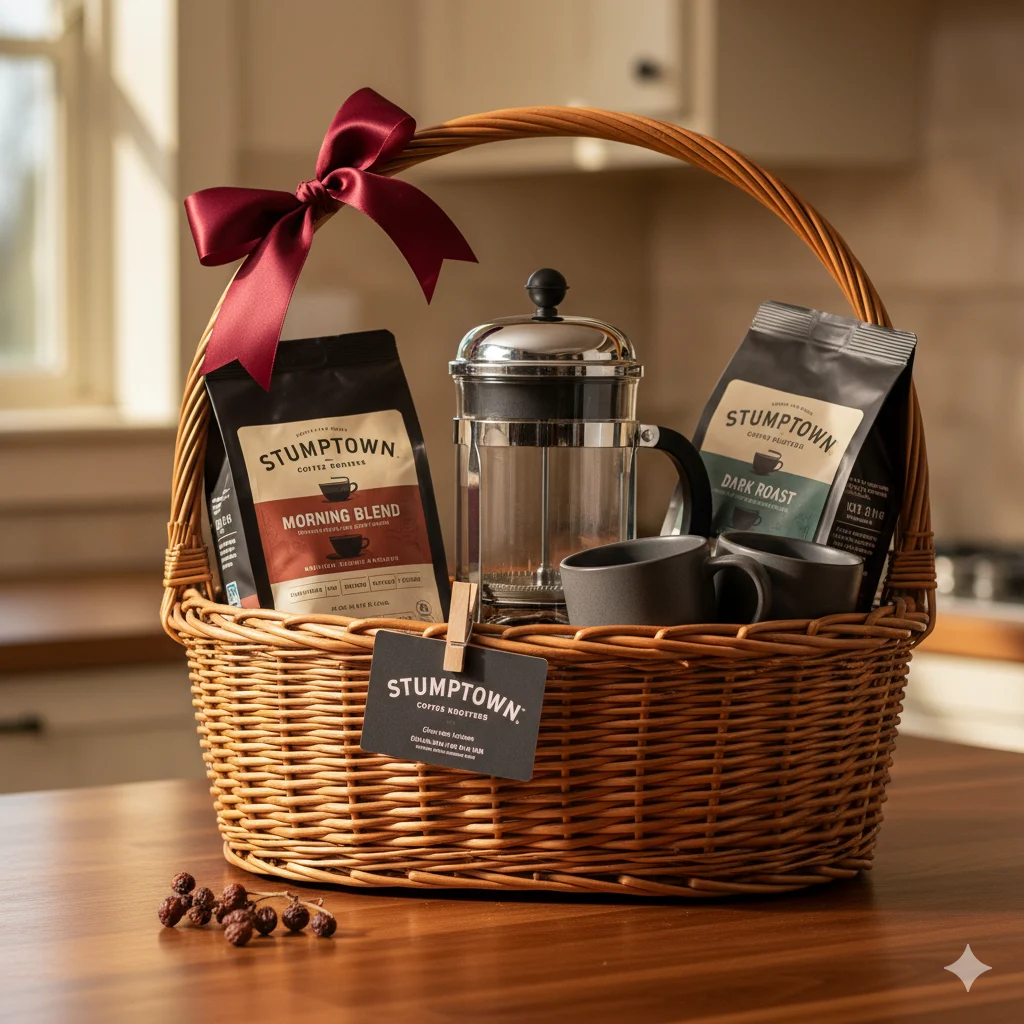 Best Overall
Coffee Lover Starter Kit
What's Inside
- $25–$50 local café gift card
- French press or pour-over (Bodum or equivalent)
- 2 bags premium coffee (local roast or Stumptown)
- 2 ceramic mugs
- Artisan biscuits or premium chocolates
Typical Revenue$500–$1,200
Why it works: The French press is the visual centerpiece — it signals a complete brewing experience, not just beans. The gift card resolves any uncertainty about coffee preferences. This build photographs well and reads clearly on any device. Best overall performer at community-scale events of 100–300 people.
 High Concentration
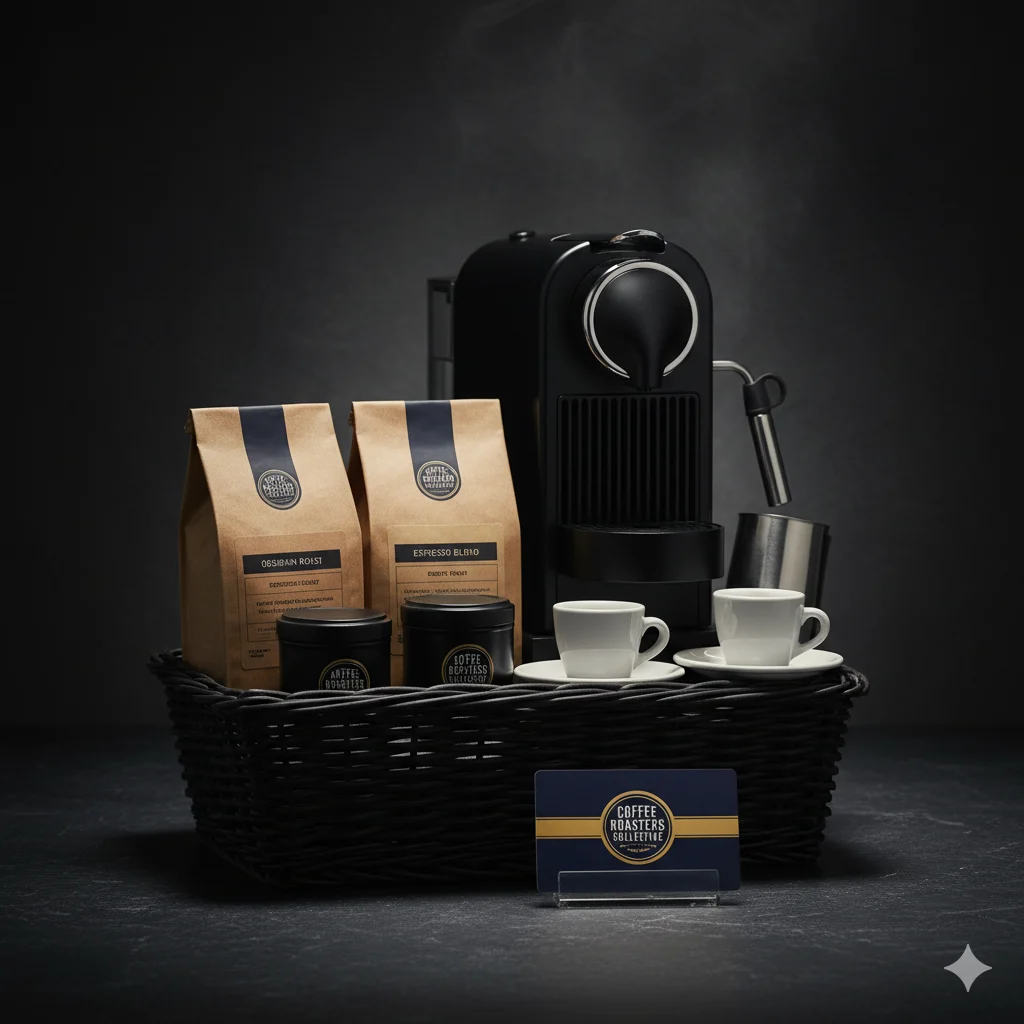
Barista Experience
What's Inside
- Entry-level espresso machine (Nespresso or similar)
- 2 bags premium espresso-roast beans
- Milk frother or steam wand
- 2 ceramic espresso cups + saucers
- Coffee roaster gift card ($25–$50)
Typical Revenue$900–$2,000
Why it works: This basket doesn't get the most buyers — it gets the most tickets from fewer, committed buyers. Espresso enthusiasts recognize the machine immediately and allocate heavily. The drama of the espresso machine as a centerpiece draws attention from across the room. Use this as an anchor basket to elevate the whole event's perceived quality.
 Emotional Trigger
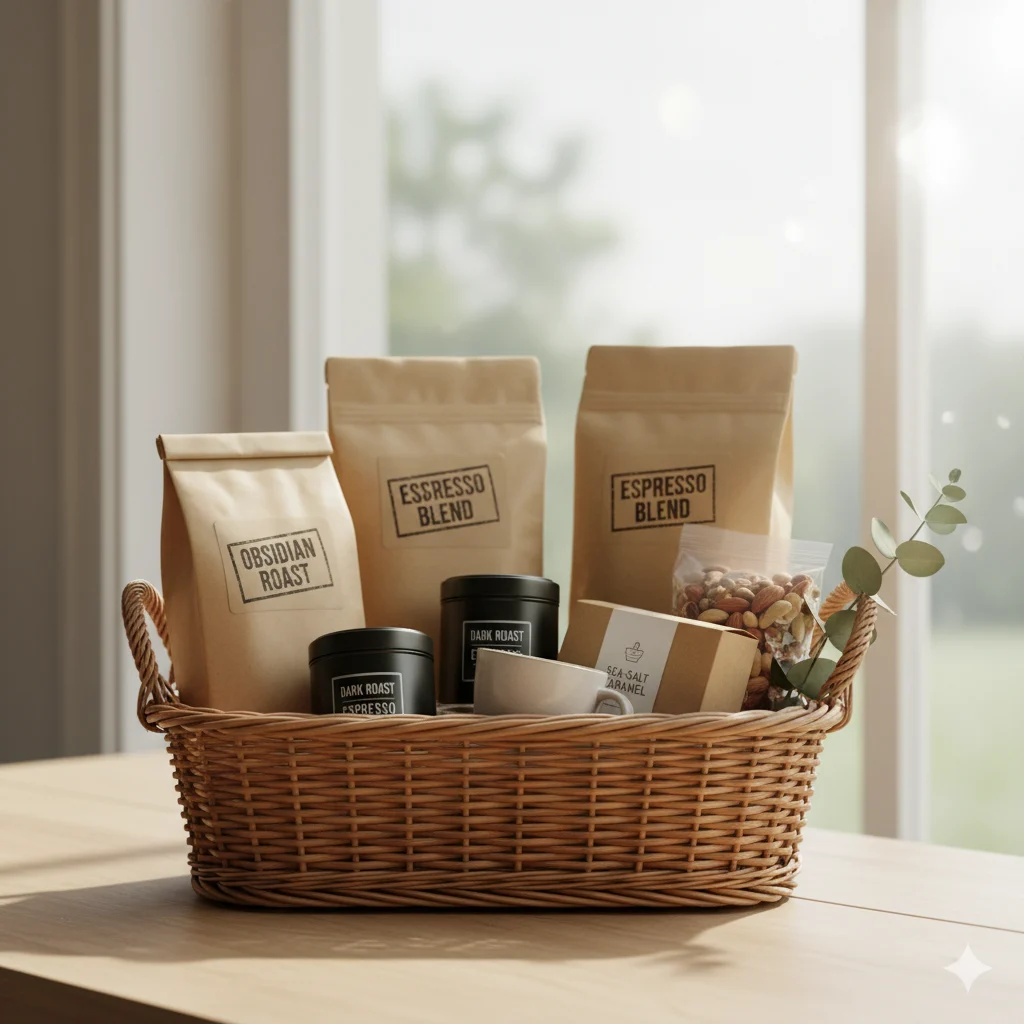
Morning Ritual
What's Inside
- $25–$40 local café or coffee shop gift card
- 2 bags coffee (a dark roast + a medium/light option)
- Ceramic pour-over dripper or mug
- Cozy throw blanket or quality tea towel
- Artisan biscuits or premium nuts for pairing
Typical Revenue$450–$1,000
Why it works: This is the most underrated coffee build. "Morning Ritual" creates a lifestyle image — supporters don't see products, they see their ideal Saturday morning. The blanket adds warmth to the visual and broadens appeal to people who don't identify primarily as coffee enthusiasts but immediately recognize the experience being described.
 Easiest to Source
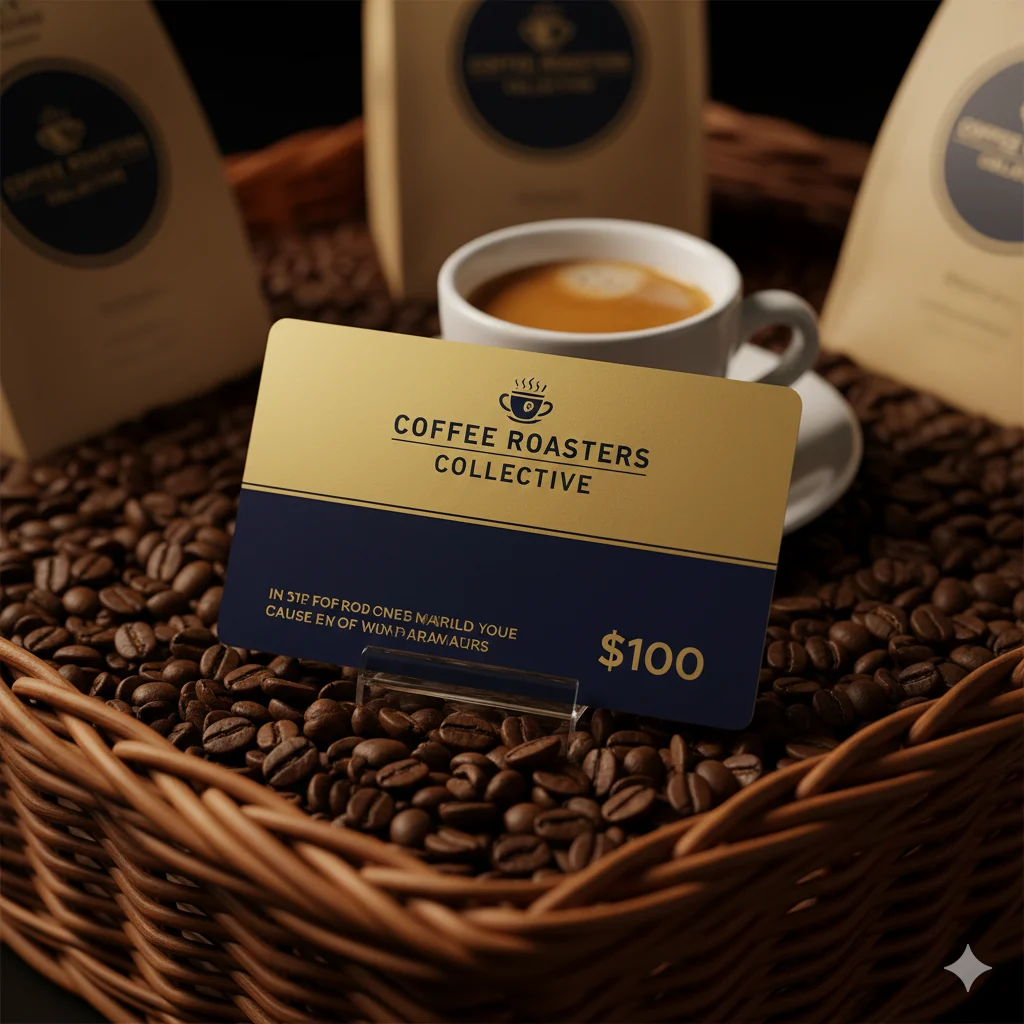
Local Coffee Shop Bundle
What's Inside
- 2–3 local café gift cards ($25–$50 each)
- Bag of the café's signature house roast
- Branded mug or travel tumbler from each café
- Artisan treat from a local bakery
- Coffee brewing guide or tasting notes card
Typical Revenue$500–$1,100
Why it works: This is the highest ROI build when sourced correctly — local cafés donate gift cards and beans in exchange for event recognition with almost no friction. The "local" angle resonates strongly at community events where audience members are already loyal to specific neighborhood shops. The visible gift cards photograph beautifully and signal value instantly.
The revenue lever most organizations miss
Bundle Pricing: Same Basket, Doubled Revenue
A school called after their coffee basket raffle. Good turnout, good interest — people kept coming back to look at the coffee baskets. But the revenue was disappointing. They were running $5 per ticket, single pricing only.
From the Raffle Hotline · School Fundraiser · The Pricing Switch
"Same event. Same baskets. Same people. Revenue doubled."
A PTA treasurer called to ask why their coffee basket was underperforming. Strong visual, recognizable brands, clear theme. But they were pricing at $5 per ticket with no bundle options. The basket had earned about $180 on a 200-person event. They figured the basket wasn't compelling enough and asked about upgrading the contents.
We told them the basket was fine. The pricing was the problem.
Caller: "But $5 tickets are accessible. We want everyone to be able to participate."
Support: "Right now everyone is participating by buying one ticket. Bundle pricing doesn't raise the floor — it raises the ceiling. You're still offering single tickets. You're also offering 5 for $20 and 15 for $50. People who really want the coffee basket will buy the bundle."
Caller: "What if they just buy the single ticket?"
Support: "Then you've lost nothing. But most people who want to win buy more when you give them a reason to."
Next year, same baskets, same event, bundle pricing added. Coffee basket revenue: $380. Total event revenue: more than doubled.
Bundle pricing works because of basket raffle psychology. Supporters buy a bundle, then allocate more heavily to the basket they most want to win. More tickets in their hand means more concentration on the prize they're excited about — and coffee buyers are excited. They just needed the option to act on it.
Single-Ticket Pricing
~$10
Average order size. Most supporters buy 1–2 tickets and move on. No bundle incentive, no concentrated allocation.
Bundle Pricing (5 for $20 / 15 for $50)
~$64
Average order size with bundle pricing in place. Same audience, same event, same basket. Only the pricing structure changes.
6×
Difference in average order size between single-ticket and bundle pricing — same event, same audience.This is the most consistent finding across thousands of Chance2Win events. The basket doesn't need to be better. The products don't need to be upgraded. The pricing structure is the single highest-ROI change you can make to any basket raffle — coffee included.
The math is simple: 200 supporters at a $10 average order = $2,000 in total raffle revenue. 200 supporters at a $64 average order = $12,800. The crowd is the same. The event is the same. The baskets are the same. The only variable is whether they had the option to buy a bundle.
Where the gift card actually comes from
The Sourcing Script That Gets the Yes
Local coffee shops are among the easiest businesses to approach for raffle donations — and most organizations are using the wrong frame when they ask. The common mistake is leading with the cause. The better approach is leading with the audience.
A $50 café gift card in a visible raffle basket reaches 200–400 local coffee drinkers at a community event. For a neighborhood coffee shop, that's a meaningful marketing opportunity — not a charity expense.
The Script Reframe
"Hi, we're running a raffle for our school and we were wondering if you could donate a gift card for our coffee basket?"
"We're featuring a Coffee Lover basket as one of our featured prizes at our fundraiser — we expect 300+ local families. We'd love to include your café. Your name on the basket, in our event program, and on our social posts puts you directly in front of the local coffee-drinking families in your neighborhood. Would you be open to contributing a $25–$50 gift card and a bag of your signature roast as a marketing partnership?"
The difference: the first version asks for a donation. The second version offers targeted local marketing to a pre-qualified audience. Most local café owners understand this math immediately — a $50 gift card at a 300-person event costs less than a single Facebook ad and produces far more meaningful impressions from people who actually live nearby.
☕ Local Coffee Shops
The easiest ask in the category. Local cafés want community visibility and new regulars. A gift card in a basket labeled with their name gives them both. Most independent shops will provide a $25–$50 voucher plus a bag of beans without much negotiation.
Hook: "We'll put your café name on the featured basket — it gets the most attention at the event."
🫘 Local Roasters
Roasters actively seek community placements to build local brand awareness. A 12oz bag of their signature roast in a raffle basket is product sampling to a targeted local audience. Many will also provide a gift card in exchange for a sponsor mention.
Hook: "Would you be interested in a community feature? We'd showcase your roast as a featured item in our Coffee Lover basket."
🏪 Kitchen & Home Stores
For the brewing equipment component — French press, pour-over, mugs — local kitchen stores often participate in community fundraisers. A Bodum French press at wholesale cost to them is a $40 item that reads as a $60 value in the basket. Offer prominent basket tag recognition.
Hook: "We'd credit your store on the basket tag and in our program — great visibility for a home goods audience."
🥐 Local Bakeries
For the food pairing — artisan biscuits, pastries, or chocolates. Bakeries respond to the same marketing-value frame. A $15 box of artisan biscuits creates a complete lifestyle package and gives the bakery exposure at the event. Usually the easiest yes of all.
Hook: "Your biscuits would be the perfect pairing — we'd feature your name on the basket alongside the coffee."
Final Takeaway
1
Give the basket a theme, not a description.
"Morning Ritual" beats "Coffee Basket" every time. A theme creates an experience the supporter can immediately visualize. A description is just a list. Name the experience first, name the items second.
2
Lead with a brewing method. Always.
A French press, pour-over, or espresso machine transforms a bag of beans into a complete experience. It's the visual centerpiece that draws attention from across the room and photographs well for your online event page.
3
Add a gift card. It's the anchor.
A $25–$50 local café gift card shifts the basket from a product collection to an experience. It also makes sourcing easier — source the gift card from the café and ask for beans and a mug as part of the same conversation.
4
Run bundle pricing. Don't run single tickets alone.
Average order with single-ticket pricing: ~$10. Average order with bundles: ~$64. You can still offer single tickets — but give supporters the option to buy a bundle for the basket they really want. Most coffee buyers will take it.
Free Download
Basket Raffle Planning Kit
20-theme build sheet with cost estimates, the ticket pricing calculator, a donor outreach email template, and the complete 60-day event checklist. Everything your committee needs — before it turns into a spreadsheet emergency.
Download Free →
What's inside
✓ 20 basket theme build sheets
✓ Ticket pricing calculator
✓ Donor outreach template
✓ 60-day event checklist
✓ Common mistakes to avoid
Common questions
Frequently Asked Questions
What makes a coffee raffle basket sell tickets?
Three things: a defined theme (not random items), a visible brewing method, and a local café gift card as the anchor item. Coffee baskets sell because everyone already drinks it — supporters don't need to imagine wanting it. A clear theme plus a gift card turns a product collection into an experience people compete for. See the four builds above for specific item lists and revenue ranges.
What should I put in a coffee raffle basket?
The highest-performing coffee baskets include a brewing method (French press, pour-over, or espresso), 2–3 bags of premium or local-roast coffee, a ceramic mug or two, a $25–$50 local café gift card, and a small food pairing like artisan biscuits or premium chocolates. Build cost runs $60–$100. Revenue with bundle pricing: $500–$1,200 depending on event size. Keep the item count to 5–7 maximum — clutter reduces perceived value.
Are coffee baskets good for school or church fundraisers?
Yes — coffee is one of the most universally appealing basket themes at school and church events because it crosses every demographic. PTAs and booster clubs find coffee baskets especially effective because they appeal directly to parents and staff. The Morning Ritual build (coffee + mug + blanket + gift card) and the Coffee Lover Starter Kit both perform consistently at school nights and parish fundraisers. For audience-specific guidance, see the
school basket raffle guide and
church basket raffle guide.
How do I get coffee basket items donated?
Local coffee shops respond well to: "We're featuring a Coffee Lover basket at our event and would love to feature your café. We'll promote you to 300+ local families — would you contribute a $25–$50 gift card or a bag of your signature roast?" Frame it as local marketing exposure, not a charity ask. Local roasters donate beans frequently in exchange for event recognition. See the full
basket donation sourcing guide for additional scripts and email templates.
How do I price tickets for a coffee basket raffle?
Bundle pricing dramatically outperforms single-ticket pricing. A school ran the same coffee basket at $5 per ticket and generated modest revenue. Switching to 5 for $20 and 15 for $50 doubled total revenue without changing the basket. The average order jumps from roughly $10–$15 to $64 with bundle pricing. You can still offer single tickets — bundle pricing doesn't remove accessibility, it adds a higher-engagement option for supporters who really want the basket. See the full
pricing strategy guide.
How many coffee baskets should I include in a basket raffle?
At least one, ideally two — a simple everyday build ($65–$85) and a premium build ($180–$250). Two coffee baskets at different price points capture both casual coffee drinkers and serious enthusiasts without competing with each other. The premium Barista Experience basket tends to attract concentrated ticket allocation from a small number of very motivated buyers, while the starter build attracts broad participation. Running both maximizes total coffee basket revenue.
Can I run a coffee basket raffle online?
Yes. Coffee prizes don't carry the payment processor restrictions that wine or firearms do — Stripe doesn't flag café gift cards or French presses. But you still need a platform that supports per-basket ticket allocation and separate drawing pools per basket. Most free platforms don't have this architecture. If you're also accepting cash entries at the door, you need a platform with manual order entry that adds those buyers into the correct basket's pool alongside online purchases. See the
basket raffle software guide for the questions to ask before committing to a platform.
The basket alone is not enough
Learn How to Maximize This Basket
Most raffles don't fail because of the prize. They fail because of pricing, platform choice, and promotion. These guides cover everything that happens around the basket — and they matter just as much as what goes inside it.
💰
Basket Raffle Pricing Strategy
The $11 vs $64 bundle pricing analysis and the exact tier structure that doubles average order size without changing a single item in your basket.
Read the guide →
📋
How to Run a Basket Raffle
Complete 60-day planning countdown — basket building, ticket pricing, promotion schedule, drawing night logistics. Online, in-person, and hybrid.
Read the guide →
🖥️
How to Run a Basket Raffle Online
The per-basket pool requirement, cash entry support, and what to do when a platform can't support the format. Step-by-step setup.
Read the guide →
⚙️
Basket Raffle Software Guide
Eight questions to ask any platform before committing. Most fail at least three — including the most popular free options.
Read the guide →
🧺
Basket Raffle Ideas Hub
Browse 100+ basket themes organized by audience, season, and value tier. Find what works for your specific crowd.
Browse all themes →
⚠️
Why Basket Raffles Fail
The 7 most common problems — platforms that break, pricing mistakes, no photos, cash buyers excluded. Real cases, real losses avoided.
Read the guide →
Two more questions we get on every call
How do you make a coffee basket look expensive for a raffle?
Use a strong anchor item (French press, espresso machine, or café gift card) as the visual centerpiece, with coffee bags angled label-forward so brands are readable. Put the gift card clipped to the front where it is the first thing seen. Use neutral filler (kraft shred) that contrasts with dark coffee bags. A printed label with the basket name and total estimated value adds professionalism that handwriting cannot. For online events, post three photos: full basket, gift card close-up, and contents spread flat. The goal is for the basket to look like it belongs in a specialty gift shop window — not in a grocery store endcap.
What is the best way to promote a coffee basket raffle?
Post close-up photos of the anchor item and the full basket before the event opens. Tag the coffee shop or roaster who donated — their followers may become new ticket buyers. Post a "featured basket" spotlight 2–3 days before launch, the day of launch, and the day before the drawing closes. For the online listing, write a specific description that names the contents and the estimated value: "Morning Ritual — Stumptown Dark Roast, French Press, Two Ceramic Mugs, $50 Local Café Gift Card" dramatically outperforms "Coffee Basket — Assorted Items." The more specific the description, the more supporters can picture themselves winning it — and picture drives tickets.
More high-performing themes
More Basket Ideas That Actually Sell Tickets
Coffee baskets work best as part of a multi-prize event. Add a wine basket, spa basket, and pet basket and every supporter in the room has at least one prize they immediately want — which drives total ticket volume across all baskets.
Ready to run the real thing?
Turn your coffee basket into one of your highest-earning prizes
"You don't need better prizes. You need better structure, better pricing, and a platform that doesn't get in the way." — The Chance2Win Team