Ticket concentration strategy · Visible value anchoring · One premium basket per lineup · $200–$500+ builds
Luxury Basket Raffle Ideas — The Anchor That Drives the Whole Lineup
One well-built luxury basket consistently generates more ticket revenue than five standard baskets combined — when buyers see a single premium prize worth concentrating their tickets on. The key is visible, verifiable value: the dollar amount on the gift card is readable from arm's length, the experience is specific and local, and the basket is positioned as the clear prize of the event before anyone says a word.
1–2luxury baskets per lineup — more dilutes the concentration effect
5×potential tickets vs. equal-cost standard baskets when concentration works
5 ticketsper entry for $300+ builds — signals premium without a second price
$200minimum anchor gift card or experience value for a true luxury build
The short versionLuxury baskets generate disproportionate revenue through ticket concentration: when buyers see one clear premium anchor, they put their extra tickets there. The mechanism requires visible, verifiable value — the dollar amount on the anchor gift card must be readable at a glance, the experience must be specific and local, and the basket must be physically positioned as the event's top prize. One well-executed luxury basket at 5 tickets per entry will typically generate more revenue than three standard baskets combined.
Visible Value and Experience Anchoring — Why Premium Fails Without Both
Luxury basket failures share a common pattern: expensive items without an obvious value signal. A basket containing $400 worth of artisan food, premium wine, and hand-poured candles looks "nice" to buyers who don't know the brands. The same buyers see a basket with a "$250 Tasting Menu Gift Certificate" clipped front-center and immediately understand what they are competing for.
Visible value means the most important number — the anchor gift card amount or the experience ticket value — is readable from arm's length without leaning in. If buyers have to pick up the card to see how much it is worth, a significant percentage will not make that physical movement and will move on. Put the dollar amount on a printed insert facing outward if the gift card itself doesn't show it clearly.
Experience anchoring means the basket promises a specific, vivid experience the buyer genuinely desires — not a collection of premium items requiring personal assembly. "Tasting Menu for Two at [Restaurant]" creates an immediate, specific picture. "Premium Gourmet Basket" creates a vague sense of quality. The specific experience is what drives competitive ticket allocation.
From the Raffle Hotline · Nonprofit Gala · "The Expensive Basket Didn't Generate Any More Tickets"
"We built what we thought was an incredible basket — premium wine, gourmet foods, beautiful presentation. Estimated value $400. It generated about the same tickets as the $120 spa basket. I don't understand it."
Us: "How was the value communicated? Was there a dollar figure visible from the outside?"
Caller: "We had an estimated value on the label — $400. But the items were all premium gourmet brands."
Us: "The label can say $400 but buyers have no way to verify that without researching the brands, which nobody does at a raffle table. The spa basket had a $75 gift card visible on the front — that $75 was immediately verifiable and created a specific experience picture. Your basket had an unverifiable estimate and required buyers to trust you about the brand values. At a raffle table with eight seconds of decision time, trust is not enough. Visible, verifiable value is."
Caller: "So we should have anchored on a restaurant certificate instead?"
Us: "A $250 tasting menu certificate front-center, with the gourmet items supporting that experience picture. The food items now make sense — they're part of a night out, not a mystery collection. The $250 number is immediately verifiable and creates the luxury experience picture. The basket becomes worth concentrating tickets on."
Following year: $250 tasting menu certificate at [locally acclaimed restaurant] front-center, premium wine and chocolates as supporting items, labeled "Chef's Tasting Menu for Two." Tickets: 160 at 5 per entry from the $25 bundle. Revenue from that single basket: $800. Previous year's $400 gourmet basket: $190.
$400 of unverifiable premium items generates fewer tickets than a $250 experience certificate that buyers can verify at a glance. Visible, verifiable value produces competitive ticket allocation. Product collections without an obvious anchor produce polite appreciation and minimal entries.
The Ticket Concentration Strategy — Why One Beats Three
When a raffle lineup has one clearly identified premium basket, buyers who want to maximize their odds on the best prize concentrate their tickets there. When a lineup has three roughly equivalent premium baskets, the same buyers spread their tickets across all three — and none of the three generates the competitive density that signals "you need to put more tickets in here to have a real chance."
Ticket concentration: one premium anchor vs. three equal premiums
Three premium baskets ($250 each)
Tasting Menu
55 tkts
Spa Weekend
48 tkts
Hotel Stay
42 tkts
Total: 145 tickets · $362 revenue at $2.50/ticket
One premium anchor ($350) + two standard
Tasting Menu ★
140
Date Night
56 tkts
Spa Day
49 tkts
Total: 245 tickets · $612 revenue — same buyers, different structure
The mechanism is strategic: buyers who see one clear premium basket and multiple standard baskets make an explicit calculation — "that's the one worth competing for" — and concentrate their allocation there. That concentration creates visible ticket density (a filling bucket), which signals to other buyers that the basket is popular and worth competing for, which drives further entries. The effect compounds. One premium anchor with 140 tickets is more visible, more competitive, and generates more late-adding entries than three baskets at 55 tickets each.
The 6 Luxury Basket Builds That Anchor Raffle Lineups
 Premium Anchor
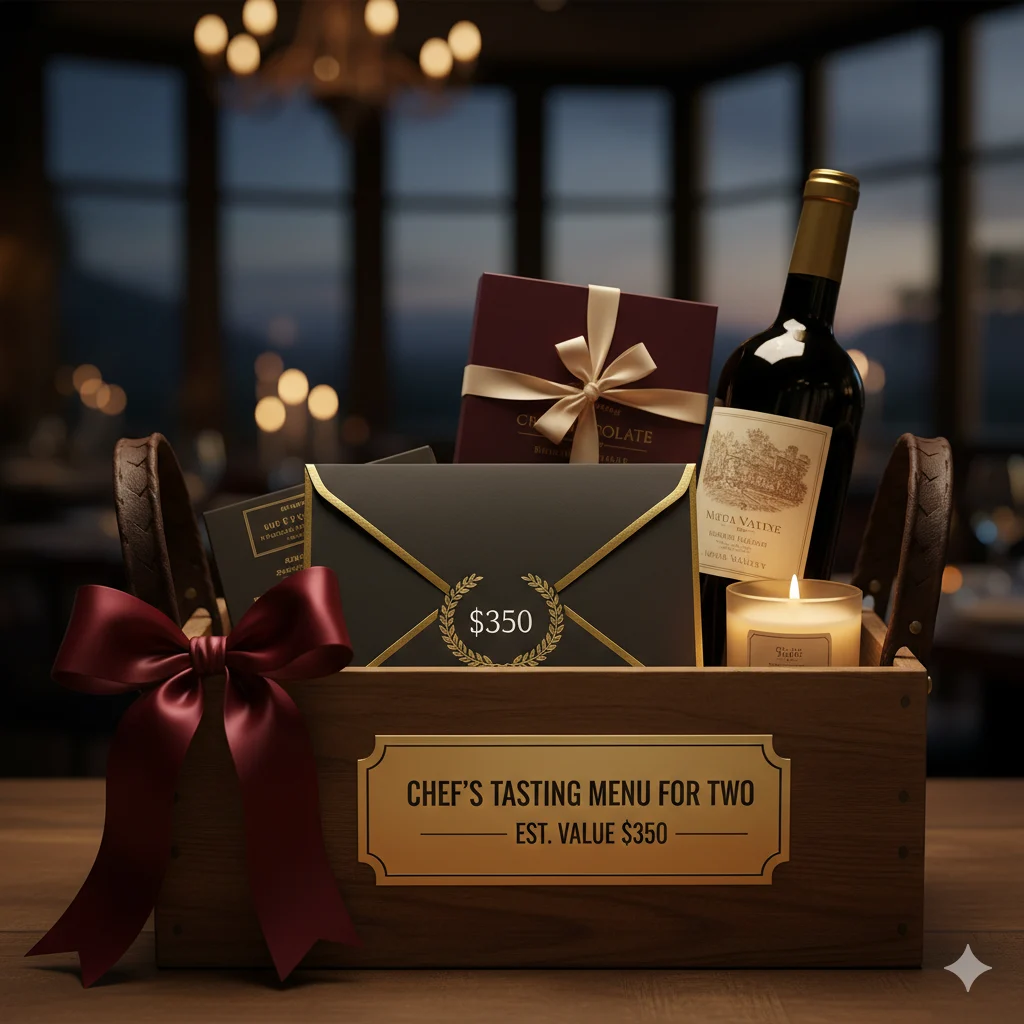
Chef's Tasting Menu for Two
What's Inside
- $200–$250 tasting menu or fine dining gift certificate
- Premium wine bottle ($50+ tier)
- Artisan chocolate box (local chocolatier or premium import)
- Luxury candle from a recognizable premium brand
- Silk ribbon presentation and premium box or crate
The single strongest luxury basket for any adult audience. The "tasting menu" framing signals a dinner most people want but won't schedule for themselves. Choose the most acclaimed local restaurant your audience recognizes and has been meaning to try. That restaurant name does the selling.
 Top Performer
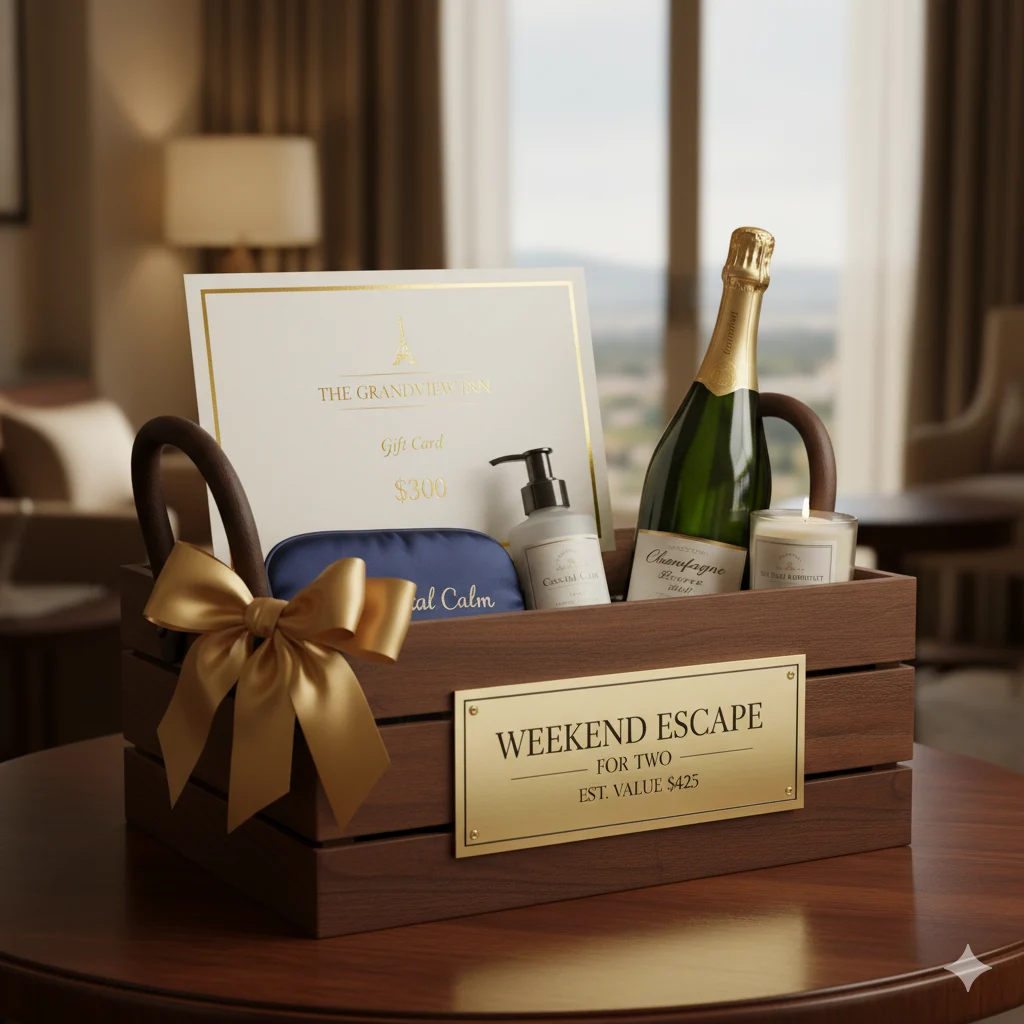
Weekend Escape for Two
What's Inside
- One-night boutique hotel stay (donated or gift certificate, $200–$300 value)
- Bottle of Champagne or premium sparkling wine
- Luxury travel amenities (silk sleep mask, premium toiletries)
- Premium candle and artisan chocolates
- Restaurant gift card for dinner ($75) from near the hotel
The highest-potential-revenue luxury basket at gala and high-income audience events. Boutique hotels often donate stays for charity auction and raffle events — the marketing value to them is genuine. The overnight stay picture ("a real escape") produces a stronger aspiration than any product basket can match.
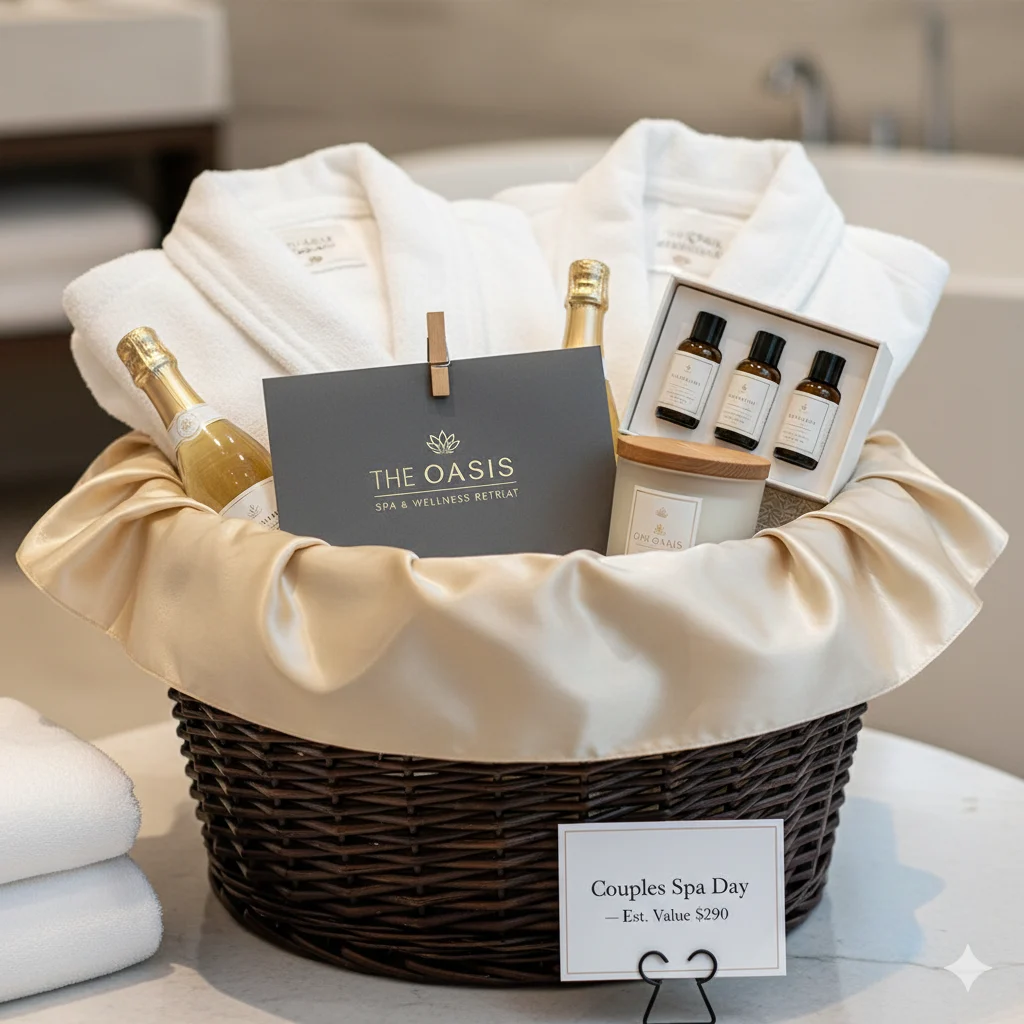
Couples Spa Day
What's Inside
- $150–$200 couples massage or spa package gift certificate
- Two premium robes or luxury towel set
- Champagne splits (two mini bottles)
- Luxury bath oil or soak set
- Premium candle in a spa-appropriate scent
The most consistently requested luxury basket across event types. The couples spa experience picture — a real appointment, not a product haul — creates joint purchase decisions from every couple in the room. Works at school events, galas, and everything between.
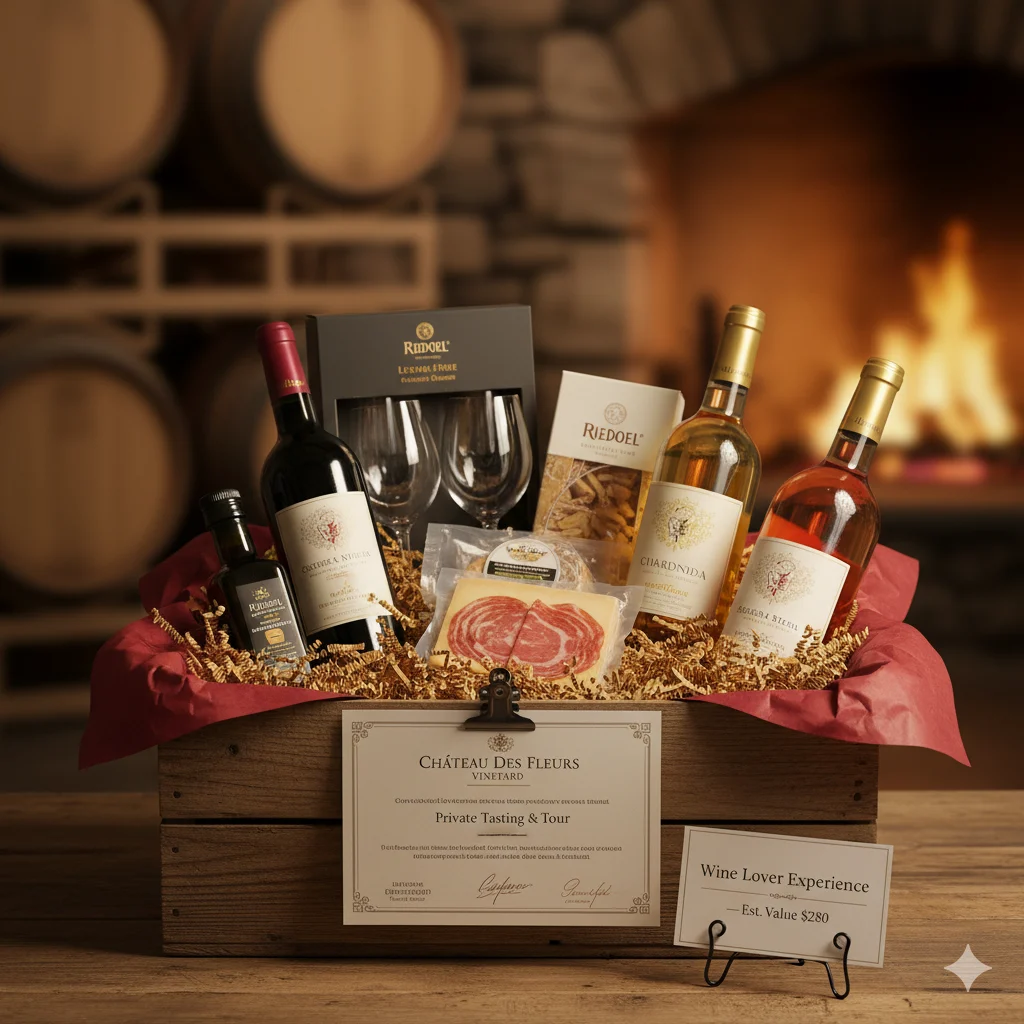
Wine Lover's Experience
What's Inside
- $100–$150 local winery tasting or wine experience gift certificate
- Three premium wine bottles (curated by a local sommelier or wine shop)
- Premium wine glass set (Riedel or equivalent, boxed)
- Artisan cheese board set (sealed items only)
- Premium olive oil and specialty crackers
Works exceptionally well at events with a wine-forward adult audience. The winery experience certificate creates a specific outing picture. Three bottles of wine plus the experience picture communicates genuine luxury without requiring the buyer to recognize obscure brands.
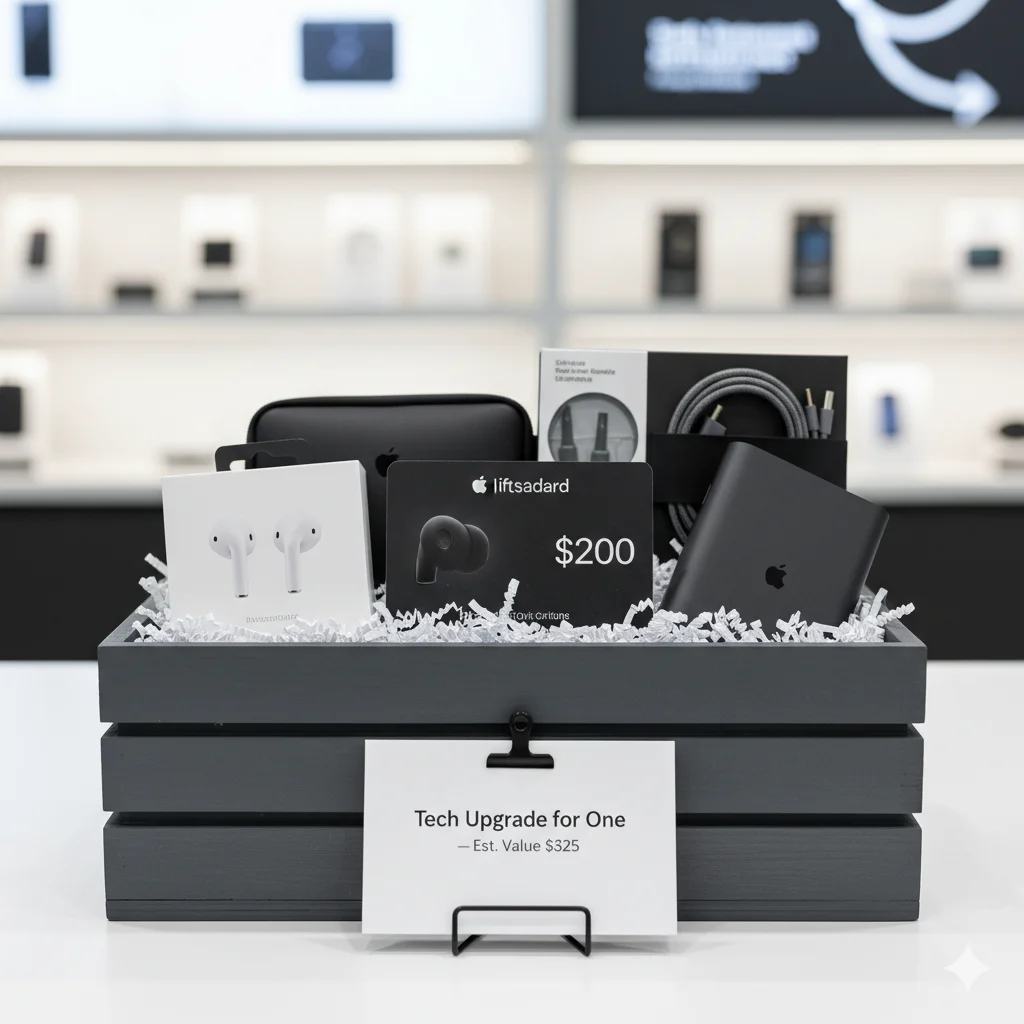
Tech Upgrade for One
What's Inside
- $200 Best Buy or Apple Store gift card
- Premium wireless earbuds or headphones ($80–$120 tier)
- High-capacity portable charger
- Premium cable organizer and travel tech kit
- Screen cleaning kit and accessories bundle
The strongest luxury basket for mixed gender events and events with significant male attendance where experience-based baskets produce lower male engagement. The gift card anchor ($200 to a recognizable retailer) is verifiable from the label. Works at civic events, fire department raffles, and gala events with diverse demographics.
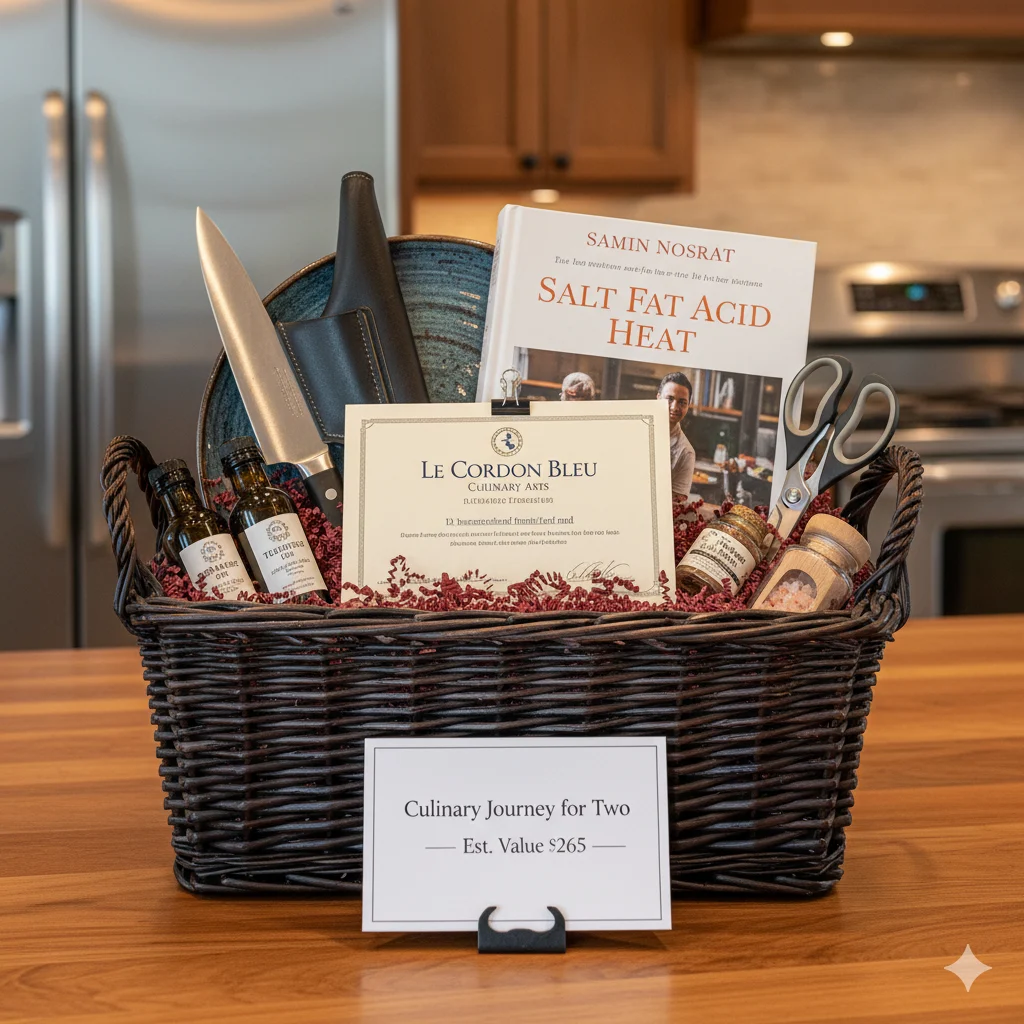
Culinary Journey for Two
What's Inside
- $100–$150 cooking class gift certificate for two (local culinary school or restaurant)
- Premium cookbook from a recognized chef or local restaurant
- High-quality chef's knife (6–8 inch, quality brand)
- Truffle oil, specialty salts, and spice set
- Premium cutting board or ceramic serving dish
Appeals strongly to food-interested couples and individuals who would never buy themselves a cooking class. The class experience is dateable and shareable, which creates the joint purchase dynamic. Local culinary schools and restaurants offering classes are generally receptive to donation requests.
Pricing Strategy — The 5-Ticket Entry Signal
Variable entry costs are most important for luxury baskets. The 5-ticket multiplier signals "this is the premium prize" without creating a separate ticket price. From the standard $25 bundle, 5 tickets per entry = $12.50 effective entry cost — a clear signal that this basket is in a different tier, accessible to anyone with the 25-ticket bundle ($50) or two $25 bundles.
| Basket Value | Tickets / Entry | Entry Cost ($25 bundle) | Entry Cost ($50 bundle) |
|---|---|---|---|
| Standard ($80–$120) | 1 ticket | $2.50 | $2.00 |
| Mid-premium ($120–$200) | 3 tickets | $7.50 | $6.00 |
| Luxury ($200–$350) ★ | 5 tickets | $12.50 | $10.00 |
| Ultra-premium ($350+) | 5–10 tickets | $12.50–$25.00 | $10.00–$20.00 |
The 5-ticket multiplier is the most important visual signal in the lineup. When buyers see "5 tickets per entry" on one basket and "1 ticket per entry" on others, they immediately identify the premium tier without needing to read the estimated values. This recognition shortcut is part of why the concentration effect works — buyers allocate to the clearly-signaled premium basket because the signal is visible from across the table.
Display Strategy — Looking Like the Prize of the Event
01
Separate physical space
The luxury basket should not be in the standard lineup. Give it its own table, riser, or display position that communicates "this is different" before anyone reads a label.
02
Dollar amount readable at 6 feet
The gift card or experience certificate value must be readable from across the table. Use a bold printed insert if the card itself doesn't show it clearly. No buyer should have to lean in to see what the prize is worth.
03
Premium container — not standard wicker
A wooden crate with leather handles, a leather-sided box, or a premium gift basket stands visually apart. Standard wicker communicates standard value regardless of what's inside.
04
Volunteer specifically pitches it
Have one volunteer whose job is to direct buyers who have already purchased toward the luxury basket: "Have you seen the [basket]? It has a $250 dinner voucher to [restaurant]. That's the one most people are putting their extra tickets toward."
Free Download
Raffle Planning Kit
Variable entry cost pricing guide, pre-launch checklist, bundle pricing structure, and the per-person revenue diagnostic — all in one 13-page PDF.
Download Free →What's inside
✓ Variable entry cost guide ✓ Bundle pricing structure ✓ Pre-launch checklist ✓ Revenue diagnostic ✓ Promo calendarFrequently Asked Questions
What makes a luxury raffle basket worth the premium entry cost?
Visible, verifiable value and an experience anchor. The anchor gift card or experience certificate value must be readable from arm's length — the specific dollar amount, not just an estimated value label. The experience must be specific and local: "Tasting Menu for Two at [Restaurant]" creates competitive desire; "Premium Gourmet Collection" creates polite appreciation. Product-only luxury baskets consistently underperform experience-anchored luxury baskets, even when the product basket has higher total retail value.
How many luxury baskets should be in a raffle?
One, or at most two with clearly different appeals. One clear premium anchor concentrates tickets from buyers who want to maximize their chance at the best prize. Multiple premium baskets split that concentration across all of them, reducing ticket density in each. The ticket concentration effect — where buyers allocate more tickets to one clearly superior prize — requires a single identifiable premium anchor to work. See the concentration diagram above for the revenue math.
Do luxury baskets work at school and community events or only at galas?
They work at any event with meaningful disposable income in the audience. The calibration is the effective entry cost: at a school event with $25 bundles and 5-ticket-per-entry premium baskets, the entry cost is $12.50 — aspirational but accessible for parents who have already bought a bundle. At a gala, the premium basket can be $500+ and the entry cost reflects that. The principle is the same at every level: one clear premium anchor, visible value, specific experience.
How do you source a high-value anchor for a luxury basket?
Approach the most acclaimed local restaurant your audience recognizes for a tasting menu gift certificate — use the marketing pitch, not a charity pitch: "We have X families at an average income of $Y — a feature slot in our luxury basket puts your name in front of this specific audience as the top prize." Boutique hotels respond to the same pitch for one-night stays. Local spas with couples packages are typically receptive for the promotional value. The ask is easier than most organizers expect because the marketing value to the business is genuine.
What is the variable entry cost and how does it signal luxury?
Variable entry cost means different baskets require different numbers of tickets per entry — one ticket for a standard basket, three for a mid-premium build, five for a luxury build. At the standard $25 bundle (10 tickets), a 5-ticket entry means each entry costs $12.50 rather than $2.50 for a standard basket. That visible cost difference communicates premium tier instantly. See the pricing guide for the complete variable entry cost structure.
Related Pages
Variable entry costs and per-basket pools — built in