Sports Basket Raffle Ideas — Builds Every Fan Base Competes For

Local team identity · Signed item multiplier · Booster club proven · Game-night experience anchor

Sports Basket Raffle Ideas — Builds Every Fan Base Competes For

Generic sports merchandise produces generic ticket sales. Sports baskets that anchor on a local team experience — a signed item from the coach, game tickets, gear in the actual team colors — produce the most competitive ticket pools at booster clubs, school fundraisers, and community events. The audience already wants to win this one before they finish reading the label.

3–4×more tickets vs. generic sports merchandise
$0cost to add a signed coach item — highest-value addition
3 ticketsper entry for premium builds with signed items or event tickets
35–45%in-person ask success rate for local venue donations
The short version

Sports baskets outperform their stated value when they are built around local team identity, not generic sports merchandise. A signed item from the actual coach, tickets to the actual team's next game, or gear in the actual team colors creates an immediate, specific want in families who are already invested in that team. The experience name should promise the night out: “Season Opener for the Whole Family” sells itself to any booster club parent without needing a volunteer pitch.

Why Local Team Identity Beats Generic Sports Merchandise

Here is the specific mechanism: a family at a youth soccer booster raffle already identifies as a soccer family. They attend games, they wash the uniform, they drive to tournaments. When they see a basket built around their team — the actual club colors, a signed item from the coach their kid sees every week, a “sideline pass” experience that directly involves their child — the want is immediate and personal. It is not “that would be nice.” It is “that is ours.”

Generic sports merchandise produces none of this. A Nike hat, a branded sports tumbler, and a gift card to Dick’s Sporting Goods creates no identity connection. Those items could belong to anyone. The local team basket belongs specifically to families in that room, which is exactly why it out-tickets everything else at booster events.

The signed coach item is the single highest-leverage addition available. It costs nothing to produce — a jersey, a ball, a photograph signed by the coaching staff takes ten minutes to arrange — and creates an item that cannot be purchased anywhere at any price. Parents who respect and like their child’s coach will compete hard for that signature. Put it front-center at eye level and watch the ticket bucket fill.

From the Raffle Hotline · Youth Soccer Club · “The Sports Basket Never Does Well”
“We always put together a sports basket. Nice stuff — branded water bottle, gift card to a sporting goods store, some snacks. It always underperforms. I think our families just aren’t into the raffle thing.”
Us: “Tell me about the basket. Was there anything from the actual club in it?”
Caller: “No, just general sports stuff. We figured sports is sports.”
Us: “That’s the problem. You’re at a soccer club event selling a basket to soccer families, and the basket has nothing to do with soccer or their club. The families in that room are not ‘general sports fans’ — they are specifically your-club fans. A signed ball from the head coach, the club jersey, tickets to the end-of-season showcase — those items create immediate desire because they connect to something these families already care about deeply.”
Caller: “We can get the coach to sign a ball. That’s easy.”
Us: “Do that. Put it front and center. Name the basket after the club and the season. Watch what happens to that ticket bucket.”
Following year: signed ball from both coaches, club jersey, “[Club Name] Season Opener Pack” with snacks and a family tailgate blanket. The basket that “never does well” generated the most tickets of any basket at the event. Same families. Same raffle. Different basket.
Your audience does not want generic sports merchandise. They want their team, their coach, their club. Make the basket local and specific and it sells itself.

The 6 Sports Basket Builds That Consistently Generate Tickets
Top Performer

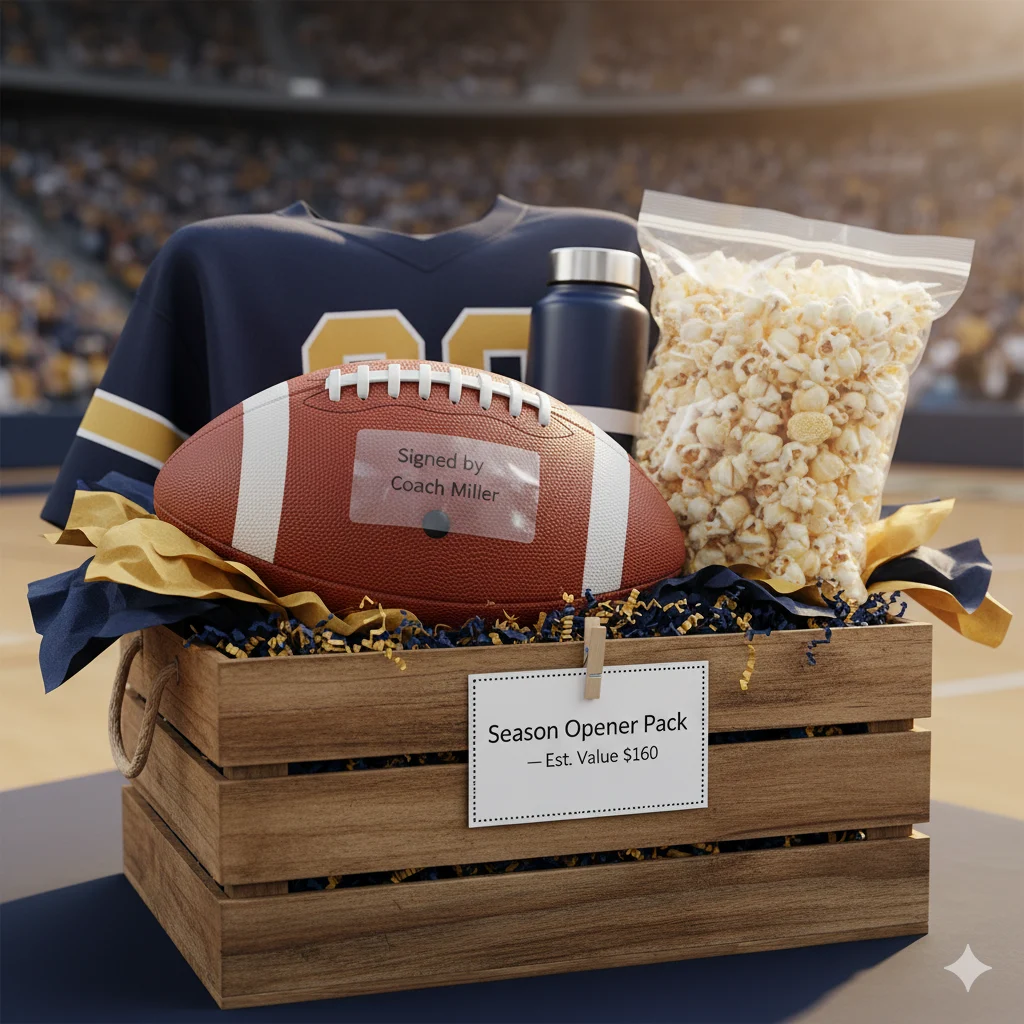
Season Opener Pack

What’s Inside
  • Signed item from the coach (ball, jersey, or photo)
  • Club team jersey or hoodie
  • Tickets to an upcoming club event or showcase
  • Stadium-style snack pack (popcorn, candy, drinks)
  • Team water bottle or insulated tumbler
  • Blanket in team colors
Est. Value $140–$170 3 tickets / entry
The signed coach item is what makes this basket irreplaceable. Parents who respect the coach compete hard for it. It costs nothing to produce and creates the highest-value anchor available at a booster event.
🏟️
Family Favorite

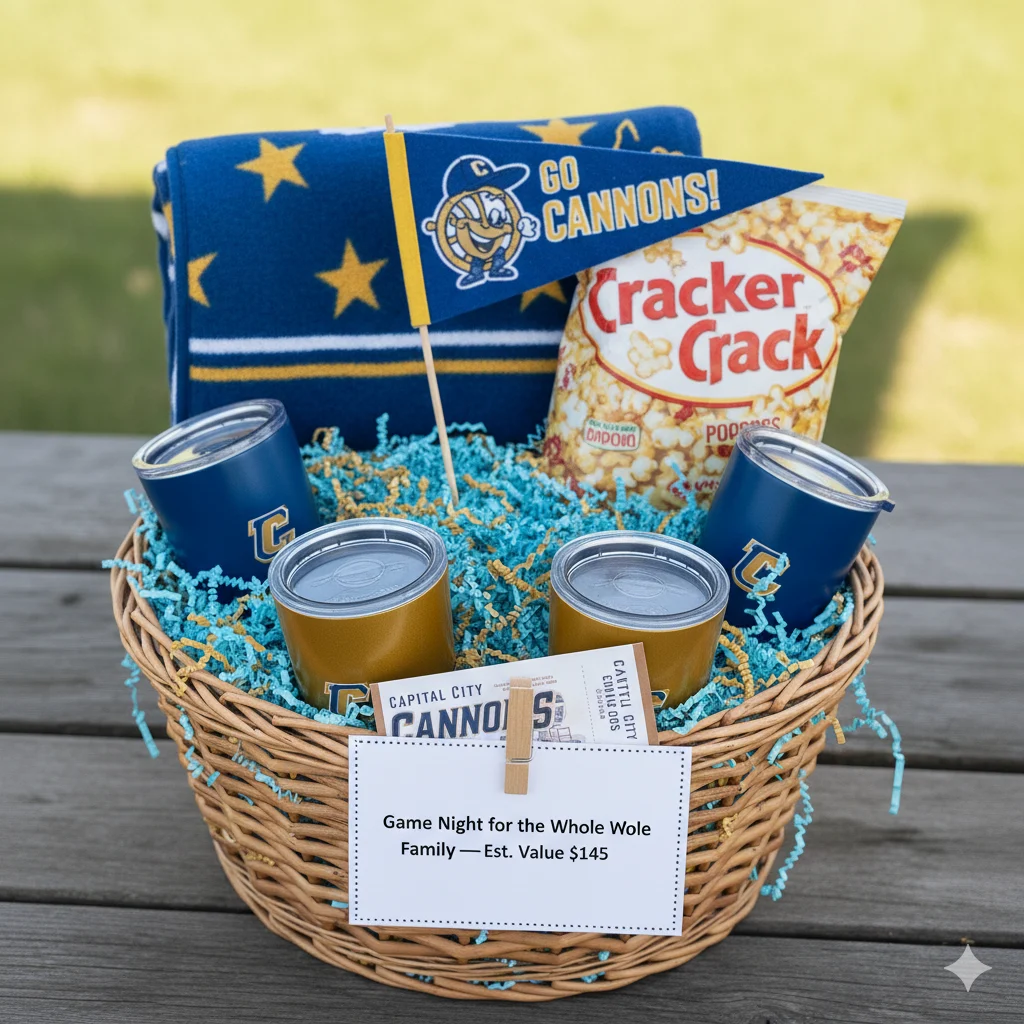
Game Night for the Whole Family

What’s Inside
  • 4 tickets to a local minor league or college game
  • Stadium blanket
  • Cracker Jacks / popcorn / game-day snacks (4-person set)
  • Four insulated tumblers or cups
  • Local team pennant or foam finger
Est. Value $120–$150 3 tickets / entry
Works at any event type, not just sports events. Minor league teams typically donate ticket packages readily — the ask is a marketing conversation, not a charity request. Four-person format means every family in the room can picture themselves using it.

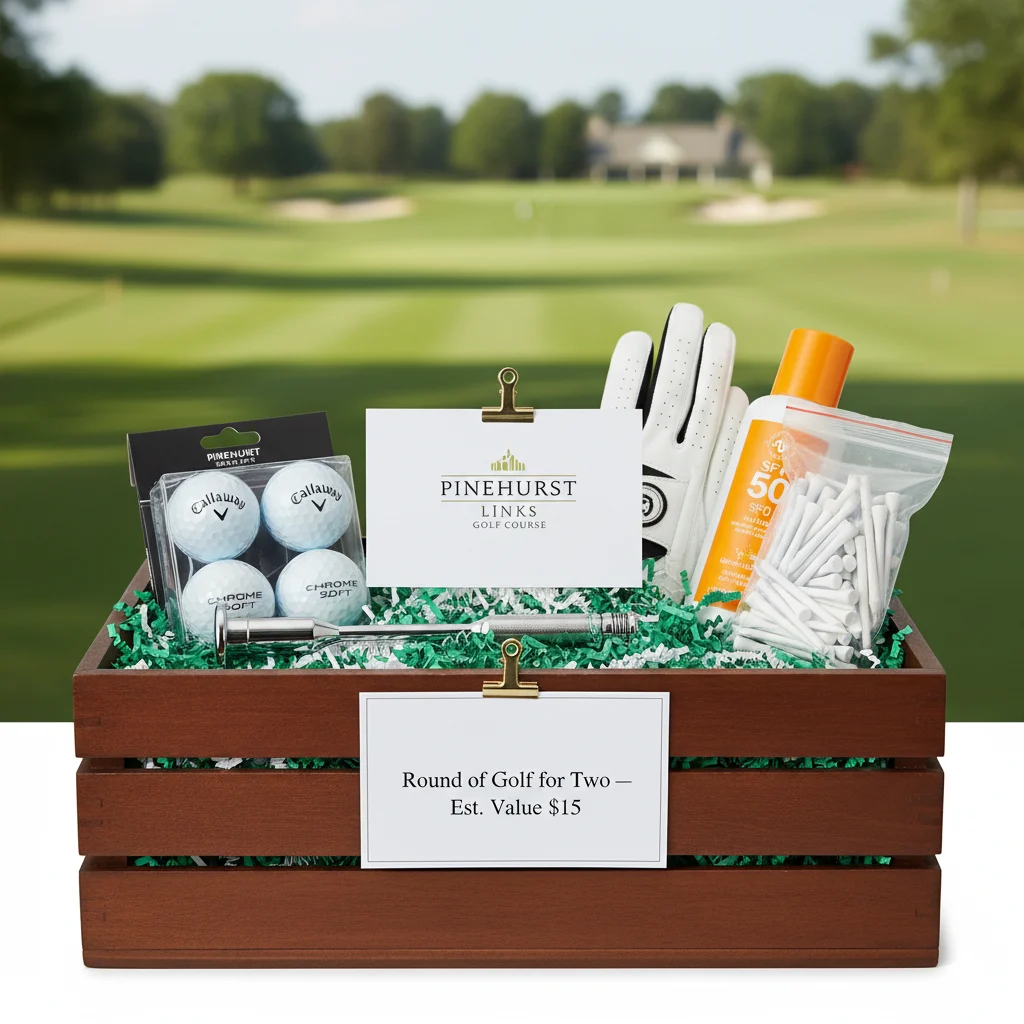
Round of Golf for Two

What’s Inside
  • $75–$100 local golf course gift card (round of golf for two)
  • Two sleeves of premium golf balls
  • Golf glove (men’s medium or universal)
  • Tees, divot tool, ball markers
  • Sunscreen and a golf towel
Est. Value $140–$165 3 tickets / entry
Travels well to any adult audience — not just golfers want to learn or try. The local course gift card is the experience anchor. Most local courses are happy to donate for the promotional exposure. Works especially well at church, gala, and civic events.
🎯

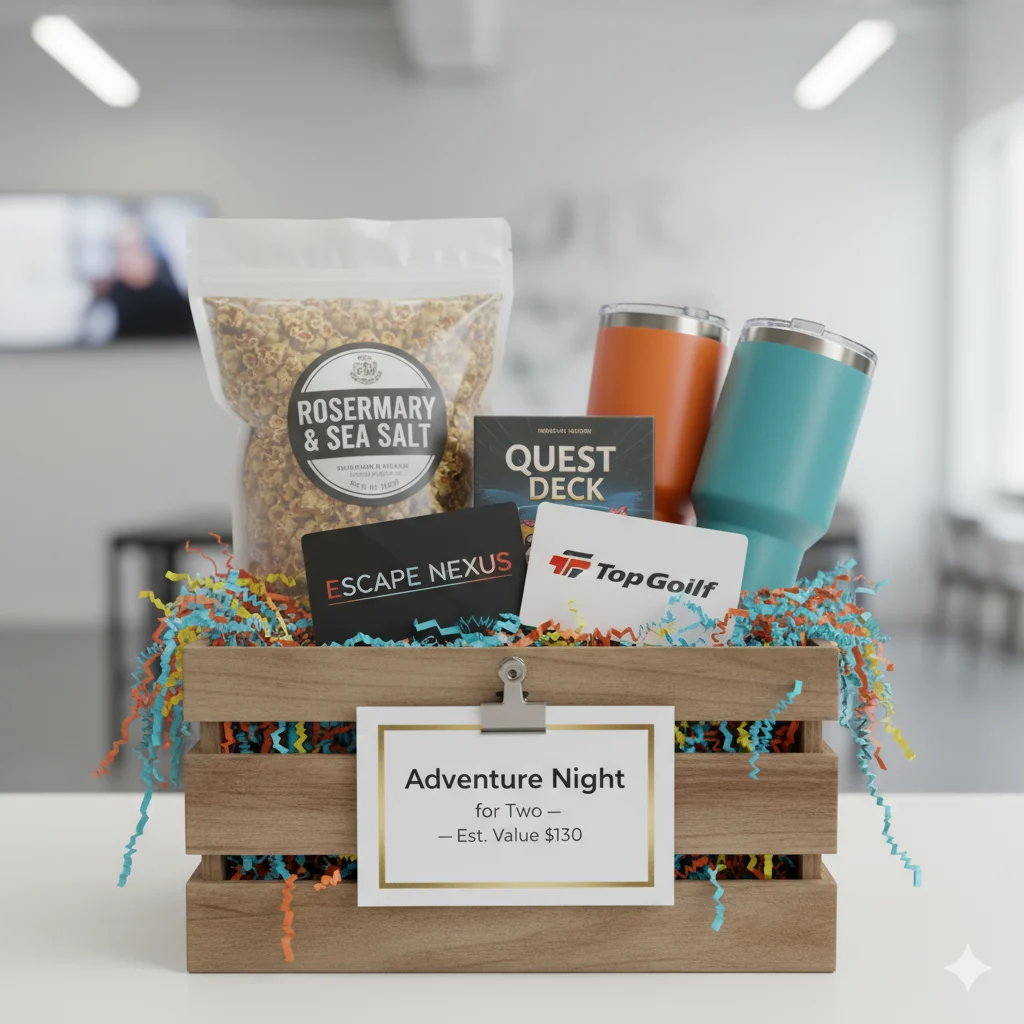
Adventure Night for Two

What’s Inside
  • $50–$75 experience gift card (escape room, Top Golf, batting cages, bowling)
  • Gourmet snack pack for the outing
  • Two insulated tumblers
  • A quick card or dice game
  • Activity gift card (movie, dessert, or coffee) for after
Est. Value $110–$135 2 tickets / entry
Appeals strongly to younger adults and couples looking for something active over a quiet dinner. Escape room gift cards are especially easy to source — most escape rooms see the donation as direct marketing to families who become paying customers.
🏅

Future Champion Kit

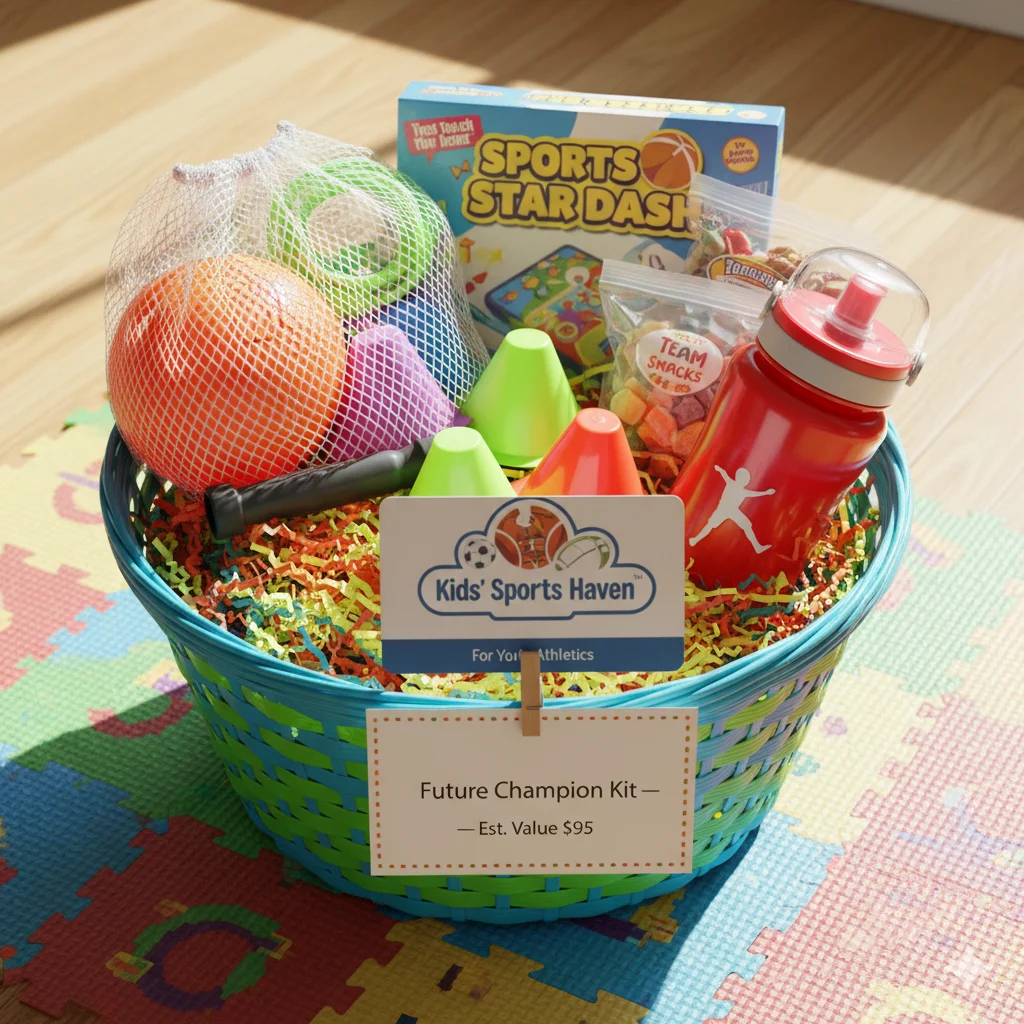
What’s Inside
  • $50 youth sporting goods store gift card
  • Sport-specific training equipment (cones, resistance band, agility ladder)
  • Sports-themed board game or card game
  • Team snack pack (sports drinks, protein bars, trail mix)
  • Water bottle with name label space
Est. Value $85–$110 2 tickets / entry
Designed for events where parents are buying for their kids. The sport-specific equipment signals that you know your audience. Calibrate to the sport of the event — soccer cones for a soccer event, a basketball for a basketball event. Local sport identity increases ticket density even here.
🌭
Crowd-Pleaser

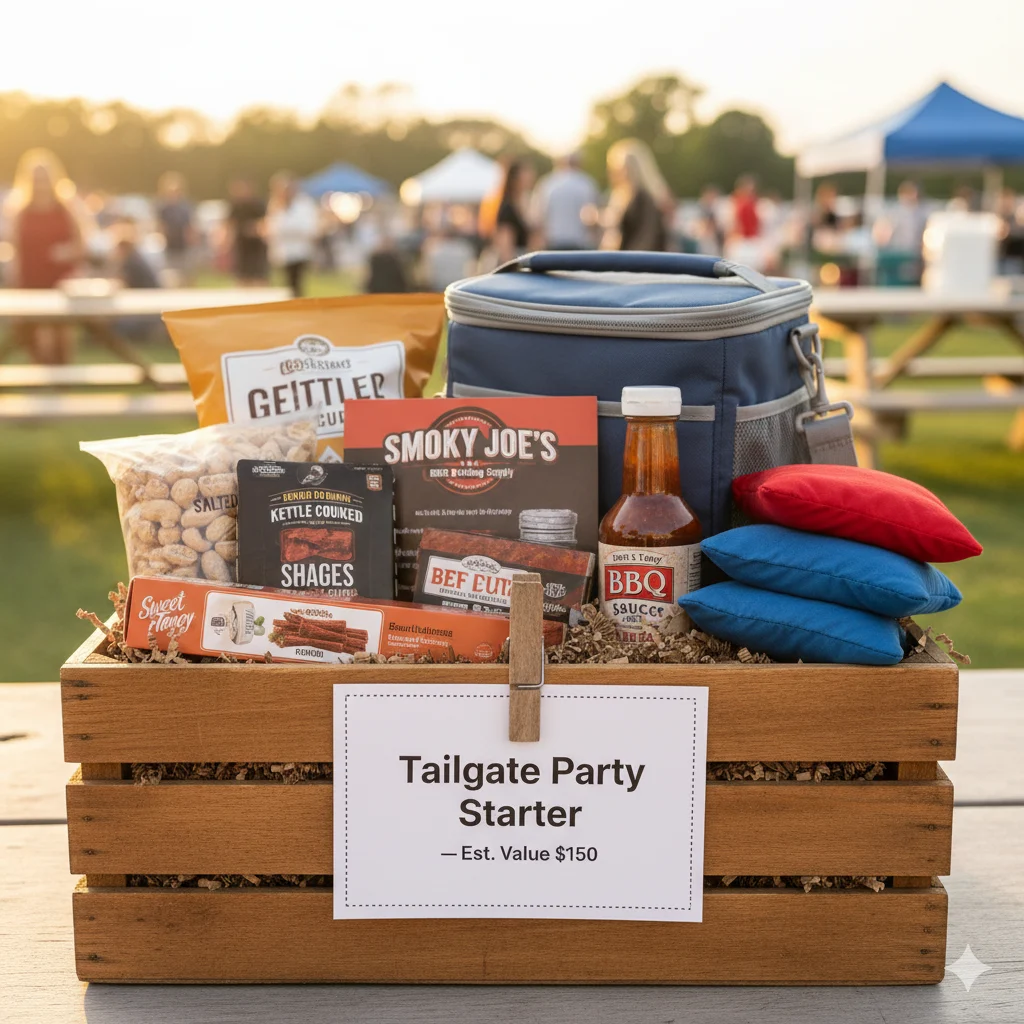
Tailgate Party Starter

What’s Inside
  • $75 restaurant or grilling store gift card
  • Portable insulated cooler bag
  • Gourmet BBQ snack assortment (jerky, chips, sauces)
  • Cornhole bean bags or lawn game starter set
  • Stadium blanket and disposable cups set
Est. Value $130–$155 3 tickets / entry
Appeals to a broad adult audience beyond dedicated sports fans — anyone who hosts gatherings or attends outdoor events wants this. The “party starter” framing signals that it produces a shareable experience, not just personal use, which increases its perceived value and couple-decision appeal.

How to Name Sports Baskets — Team Identity First

The naming principle is the same across all basket themes: name the experience the basket promises, not the items inside. For sports baskets at team events, go one step further — name the team identity directly.

Experience names outperform item names every time
✗ Generic
Sports Fan Basket
Could be anyone's. Creates no specific desire at a club-specific event.
✓ Local identity
[Club Name] Season Opener Pack
Belongs to this audience. The team name in the basket name closes the sale before the buyer reads an item.
✗ Items-first
Golf Balls and Accessories Basket
Describes what's in the bag. Buyer sees a collection, not an experience.
✓ Experience-first
Round of Golf for Two at [Local Course]
Promises a specific outing. Course name creates local recognition and desire.
✗ Vague
Sports Night Basket
Which sport? Which night? Ambiguity kills desire before it forms.
✓ Specific night
Game Night for the Whole Family — [Team Name]
Specific event, specific team, specific audience. Every family in the room pictures going.

What to Include and What to Leave Out

✓ Include These
  • Signed item from a coach or local athlete — irreplaceable, costs nothing, highest-value anchor
  • Local team colors in tissue, ribbon, and fill — visual identity signal before the buyer reads anything
  • Experience tickets or gift card to a local venue — creates a specific, dateable outing
  • Gear for the specific sport of the event — a soccer ball at a soccer event, not a generic sports ball
  • Snack pack in the tailgate format — popcorn, jerky, sports drinks signal game-day experience
  • Printed experience name label with Est. Value — visible at arm’s length before buyer stops walking
✗ Avoid These
  • Generic licensed team merchandise (NFL/NBA/MLB) — creates fans and non-fans; non-fans are excluded
  • Sporting goods gift cards without an experience anchor — “buy more equipment” is not an experience
  • Multiple sports mixed in one basket — dilutes the identity signal; stick to one sport
  • Heavily branded corporate sports merchandise — Under Armour hat + Nike shirt = sales catalog, not raffle basket
  • Equipment only, no experience — resistance bands and cones without a destination feel like a workout obligation

Sourcing the Anchor Items — Coaches, Venues, and the Right Ask

The signed coach item requires only an ask — it is not a donation request. Frame it to the coach as a contribution to the event that celebrates the team: “We’re building a basket to celebrate the club at this year’s fundraiser. Would you be willing to sign a ball? It’ll be the centerpiece of our sports basket.” Every coach we have ever heard about in twenty-plus years of raffle calls has said yes. It is the easiest anchor item in fundraising.

The local venue donation ask — word for word
“Hi — I’m [name] from [organization]. We’re running a fundraiser for [cause] and we’re building a sports basket featuring a ‘Game Night for the Whole Family’ experience. We’d love to include tickets to one of your upcoming games as the anchor. That means your name is front-center on the basket, in all our promotional posts, and in our email to [X] families. Would you be willing to donate four tickets? We can offer you recognition in the event program and on our social channels.”
Minor league baseball teams, local college athletic departments, and indoor sports venues (arena football, hockey) respond especially well to this pitch because four donated tickets have minimal cost to them and produce direct local marketing. Go in person or call the community relations department directly — not the general box office. Response rate from direct contact: 40–55%.
From the Raffle Hotline · Booster Club · “We Can’t Get the Sports Stuff Donated”
“We tried asking local businesses for sports items. Nobody wanted to donate equipment or gear. It felt like nobody cared about supporting us.”
Us: “What specifically were you asking for?”
Caller: “Sports equipment, gear, that kind of thing. We emailed local sporting goods stores.”
Us: “Equipment is a hard ask because the store sees it as product, not marketing. Flip the ask: instead of asking for equipment, ask for an experience. Ask the local golf course for two rounds of golf, not clubs. Ask the minor league team for four tickets, not a jersey. Experiences are easier to donate because the marginal cost to the donor is low — four seats at a game that isn’t sold out costs the team almost nothing. And experiences make dramatically better basket anchors than equipment.”
They pivoted to experience asks: two rounds of golf from the local municipal course, four tickets from the local minor league team, a one-month membership from a local fitness studio. Three asks, three yeses. The sports basket that never performed became the top-grossing basket at their next event.
Ask for experiences, not equipment. Experiences have low marginal cost to the donor and high perceived value to the buyer. A round of golf costs a course almost nothing to donate. Four baseball tickets cost a team nothing if the seats would otherwise be empty. The ask is easier and the basket is better.

Sports Baskets and the Leaderboard Multiplier

Sports events have a structural advantage over other raffle formats: the audience already has a competitive culture. Youth sports families understand leaderboards, rankings, and individual performance visibility. That culture, when directed at ticket selling, produces the largest activation multiplier of any audience type.

Assigning individual selling goals to players — each player has their own name, their own link, their own number — and posting a weekly leaderboard converts the existing competitive energy into ticket revenue. Players compete. Parents compete on behalf of their players. The family that is close to the top does one more ask to close the gap. This is not manufactured motivation. It is the same motivation that already exists in the sport, redirected for ten minutes per week.

Average per-player selling with a visible leaderboard vs. passive “tell your network” promotion at youth sports events.

Without a leaderboard: 10–15 tickets per player on average. With individual goals and a public leaderboard updated weekly: 40–80 tickets per player. Same families, same network, same two-week window. The competitive structure does the work. See the full seller activation guide for the leaderboard setup.

Free Download
Raffle Planning Kit

Seller activation tracker with leaderboard template, bundle pricing guide, and the 7-touchpoint promotion calendar — all in one 13-page printable PDF.

Download Free →

What’s inside

✓ Seller leaderboard tracker
✓ Bundle pricing guide
✓ 7-touchpoint calendar
✓ Pre-launch checklist
✓ Revenue diagnostic

Frequently Asked Questions

What should go in a sports raffle basket?
The anchor is a local team experience: a signed item from the coach, game tickets for a local team, or a gift card to a local sports venue (golf course, bowling, Top Golf). Supporting items fill out the game-day picture: team colors in the tissue, stadium snacks, a blanket or water bottle. Generic sports merchandise — branded gear without team identity — underperforms because it creates no specific desire at an audience that is already team-specific.
How do you get a coach to sign something for a raffle basket?
Ask directly and frame it as a club celebration, not a charity request: “We’re building a basket to celebrate the team at this year’s fundraiser — would you be willing to sign a ball?” In twenty-plus years of raffle experience, coaches consistently say yes to this ask. It takes ten minutes for the coach and creates the highest-value anchor item available at any booster event. Put it front-center on the basket at eye level so it’s the first thing buyers see.
Do sports baskets work at non-sports events like church dinners or galas?
Yes, with the right build. At non-sports events, the experience anchor replaces team identity: a round of golf for two, a family game-night outing, or a local minor league game night works because the activity is universally relatable. Avoid licensed team merchandise (NFL/NBA/MLB) at events where the audience has mixed team loyalties — it creates fans and excluded non-fans. See the FAQ above on building without team merchandise for the specific approaches that travel well across event types.
How do sports baskets perform online vs. in-person?
Sports baskets perform well online when the signed item is photographed prominently — the signature and the name visible, clearly readable on a phone. That image is highly shareable among families who know the coach. The basket spotlight post for the “Signed by Coach [Name]” basket should lead with that photograph, the coach’s name in the caption, and the entry link. Parents forward it directly to other team families, reaching buyers outside your direct promotion reach. See the online raffle guide for the three-photo standard.
How many sports baskets should be in a raffle lineup?
At a single-sport booster event: one strong sports build plus a complementary non-sports basket (family game night, date night, food) covers the audience well without oversaturating the sports theme. At a multi-sport school event: one per sport represented in the audience, or one “local sports fan” build that incorporates multiple local teams without committing to a single sport identity. More than two sports-themed baskets at any single event risks splitting ticket density without adding new buyer motivations.

Related Pages

Built for the competitive selling culture sports events already have

Per-basket pools. Seller tracking. Bundle pricing built in.

“Chance2Win includes the seller tracking and leaderboard tools that make sports event activation work. Individual seller links, visible ticket counts, per-basket allocation. The platform matches the competitive structure your audience already responds to.” — The Chance2Win Team