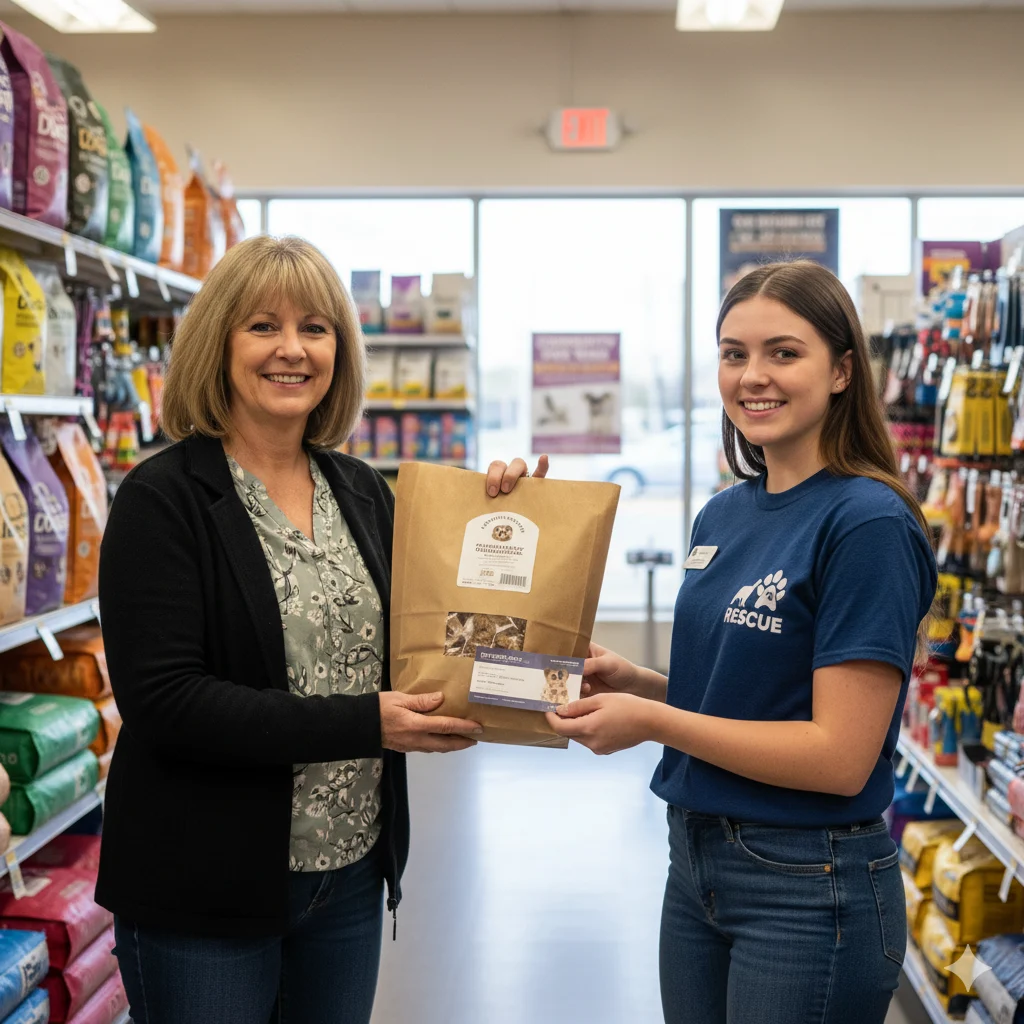
Quick AnswerPet baskets are one of the most emotionally driven raffle categories — which means the highest potential revenue and the most room for error. People don't apply normal spending hesitation to purchases for their pets. "It's for my dog" is sufficient justification for nearly any amount. At events where 40–60% of attendees own pets, a well-built pet basket regularly ranks in the top three revenue earners. The two things that kill pet baskets: building for multiple animals at once (dog + cat + bird = no one's basket), and using cheap items that signal low value to pet owners who already spend significantly on their animals.
The emotional spending advantage
Why Pet Baskets Consistently Overperform
Most raffle categories require supporters to evaluate a prize for themselves — "Do I want this? Will I use it? Is it worth the ticket price?" Pet baskets bypass this entirely. A pet owner doesn't evaluate a dog basket for themselves. They evaluate it for their dog. And when the beneficiary is a pet, normal spending resistance disappears.
This is not sentiment — it's buying behavior data. The American Pet Products Association reports that US pet owners spend an average of $1,380 per year on their dogs. These are not reluctant spenders. They are habitual, emotionally motivated buyers who are already pre-sold on investing in their pets. When a raffle basket is clearly built for their specific animal, that pre-existing spending behavior activates immediately.
The result at raffle events: pet basket buyers tend to allocate more tickets, come back to add more tickets multiple times, and talk to other pet owners at the event about the basket — creating social purchasing behavior that compounds ticket revenue beyond what individual allocation predicts.
The single most important insight on this page
The Specificity Rule: "Dog Lover Basket" Beats "Pet Basket" Every Time
This is not a minor optimization. In our event data, a basket labeled "Dog Lover Basket" with dog-specific items consistently generates two to three times the ticket revenue of a basket labeled "Pet Basket" with mixed animal items of equivalent total value.
The reason is not intuitive until you think like a buyer. A dog owner looking at a basket with dog toys, cat toys, and bird supplies has to answer a question: "How much of this can I actually use?" If the answer is "maybe half," ticket allocation drops. If they see a basket labeled "Ultimate Dog Lover Basket" with premium dog treats, a dog toy assortment, and a pet store gift card, the answer is "all of it." No hesitation. Full allocation.
Generic — Lower Revenue
~$200–$350
"Pet Basket" with mixed dog + cat + bird items. Dog owners aren't sure how much applies to them. Cat owners aren't sure either. Everyone hesitates. No one allocates heavily.
Specific — Higher Revenue
~$500–$1,200
"Ultimate Dog Lover Basket" — 100% dog items. Dog owners see it and immediately know it is entirely for them. No hesitation. High allocation. Repeat buyers throughout the event.
The right way to run bothWhen your audience has significant numbers of both dog and cat owners, run two separate baskets — not one mixed basket. A "Dog Lover Basket" and a "Cat Lover Basket" run as separate prizes will together generate more total revenue than one "Pet Basket" combining both. Each basket captures its audience completely. The mixed basket captures neither audience fully.
If you can only run one, pick the largest pet-owning segment in your specific audience. At most US community events, that's dog owners. At events with a younger urban audience or older attendees, cat ownership is often higher. Know your crowd before you build.
From the Raffle Hotline · Community Fundraiser · The Clearance Bin
"We made a pet basket but it's barely getting any tickets."
A community organization called frustrated. They had assembled a pet basket and displayed it prominently. Other baskets nearby were doing fine. The pet basket had attracted almost no tickets after an hour.
We asked what was inside.
Caller: "Dollar store toys, some random treat bags we got donated, a couple of accessories."
Support: "Is there a gift card or anything that anchors the value?"
Caller: "No — we figured pet owners would just be happy to win anything for their pet."
Support: "Pet owners spend $1,000+ a year on their animals. They know the difference between a $5 dollar store toy and a $15 quality toy. A clearance bin basket tells them the basket isn't worth competing for. You haven't built a prize — you've built a bag of items you got for free."
They rebuilt it the following year: a $40 pet store gift card, two quality toys, a bag of premium treats, and a pet-specific bandana. Presented cleanly with a printed "Dog Lover Basket" label. Ticket revenue was over $600 — from almost nothing the year before.
The lesson: pet owners are not grateful for anything. They are experienced buyers with standards formed by years of intentional pet spending. A cheap basket signals cheap — and emotionally motivated buyers will not compete hard for something that doesn't match the value they already place on their pet.
From the Raffle Hotline · School PTA · The Dog + Cat + Bird Problem
"Our pet basket has a little something for everyone — but no one is buying."
A PTA called about their annual fundraiser. They had carefully included items for dogs, cats, and even a bird toy "so no pet owner would feel left out." The basket looked full and varied. Tickets were barely moving.
Caller: "We wanted to make sure everyone could use it."
Support: "How much of this basket can a dog owner use?"
Caller: "...maybe half?"
Support: "Right. And a cat owner can use maybe a third. And a bird owner can use one toy. Nobody feels like this is entirely for them — so nobody allocates heavily. By trying to appeal to everyone, you've appealed to no one completely."
Caller: "So we should have two baskets?"
Support: "Yes. A Dog Lover Basket and a Cat Lover Basket. Two smaller baskets will together earn more than one large mixed basket. Specificity sells. Confusion doesn't."
The next year: two separate baskets. Dog Lover ($65 build) earned $540. Cat Lover ($55 build) earned $420. Combined: $960. Mixed basket the year before: $280.
Specificity is not exclusion — it is focus. A dog owner walking up to a basket clearly labeled "Dog Lover Basket" with 100% dog items doesn't wonder if they'll use it. They know. That certainty is what drives ticket allocation. Diluting specificity to "include everyone" ends up including no one completely.
From the Raffle Hotline · Animal Shelter Fundraiser · The Invisible Raffle
"Our pet basket is great — but tickets just aren't moving."
An animal shelter called after a fundraiser that underperformed despite what they described as a genuinely high-quality pet basket. Well-built, well-presented. But ticket sales were slow across the board.
Caller: "We promoted it on our website and sent one email."
Support: "How many people opened the email?"
Caller: "I don't know. Maybe a few hundred?"
Support: "The basket is only part of the equation. A great pet basket with no visibility earns the same as a bad pet basket — nothing. Your audience of pet owners is literally the most engaged social media audience in existence. Photos of pet baskets get shared, liked, and commented on at rates most other content never achieves. One good photo of your dog basket on your shelter's Instagram should have gotten shared by every pet owner in your network."
They ran the same basket the following month with a proper social media campaign — three posts over the week before the event, featuring individual items and a photo with one of the shelter's adoptable dogs in frame beside the basket. Ticket revenue increased by 4× with the same basket and the same audience size.
Pet basket content is uniquely shareable. A photo of a dog next to a dog raffle basket will travel farther on social media than almost any other fundraising content. This is not a category where you can rely on foot traffic alone — the promotion strategy is as important as the basket build.
Build it right the first time
The Anatomy of a High-Converting Pet Basket
⭐
The Anchor Item — This Is What Makes a Pet Owner Stop
Every high-performing pet basket has one item that immediately communicates value to a pet owner before they read anything else. That item is either a pet store gift card ($25–$75), a grooming certificate from a local groomer, or a visibly premium item like a quality pet bed or a well-known treat subscription. Without the anchor, the basket reads as a collection of items. With it, the basket reads as a complete investment in someone's pet. The anchor is not optional. It is the difference between a $250 basket and a $900 basket with the same supporting items.
Experience builders — items that complete the story the anchor starts. For a dog basket: quality treats (not generic grocery-store brands), 2–3 toys appropriate for the dog size you're targeting, a useful accessory (bandana, collapsible water bowl, leash clip). For a cat basket: a crinkle or feather toy, a bag of premium treats, a catnip item, a cozy small blanket. Every item should be something a pet owner would buy for their animal — not something that was donated because it was available.
The presentation layer — pet baskets have a specific presentation challenge: the anchor item must be unmistakably visible. A pet store gift card face-down in a pile of treats does nothing. Clipped vertically to the front of the basket at eye level, it does everything. The basket name — printed, not handwritten — should include the specific animal: "Ultimate Dog Lover Basket" not "Pet Gift Basket."
Proven builds from real events
5 Pet Basket Builds That Consistently Perform
Each build is built around a specific animal and a specific experience. ★ marks the anchor item. Every build includes the specific reason it performs — not just what's inside it.
 Top Performer
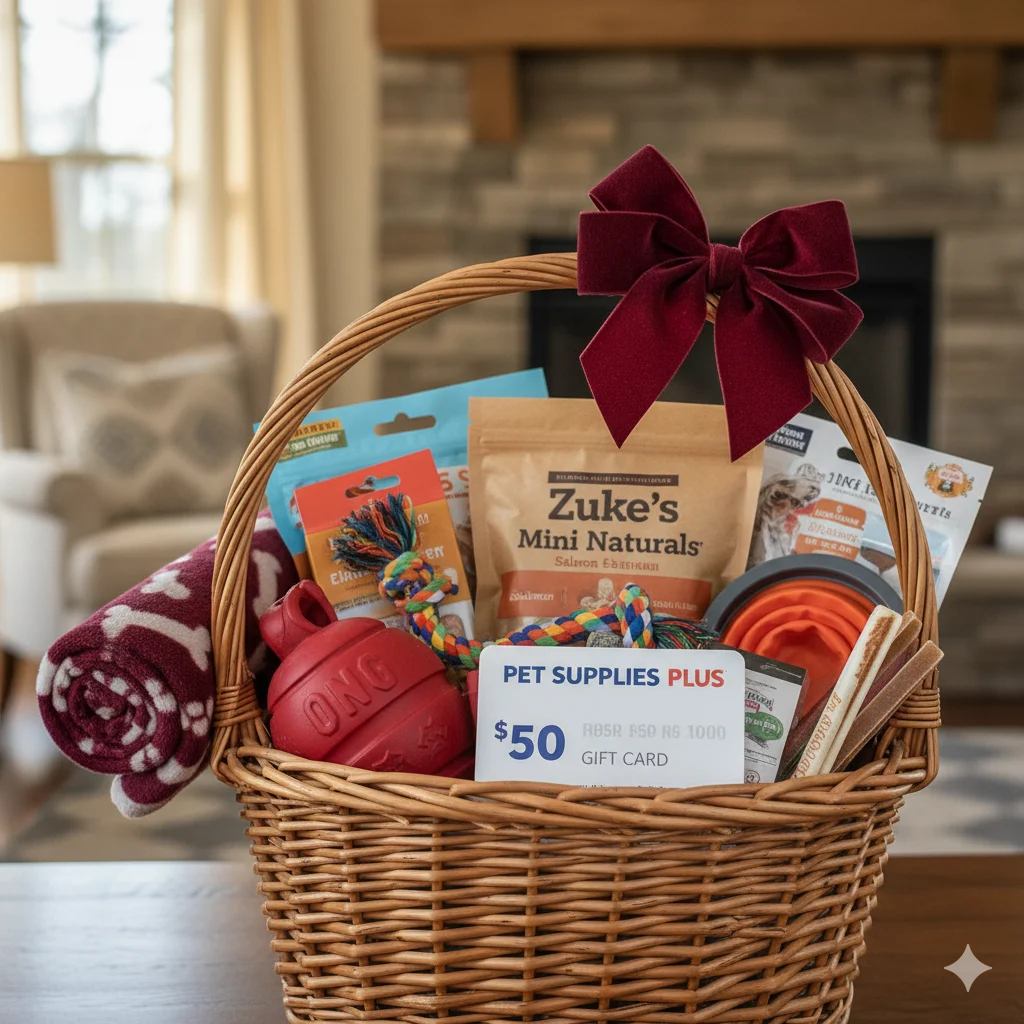
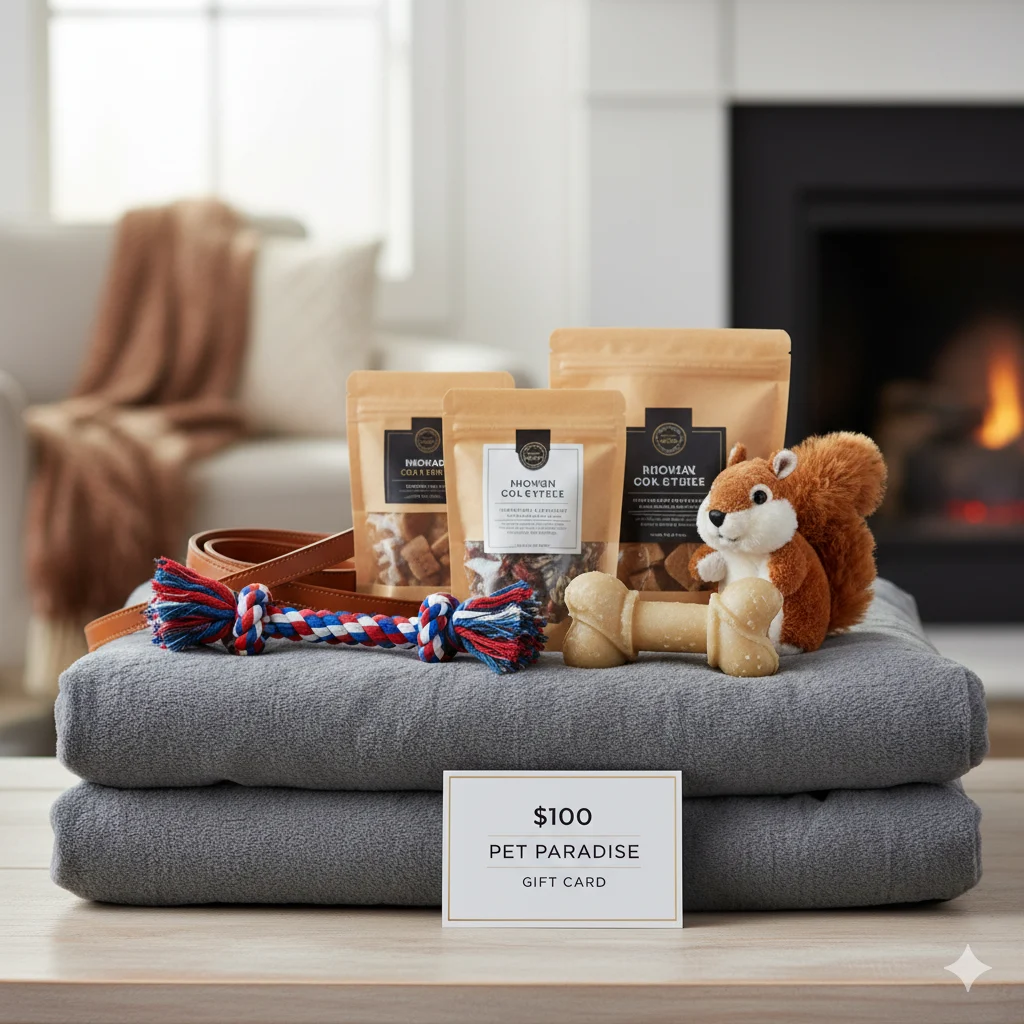
Ultimate Dog Lover Basket
What's Inside
- $50 local pet store or PetSmart gift card
- Quality dog toy (Kong, rope toy, or squeaky plush)
- Premium treat bag (Zuke's, Blue Buffalo, or similar brand)
- Dog bandana or collar accessory
- Collapsible travel water bowl or treat pouch
Typical Revenue
$500–$1,200
Why it works: This basket leaves no ambiguity for a dog owner. Every item is entirely for their dog. The gift card anchors real dollar value. The premium treat brand signals quality that a pet owner who spends $80/month on food immediately recognizes. Label it "Ultimate Dog Lover Basket" — the word "ultimate" signals completeness and triggers the "this is everything my dog needs" visualization.
 Separate from Dog
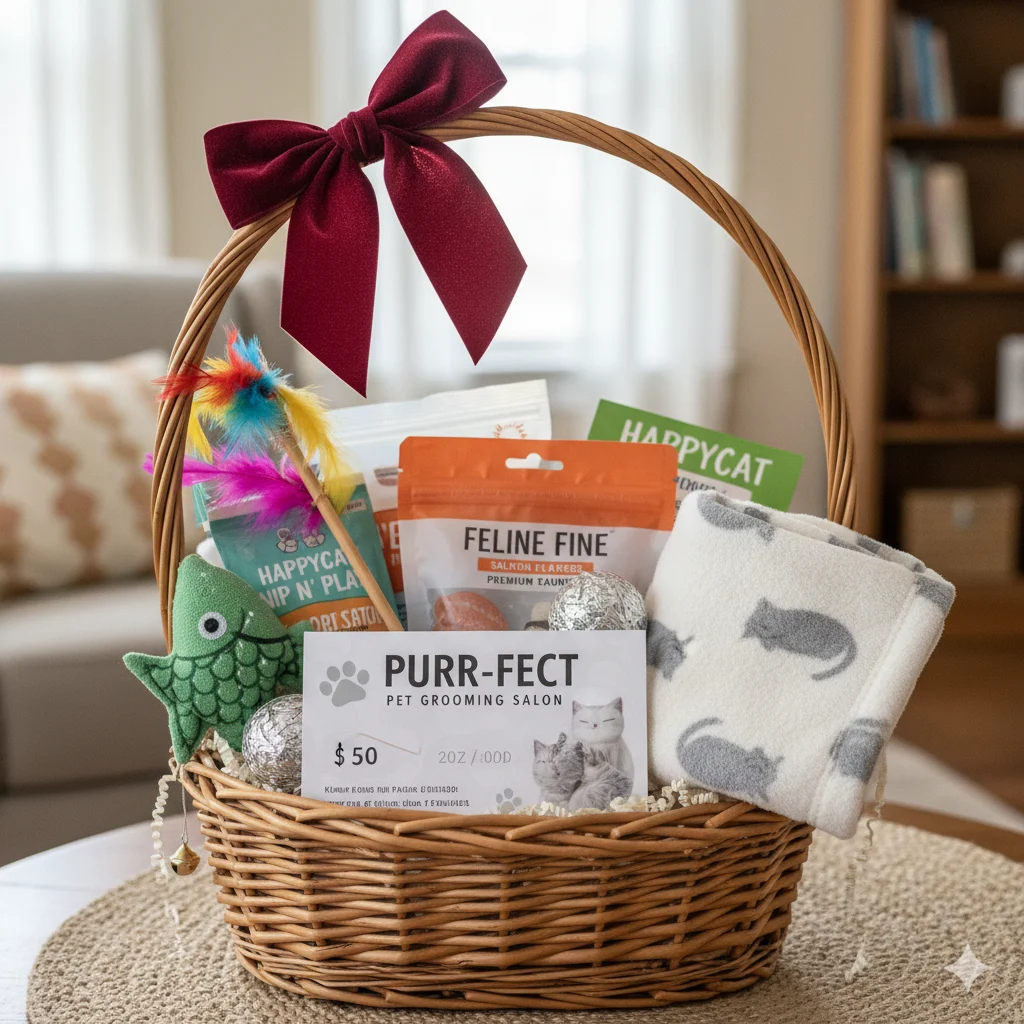
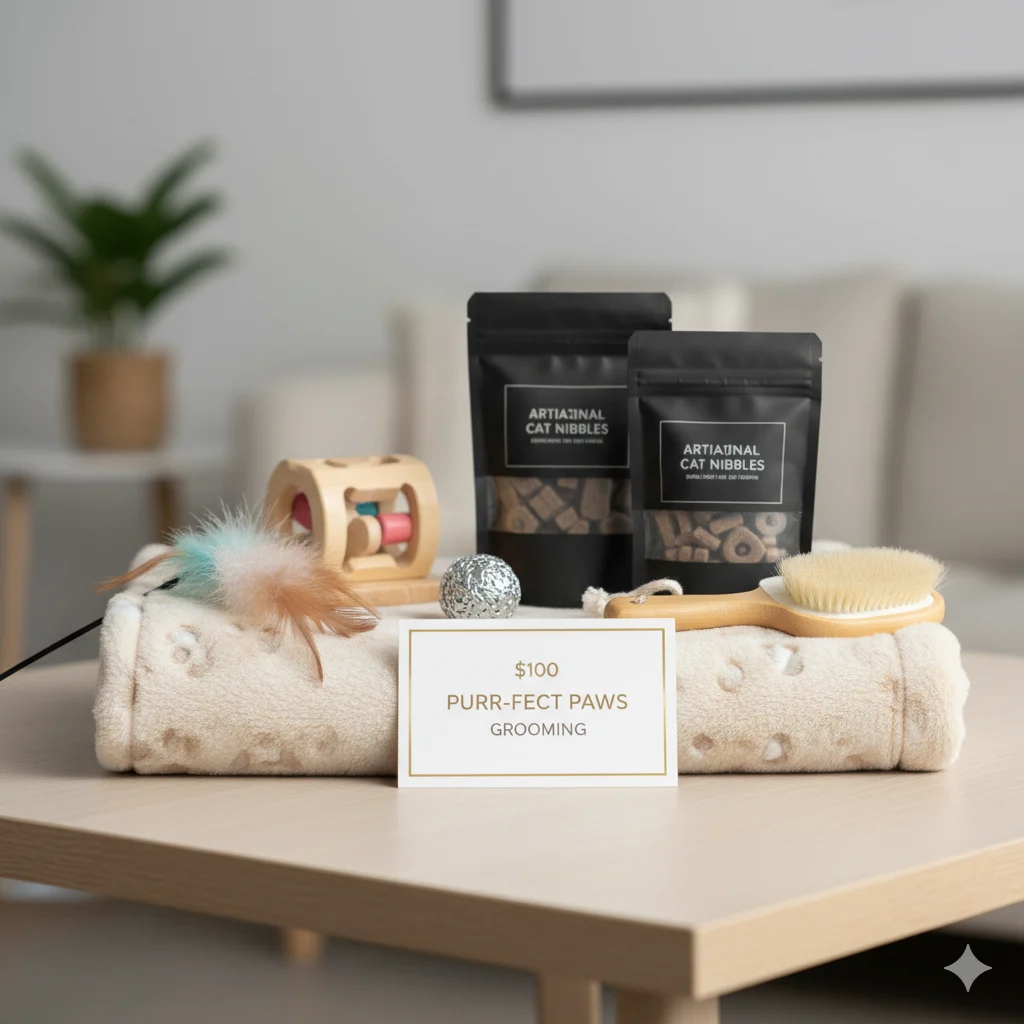
Cat Lover's Dream Basket
What's Inside
- $40–$50 pet store or grooming gift card
- Feather wand or interactive toy
- Premium cat treat bag (Temptations, Churu, or local brand)
- Catnip toy or catnip spray
- Cozy cat blanket or small plush bed
Typical Revenue
$400–$900
Why it works: Run this alongside the dog basket, not instead of it. Cat owners at community events are often overlooked by raffle organizers — which means when a cat-specific basket appears, the response is disproportionately strong. Cat Churu tubes (squeeze treats) are a cult product among cat owners — if you can include them, do. Known treats drive immediate recognition and desire.
 Easiest to Source
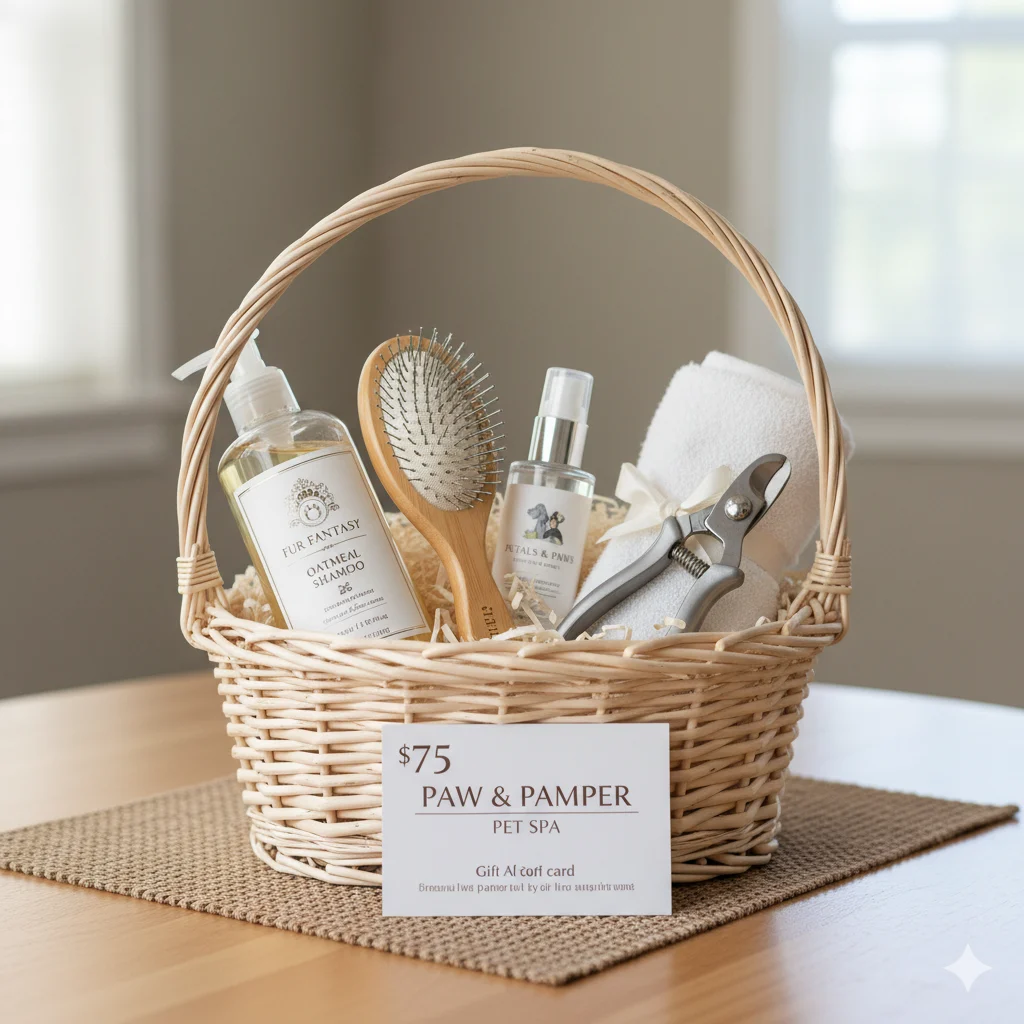
Pet Spa & Grooming Day
What's Inside
- Local groomer gift card ($40–$75 grooming appointment)
- Quality dog or cat shampoo (brand-name)
- Soft-bristle brush or grooming kit
- Pet-safe nail file or clippers
- Rolled microfiber towel or pet bathrobe
Typical Revenue
$500–$1,100
Why it works: Grooming is a recurring pet expense — most dog owners spend $50–$100 per grooming appointment, 4–8 times per year. A grooming gift card isn't an indulgence; it's a utility they already budget for. That familiarity makes the anchor immediately legible as real value. Local groomers are also the easiest pet business to source from — they understand marketing to local pet owners better than any other category.
 Niche Powerhouse
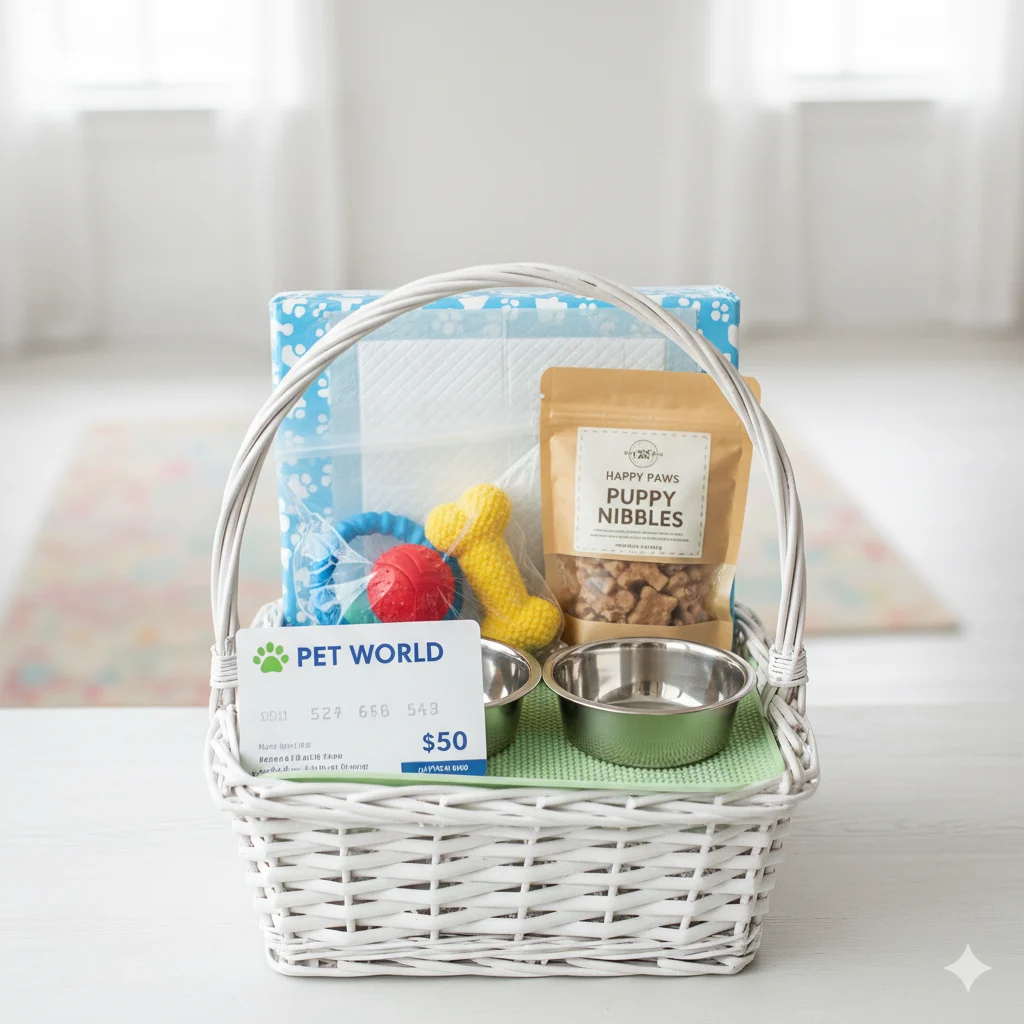
Puppy Starter Kit
What's Inside
- $50 pet store gift card (for food, supplies)
- Training pads (30-pack)
- 2–3 puppy-appropriate toys
- Premium puppy treat bag
- Stainless steel food and water bowl set
Typical Revenue
$450–$1,000
Why it works: New puppy owners are the highest-spending segment of pet owners — they buy everything at once and they buy the best. A "Puppy Starter Kit" targets them specifically and tells them everything inside is for them. Even dog owners without puppies buy tickets on this basket as a gift for friends who just got a dog. The gifting angle expands the buyer pool beyond just current puppy owners.
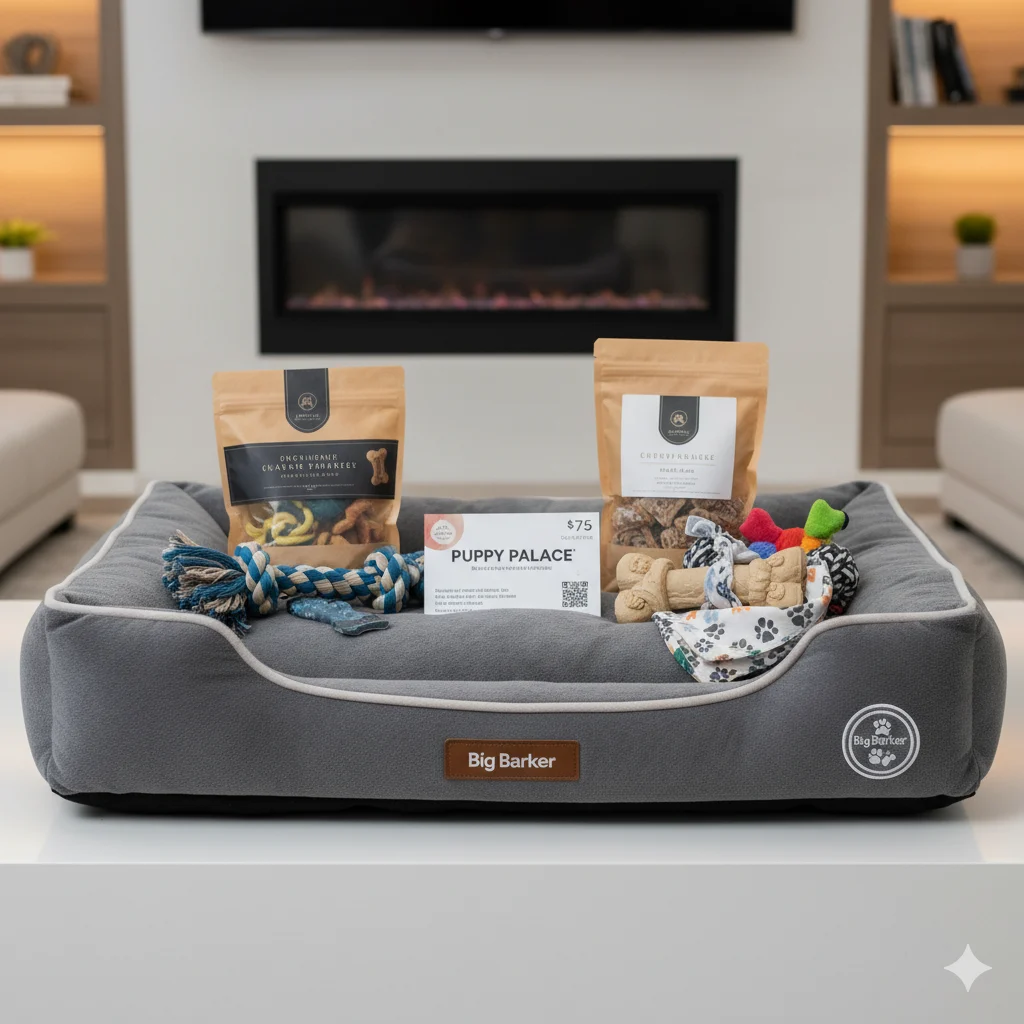 Anchor Basket
The Premium Dog Experience
What's Inside
- $75 pet store gift card
- Premium orthopedic dog bed or luxury blanket
- 3 quality toys (different types: chew, fetch, tug)
- Large premium treat bundle (multiple bags)
- Personalized dog bandana or custom ID tag
Typical Revenue
$900–$2,000
Why it works: This is the anchor basket for events where a high-value pet prize is needed. The orthopedic dog bed is the visual centerpiece — it signals premium immediately without requiring supporters to read the contents. Position this as the event's "dog lovers" anchor at the same tier as your wine or spa anchor basket. Price tickets at a higher tier for this basket specifically.
Presentation determines conversion
Presentation Strategy — What Pet Baskets Need
What Works
- Animal-specific name on a printed label — "Dog Lover Basket," not "Pet Basket"
- Gift card or anchor item clipped to the front at eye level — unavoidable
- Quality treat bags with visible brand names (pet owners recognize them)
- Toy variety — one chew, one fetch, one tug — signals completeness
- Height variation — taller items at back, shorter at front
- Clean, structured cellophane wrap with a proper bow
- For online events: three photos — full basket, gift card close-up, spread of treats and toys
What Fails
- Mixed animal items — kills specificity and hesitation sets in
- Dollar store or no-name generic toys (signals low value to experienced pet buyers)
- Gift card face-down or buried inside treats
- Overcrowded basket — too many items reduce visual clarity
- Generic label "Pet Gift Basket" — no specific animal, no emotional trigger
- One dark photo for online events
- Grooming items for an animal type different from the basket's theme
The brand name rule for pet basketsPet owners are some of the most brand-loyal shoppers in any retail category. They know the difference between a Zuke's treat and a generic grocery store treat. They know what a Kong toy is. They recognize Blue Buffalo packaging. Using recognizable brands in a pet basket signals to the buyer that the basket contains items they already trust and buy. If you have a choice between a $8 no-name toy and a $12 Kong, spend the extra $4. The perceived value increase to a pet owner is significantly greater than the cost difference.
Why emotional buyers respond differently to pricing
Bundle Pricing and Pet Owner Psychology
Pet owners are not like other raffle buyers when it comes to pricing. The emotional justification — "it's for my dog" — actively reduces their price sensitivity. A supporter who would buy 2 tickets for a restaurant basket might buy 10 for a dog basket because the emotional math is different. "It's $50 in tickets — but that's less than one month of treats for my dog."
This means bundle pricing has an amplified effect on pet baskets compared to most other categories. The emotional buyer who already wants the basket just needs the option to invest at a higher level.
$64
Average order size with bundle pricing — vs ~$11 with single-ticket pricing. The gap is wider for pet baskets than almost any other category.Pet owners with a basket they emotionally want will take the highest bundle option available. Single-ticket pricing caps their spending at $5–$10 because there's no larger option. Bundle pricing unlocks the $20, $50, and $100 options — and emotional buyers use them. The 6× average order difference between single and bundle pricing is a floor, not a ceiling, for pet baskets with a motivated audience.
Single Tickets Only — $5 each
~$150–$250
Pet owner buys 2–3 tickets. No bundle option. Revenue limited by the absence of a higher-investment tier — not by lack of interest.
Bundle Pricing — 5 for $20 · 15 for $50
$500–$1,200
Same pet owner buys the 15-ticket bundle because "it's less than two vet co-pays." Emotional justification removes price resistance. Same basket, same event.
One of the easiest categories to source
Sourcing Scripts That Get the Yes
Pet baskets are among the easiest raffle categories to source because the pitch maps exactly to what local pet businesses want: access to local pet owners. A pet store, groomer, or vet that contributes to a raffle basket gets brand exposure to a room full of their target customers. There is no reframing required — it genuinely is a marketing opportunity for them.
The key is leading with the audience size and composition, not the cause. Pet businesses respond to "300+ local pet owners in attendance" better than "we're fundraising for a good cause."
The Script That Works
"Hi, we're doing a fundraiser and we were wondering if you could donate some things for our pet basket?"
"We're featuring a Dog Lover Basket as a featured prize at our fundraiser — we expect 300+ local pet owners in attendance. We'd love to include your store's gift card and feature your name prominently on the basket and in all our event materials. Your name in front of 300+ local pet owners is worth more than a print ad — and it costs you a $40 gift card. Would you be open to that partnership?"
The difference is the audience frame. Pet businesses already know their customers are pet owners. You're not asking them to donate to charity — you're offering them direct access to 300+ pre-qualified local customers at a cost significantly below any other local advertising. Most will say yes immediately.
🐾 Local Pet Stores
The primary source for both gift cards and product donations. Independent pet stores respond especially well — they are actively trying to compete with online retailers and PetSmart for local loyalty. The marketing pitch writes itself.
Hook: "We'll feature your store name on our Dog Lover Basket — it gets the most attention from pet owners all night."
✂️ Local Groomers
Groomers provide a service pet owners use repeatedly. A grooming voucher in a basket is essentially a first-visit offer to their exact target client. Many groomers will provide a free grooming appointment without much negotiation when framed as local marketing.
Hook: "Your grooming appointment as the anchor item gets your name in front of every dog owner at the event — it's a first visit offer to 300 potential regulars."
🏥 Veterinary Offices
Vets respond well to community fundraising opportunities, especially when the beneficiary is an animal-related cause. A vet wellness visit voucher or gift card is a high-perceived-value item that costs the practice relatively little in actual service time.
Hook: "We'd love to feature your practice — a wellness visit voucher positions you with 300+ local pet owners who all need a trusted vet."
🛁 Pet Boarding & Daycare
Pet boarding and daycare facilities are always looking for local awareness. A one-day boarding credit or daycare pass is a meaningful anchor item that a pet owner immediately values — it's an expense they already have.
Hook: "A day of boarding or daycare as the anchor makes your facility the star of our featured pet basket — exposure to the exact families who travel and need boarding."
Final Takeaway
1
Pick one animal. Build completely for it.
"Dog Lover Basket" or "Cat Lover Basket" — not "Pet Basket." Specificity removes hesitation. When a dog owner sees a basket that is 100% for their dog, they allocate heavily and immediately. A mixed basket forces them to calculate what they can use — and that calculation kills revenue.
2
Use a real anchor item. Quality signals matter to pet owners.
Pet owners spend $1,000+ per year on their animals. They know the difference between quality and clearance. A pet store gift card, grooming voucher, or premium pet bed signals investment in their pet's quality of life — which is what they want to win. Cheap items tell them the basket isn't worth competing for.
3
Run dog and cat baskets separately when your audience has both.
Two $65 specific baskets will together outperform one $130 mixed basket. You capture two distinct audiences fully instead of both audiences partially. The math on ticket revenue is consistently better with two specific baskets.
4
Market with pet content. It's the most shareable raffle content there is.
A photo of your dog basket — better yet, a photo with an actual dog — gets shared, liked, and commented on at rates that no other basket category matches. Pet content on social media is uniquely viral. Post before, during, and after the event. Tag the pet businesses who donated. Your promotion matters as much as your basket.
Free Download
Basket Raffle Planning Kit
20-theme build sheet with cost estimates, the ticket pricing calculator, a donor outreach email template, and the 60-day event checklist. Everything your committee needs — before it turns into a spreadsheet emergency.
Download Free →
What's inside
✓ 20 basket theme build sheets
✓ Ticket pricing calculator
✓ Donor outreach template
✓ 60-day event checklist
✓ Common mistakes to avoid
Common questions
Frequently Asked Questions
What should be in a pet basket for a raffle?
A pet basket needs a strong anchor item — a pet store gift card ($25–$75), grooming gift card, or premium pet bed — plus supporting items specific to ONE animal type. For dogs: quality toys, premium brand treats, and a useful accessory. For cats: interactive toys, premium treats, catnip item, cozy blanket. The critical rule: pick one animal and build entirely for it. A dog basket with 100% dog items consistently outperforms a mixed pet basket with equivalent total value. Build cost runs $55–$120; revenue with bundle pricing runs $400–$1,200.
Should I build a dog basket or a cat basket?
Build both when possible — as separate baskets, not combined. A "Dog Lover Basket" and a "Cat Lover Basket" run as separate raffle prizes will together outperform a single mixed "Pet Basket" in total ticket revenue. Each basket captures its specific audience completely. If you can only run one, choose the largest pet-owning segment in your specific audience — at most US community events, that's dog owners. See the full specificity explanation above for the revenue data behind this recommendation.
Do pet baskets work for raffles?
Yes — pet baskets are one of the most consistently high-performing categories because of emotional buying behavior. Pet owners spend an average of $1,380 per year on their dogs. That level of spending habit means low price resistance and high emotional motivation. At events where 40–60% of attendees own pets (which is most community events), a well-built, animal-specific pet basket regularly ranks in the top three revenue earners, especially with bundle pricing in place.
How do you make a pet basket sell more tickets?
Three things: specificity (dog or cat, not "pet"), a visible anchor item (gift card or premium item at the front), and bundle ticket pricing. The most common mistake is mixing animal types — a dog owner won't allocate heavily to a basket with cat items they won't use. The most overlooked lever is social media marketing — pet basket photos with actual pets get shared at rates that no other raffle content matches. Post before the event, the day of, and the day before closing. Tag your donor businesses.
How do I get pet basket items donated?
Pet stores, groomers, and veterinary offices are among the easiest businesses to approach. Tell a local pet store: "We're featuring a Dog Lover Basket at our fundraiser — we'd love to include your gift card and feature your store name prominently. We expect 300+ local pet owners in attendance." Pet businesses respond to this because pet owners are their exact target customer. Most local pet stores will provide a $25–$50 gift card plus treats or toys with minimal friction when framed as a marketing partnership, not a donation request. See the full
basket donation sourcing guide.
How much should a pet basket be worth?
Most effective pet baskets have a perceived value between $75 and $300. The $75–$150 range performs best at community events and school fundraisers. Higher-value builds ($150–$300) with premium pet beds or multiple grooming vouchers work well at galas and larger fundraisers. Pet owners evaluate value through the lens of what they already spend — a $50 gift card feels proportionate to someone who spends $100/month on food and treats. Perceived value matters as much as actual cost: a $75 basket with premium brand-name items often earns more tickets than a $150 basket with generic items in poor presentation.
The basket alone is not enough
Learn How to Maximize This Basket
The three hotline calls above all had well-built baskets. What they were missing was pricing structure, platform architecture, and promotion strategy. These guides are what turn a good basket into top-three revenue at your event.
💰
Basket Raffle Pricing Strategy
The $11 vs $64 bundle pricing analysis. Why emotional pet buyers specifically respond to bundle options — and the tier structure that unlocks their full spending potential.
Read the guide →
📋
How to Run a Basket Raffle
Complete 60-day countdown — basket building, ticket pricing, promotion strategy, and drawing night logistics for online, in-person, and hybrid events.
Read the guide →
🖥️
How to Run a Basket Raffle Online
Per-basket pool requirements, cash entry support, and the platform mistakes that kill online pet basket revenue before a single ticket is sold.
Read the guide →
🏥
Animal Shelter Basket Raffle Guide
Pet baskets hit differently when run by an animal shelter. How to leverage your mission and adoptable animals as part of the raffle marketing.
Read the guide →
🧺
Basket Raffle Ideas Hub
Browse 100+ basket themes organized by audience, season, and value tier. Build the right multi-basket lineup around your pet baskets.
Browse all themes →
⚙️
Basket Raffle Software Guide
Eight questions to ask any platform before committing. The per-basket pool requirement that makes the specificity strategy actually pay off.
Read the guide →
Complete your event lineup
Pair Pet Baskets With These High Performers
Pet baskets capture the pet owner demographic completely — but they don't capture everyone. Pair them with a wine basket, spa basket, and family basket and you cover every major buyer segment in the room, driving total ticket volume across all baskets.
Ready to run the real thing?
The only platform built for true per-basket ticket pools
"We didn't add basket raffles to a donation tool. We built the raffle first. And we still answer the phone." — The Chance2Win Team