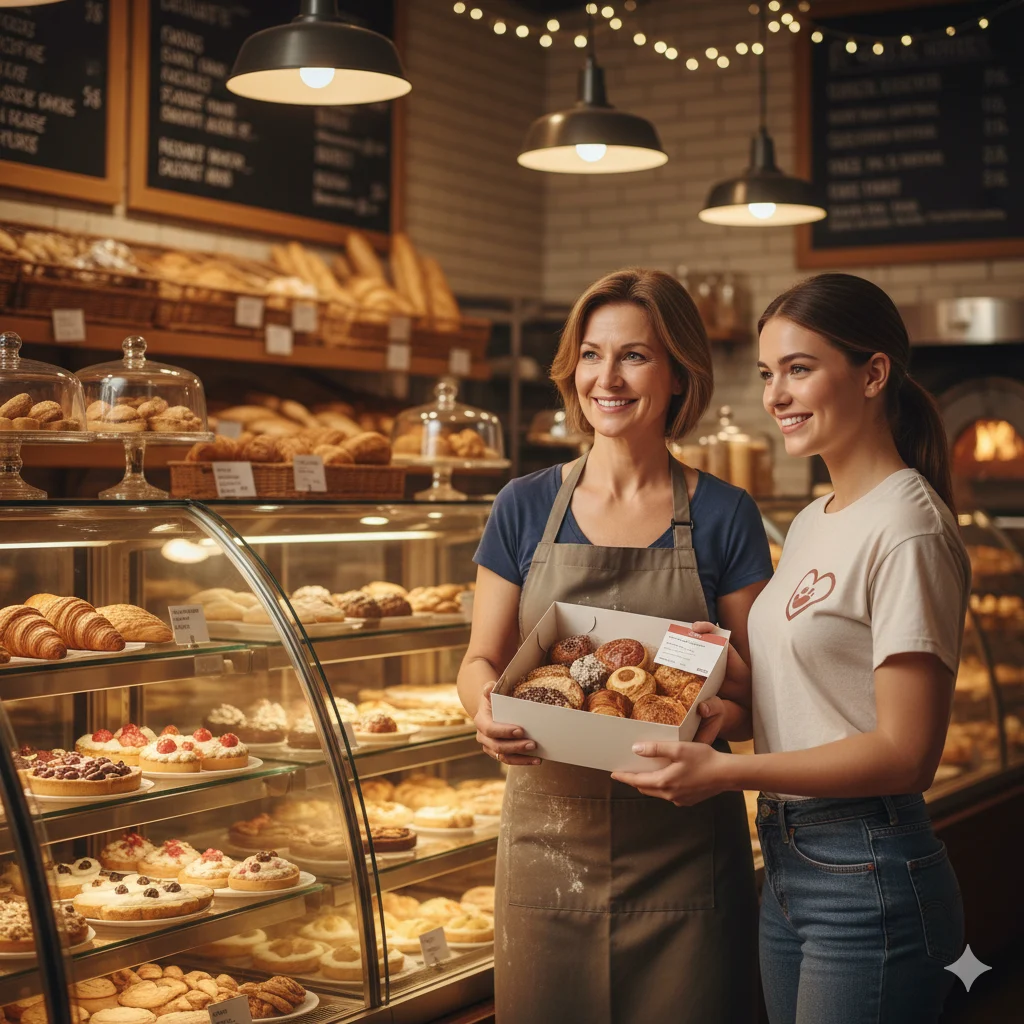
Quick AnswerFood baskets are one of the most versatile, broadly appealing raffle categories — and one of the most commonly wasted. The same artisan crackers, aged cheese, and charcuterie that earn $200 in a "Food Basket" earn $900 in a "Gourmet Charcuterie Night for Two." The items are identical. The name and presentation create an experience supporters can visualize, and that visualization is what drives ticket allocation. Food baskets work across every event type — schools, churches, corporate events, holiday fundraisers — because they hit four buyer motivations at once: practical use, shared experience, gifting, and perceived luxury. The only baskets that reliably fail are the ones built without a clear occasion name and a visible anchor item.
Four motivations in one category
Why Food Baskets Consistently Outperform Expectations
Most raffle basket categories appeal to one or two buyer motivations. Wine appeals to luxury and social experience. Coffee appeals to daily use and habit. Spa appeals to relaxation and self-care. Food baskets are unusual because they trigger all four buying motivations simultaneously — and that combination is rare.
🍽️
"I'll use this" — Practical
Food is consumed. There's no wondering whether a charcuterie set will sit unused, whether a $50 restaurant gift card will collect dust, or whether Italian pasta will go stale before they get to it. The practical objection is eliminated.
🥂
"This would be fun" — Experience
A well-named food basket creates a complete evening in the buyer's mind. "Gourmet Charcuterie Night" is not food — it is a Saturday night experience. Supporters picture themselves opening a bottle of wine and spreading the board. That scene is what sells tickets.
🎁
"This would make a great gift" — Social
More raffle tickets are purchased by someone thinking "If I win this, I know exactly who I'm giving it to" than most organizers realize. Food baskets are the most giftable raffle category. This expands the buyer pool to include everyone who has a birthday, anniversary, or dinner party coming up.
✨
"This looks expensive" — Perception
Artisan food items have a strong perceived-value-to-cost ratio. A $30 selection of artisan crackers, fig jam, and honeycomb looks and feels like a $100 entertaining set when presented correctly. Food baskets can achieve a higher perception-to-cost ratio than almost any other category.
The single most impactful change you can make
The Naming Rule: "Gourmet Charcuterie Night" Beats "Food Basket" Every Time
This is the food basket equivalent of the pet basket specificity rule — and it is just as dramatic. The same items assembled under two different names generate entirely different ticket revenue. It is not the basket that changes. It is the scene the name creates in the buyer's mind.
A basket named "Food Basket" forces a supporter to assess individual items. Are these items I'd use? Are they worth my ticket price? Is this better than the other baskets? Every question is a conversion barrier. A basket named "Italian Dinner for Two" answers all three questions in four words: yes, absolutely, and probably.
Generic Name — Lower Revenue
~$150–$300
Pasta, marinara, olive oil, breadsticks, Italian cookies. Supporters evaluate items individually. No scene. No occasion. Nobody imagines their Saturday night.
Experience Name — Higher Revenue
~$500–$1,100
"Italian Dinner for Two" — same contents. Supporters immediately picture the evening, the candles, their dinner companion. A complete Saturday night in four words. Tickets sell.
The naming formula that works for every food basketThe formula: [Occasion] + [for whom] + [implied setting].
"Gourmet Charcuterie Night for Two" — occasion is charcuterie night, for two people, implied setting is home entertainment. "Italian Dinner for Two" — occasion is dinner, for two, implied setting is a romantic weeknight. "BBQ Master's Weekend Kit" — occasion is the weekend, for a grilling enthusiast, implied setting is the backyard. Every strong food basket name paints a complete scene without requiring the supporter to read a single item on the list.
From the Raffle Hotline · Community Fundraiser · The Grocery Bag Problem
"We made a food basket but nobody's buying tickets. It has nice stuff in it."
A community organization called mid-event. Their food basket had been assembled carefully — quality items, well-sourced, decent value. But it had been sitting with barely any tickets while a wine basket nearby had sold out twice and been refilled.
Caller: "We have artisan crackers, some fancy sauces, a charcuterie set, a nice jar of jam. Good stuff."
Support: "What's the basket called?"
Caller: "...Gourmet Food Basket."
Support: "What does a supporter picture when they read 'Gourmet Food Basket'?"
Caller: "I guess... groceries?"
Support: "Exactly. You have a charcuterie board, meats, cheeses, jam, and crackers. That's not a grocery basket — that's a complete entertaining night. The basket's name is hiding the experience inside it. Change the sign to 'Charcuterie Night for Two' right now and see what happens."
They changed the sign at their table. Within 20 minutes, the tickets on that basket had tripled. Same basket, same event, same items. The name change was the only variable.
The lesson: your basket name is your first marketing message. It is seen before any item is read. If the name doesn't create an immediate scene in the buyer's mind — a Saturday night, a dinner party, a morning routine — tickets will underperform regardless of what's inside. Name the occasion, not the category.
From the Raffle Hotline · Holiday Gala · The Invisible Premium Problem
"We spent $180 on the basket. It's got great items. Tickets are barely moving."
A nonprofit called after investing significantly in their holiday food basket. They had ordered premium items — high-end olive oil, artisan balsamic, imported pasta, specialty sauces. Real quality, significant budget. Tickets were still slow at the halfway point of their event.
Caller: "We spent real money on this. Why isn't it moving?"
Support: "Describe the physical display to me."
Caller: "Everything is in the basket. Nicely wrapped in cellophane."
Support: "Can supporters read the labels on the bottles? Can they see what's inside the cellophane?"
Caller: "Probably not. Everything's kind of packed in."
Support: "Open the cellophane. Arrange the bottles so the labels face outward and people can read them. Pull the most visually impressive item — probably the imported pasta set — to the front where it's the first thing seen. Premium items only create perceived value when they're visible. Hidden premium is invisible premium."
They rearranged the display at their table. The artisan bottles were turned label-out. The pasta set was front and center. The basket sold out — meaning its ticket pool hit a target number and drew a winner — before the event closed. The budget was the same. The visibility was different.
Food baskets have a specific presentation failure mode that other categories don't: packaging. Premium food items come in beautiful bottles, elegant boxes, and artisan packaging — but all of that is invisible inside a wrapped basket. Unwrap the premium items. Turn labels outward. Let the quality be seen. If supporters can't read "Extra Virgin Olive Oil — Imported from Calabria," they can't value it.
From the Raffle Hotline · School PTA · The Holiday Timing Revelation
"Our food baskets never do well — except in November. What changed?"
A PTA coordinator called after noticing a consistent pattern across three years of fundraisers. Their food baskets underperformed at spring events and back-to-school events but consistently sold out at their November fundraiser.
Caller: "Same baskets, same crowd, roughly same pricing. But November is always 3× the tickets."
Support: "What are your supporters thinking about in November?"
Caller: "Thanksgiving? The holidays?"
Support: "Exactly. In November, everyone is in gift-buying mode. They're thinking about what to bring to Thanksgiving, what to give to teachers, what to send to family they'll see at Christmas. A gourmet food basket in November isn't just a prize — it's a hostess gift and a holiday present that's already assembled. That's what you're actually selling."
Caller: "So we should lean into that? Change the basket name?"
Support: "Change the basket name, add a couple of seasonal items, and write your description as a gift — 'Perfect for Thanksgiving entertaining or as a holiday gift.' You're not changing the basket. You're activating the purchase motivation that's already there."
The following November, they renamed their food basket "Holiday Entertaining Kit — Perfect for Thanksgiving or as a Gift" and added a spiced jam and a seasonal candle. Ticket revenue: up 4× from the previous November. Same event size, same audience.
Food baskets have a timing advantage no other category matches. When people are in gift-buying mode — November through January, Mother's Day weekend, graduation season — a well-named food basket becomes a gift solution, not just a prize. Position accordingly: name it as a gift, describe it as ready to give, and watch the gifting motivation drive tickets from buyers who were never going to win it for themselves.
Build it right the first time
The Anatomy of a High-Converting Food Basket
⭐
The Anchor Item — Creates the Value Story
Every high-performing food basket has one item that communicates immediate, legible value — either a restaurant or specialty food store gift card, or a visually premium item like an artisan charcuterie board, a premium olive oil set, or a high-end chocolate collection. The anchor is not the most expensive item in the basket; it is the most immediately valuable-looking item. A $40 restaurant gift card is a stronger anchor than $80 in artisan condiments because supporters understand exactly what a restaurant gift card is worth. The anchor resolves the first question in every buyer's mind: "Is this worth competing for?"
Experience builders — items that complete the narrative the basket name promises. "Italian Dinner for Two" needs pasta, a premium sauce, olive oil, breadsticks, and an Italian dessert item. "Charcuterie Night" needs cured meats, cheese wedges, crackers, a small board or slate, and a condiment or two (fig jam, honey, mustard). Every item should answer: "Does this make the evening more complete?" Items that don't answer yes don't belong in the basket.
The presentation layer — food baskets have a unique presentation requirement: labels must be visible. Artisan and specialty food items come in beautiful packaging that communicates quality — but only if it can be read. Arrange items so every label faces forward. Height-stack items so shorter containers don't hide behind taller bottles. Remove any generic or grocery-brand items that undercut the gourmet positioning. And name the basket on a printed card with the occasion name and the estimated total value. The estimated value is particularly important for food baskets, where supporters often underestimate how much artisan items cost.
Proven builds with real revenue data
5 Food Basket Builds That Consistently Sell Tickets
Each build below follows the three-layer structure and uses an occasion name that creates an immediate mental scene. ★ marks the anchor item. Revenue ranges are based on a 100–200 person event with bundle pricing in place.
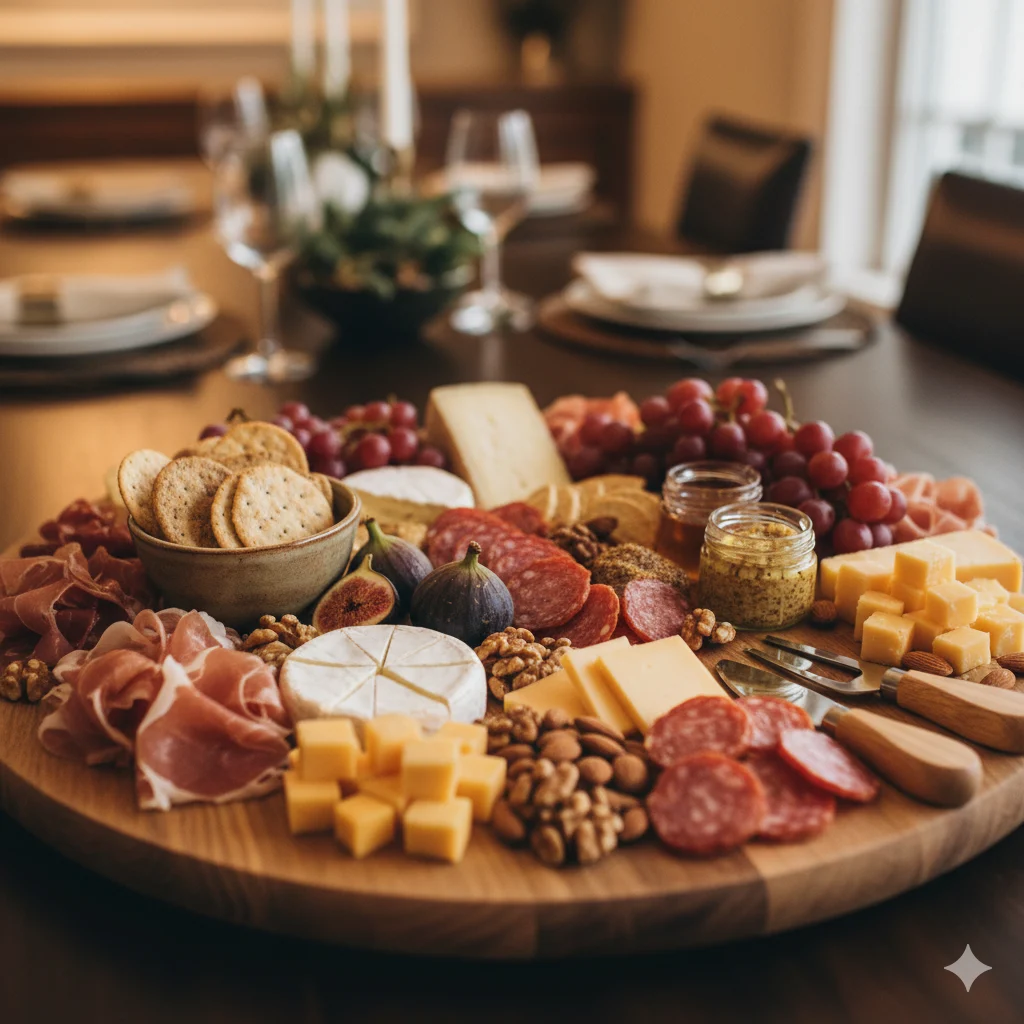 Top Performer
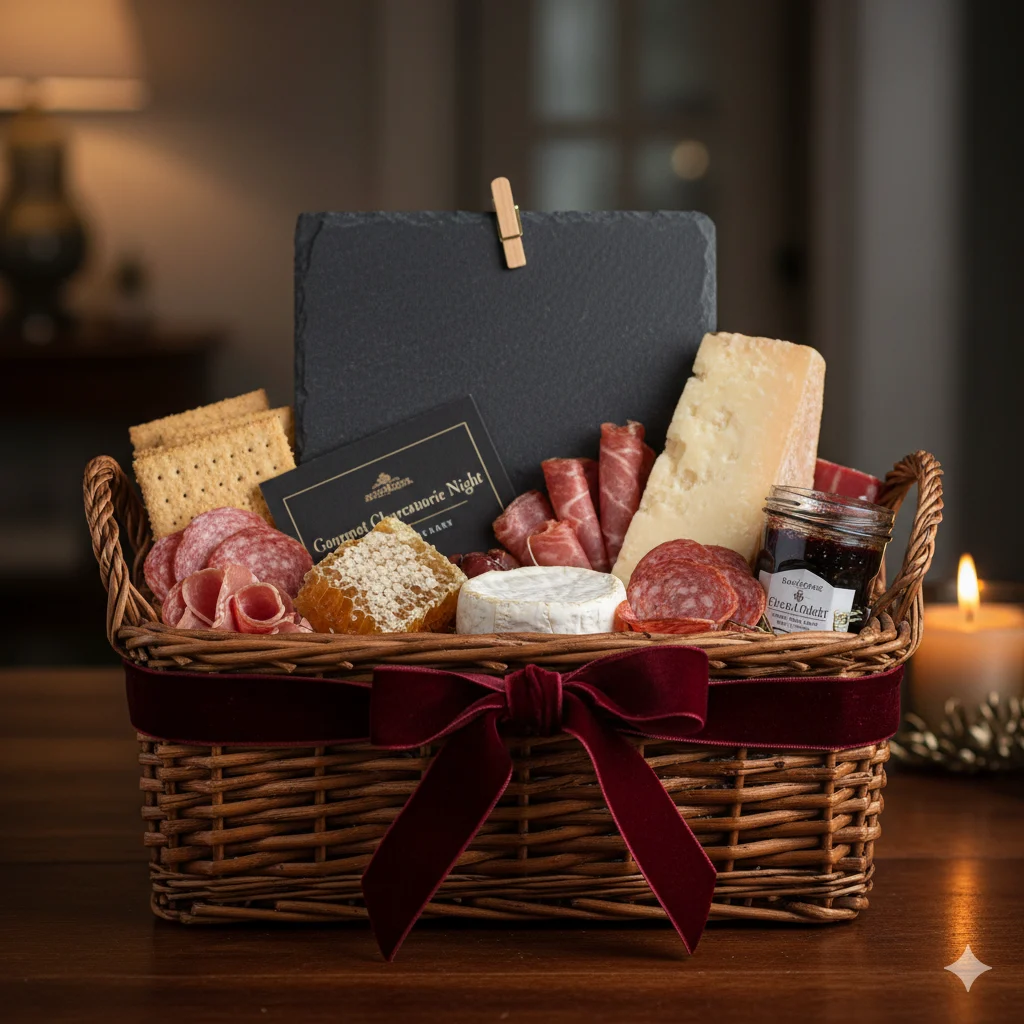
Gourmet Charcuterie Night for Two
What's Inside
- $50–$75 restaurant or specialty food store gift card
- Artisan slate or wood serving board
- Cured meat selection (salami, prosciutto, or similar)
- Aged cheese (2–3 varieties: sharp cheddar, brie, gouda)
- Artisan crackers and breadsticks
- Fig jam, honeycomb, or stone-ground mustard
Typical Revenue$600–$1,400
Why it works: This is the highest-converting food basket name in our data. "Charcuterie Night" instantly creates a complete social scene that adults across nearly every demographic find aspirational. The serving board is the visual centerpiece — it communicates "entertaining set" at a glance. The gift card anchors dollar value. Position this as your premium food basket and price tickets at a higher tier.
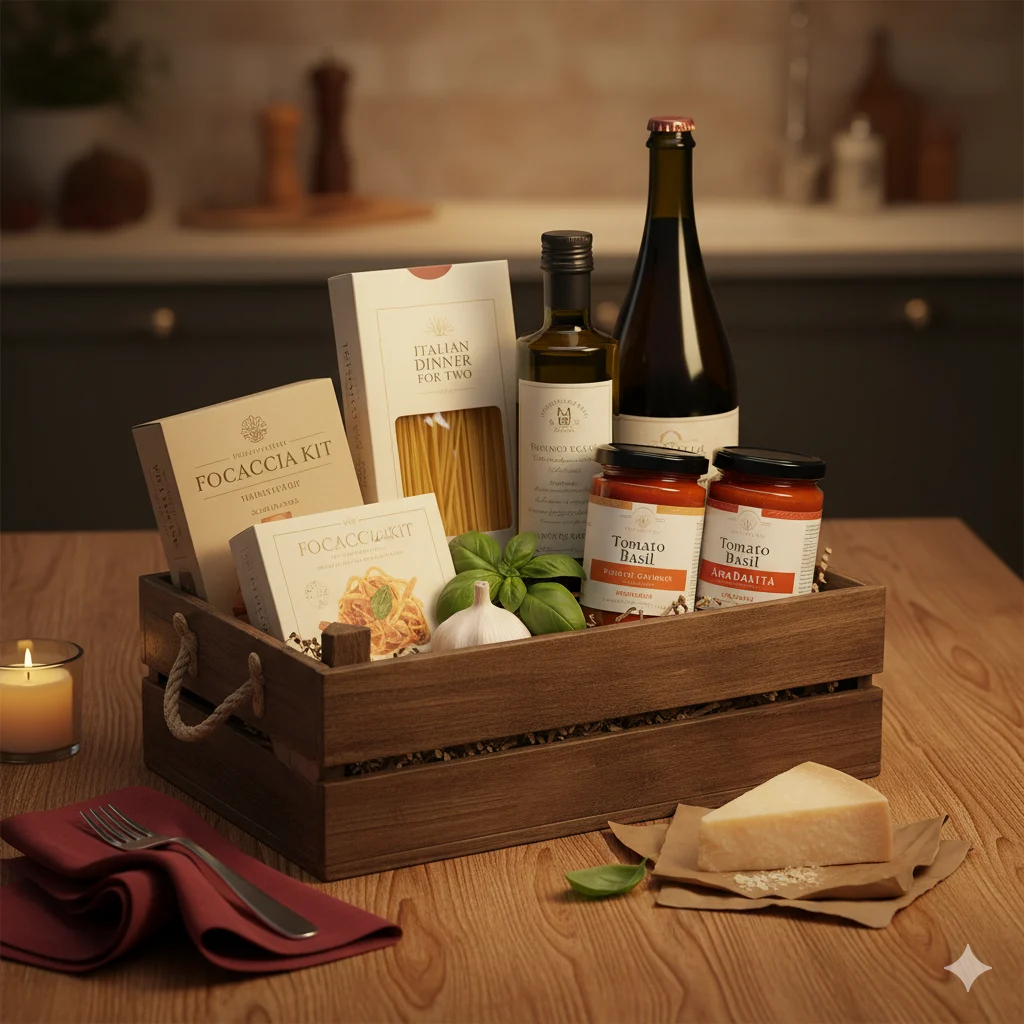 Universal Appeal
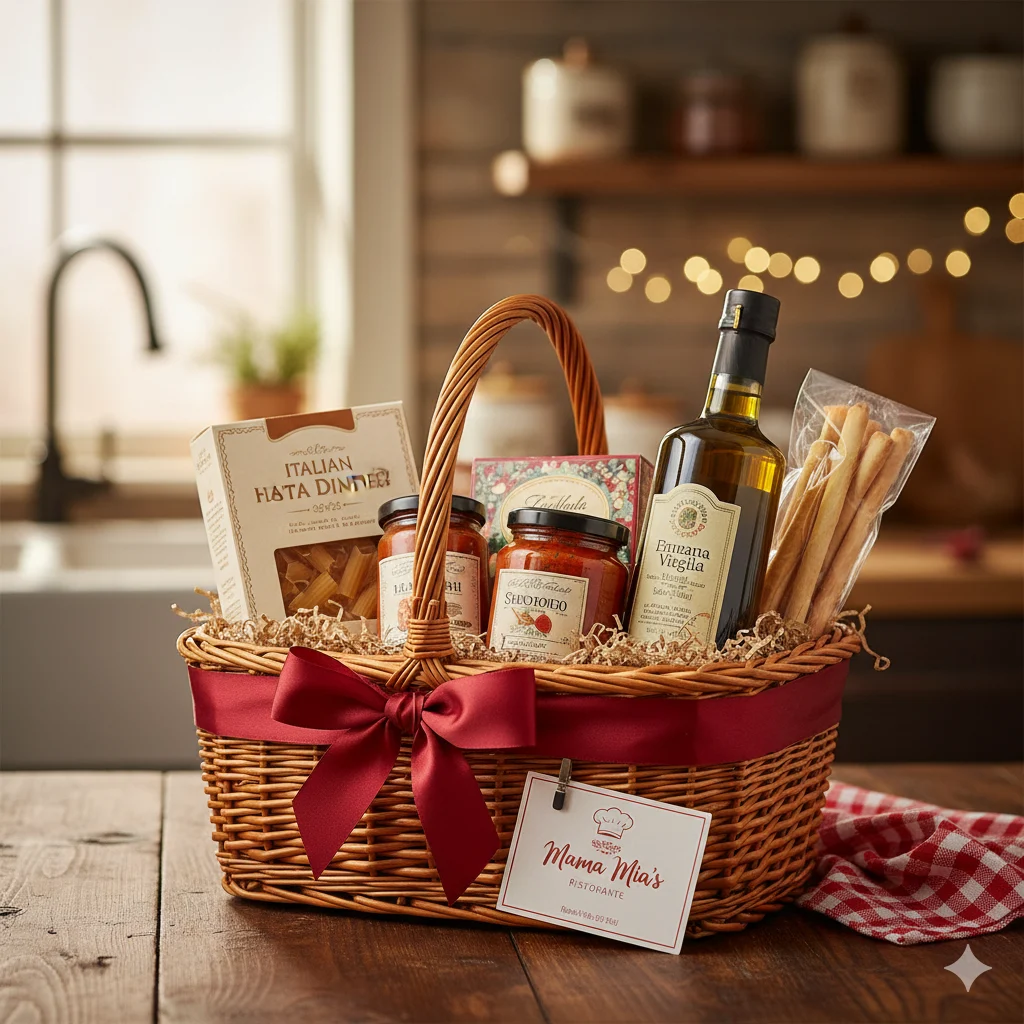
Italian Dinner for Two
What's Inside
- $40–$60 Italian restaurant gift card
- Artisan pasta (tagliatelle, pappardelle, or similar)
- Premium jarred marinara or arrabbiata sauce
- Quality extra virgin olive oil (label-forward)
- Artisan breadsticks or focaccia crackers
- Italian biscotti or amaretti cookies
Typical Revenue$500–$1,100
Why it works: Italian food is universally recognizable and aspirational — nearly everyone likes it, and a proper Italian dinner at home or at a restaurant feels special without being intimidating. The restaurant gift card anchors the basket and gives supporters a choice: cook the Italian night in, or go out to an Italian restaurant. That flexibility increases the buyer pool. Strong at both school events and adult galas.
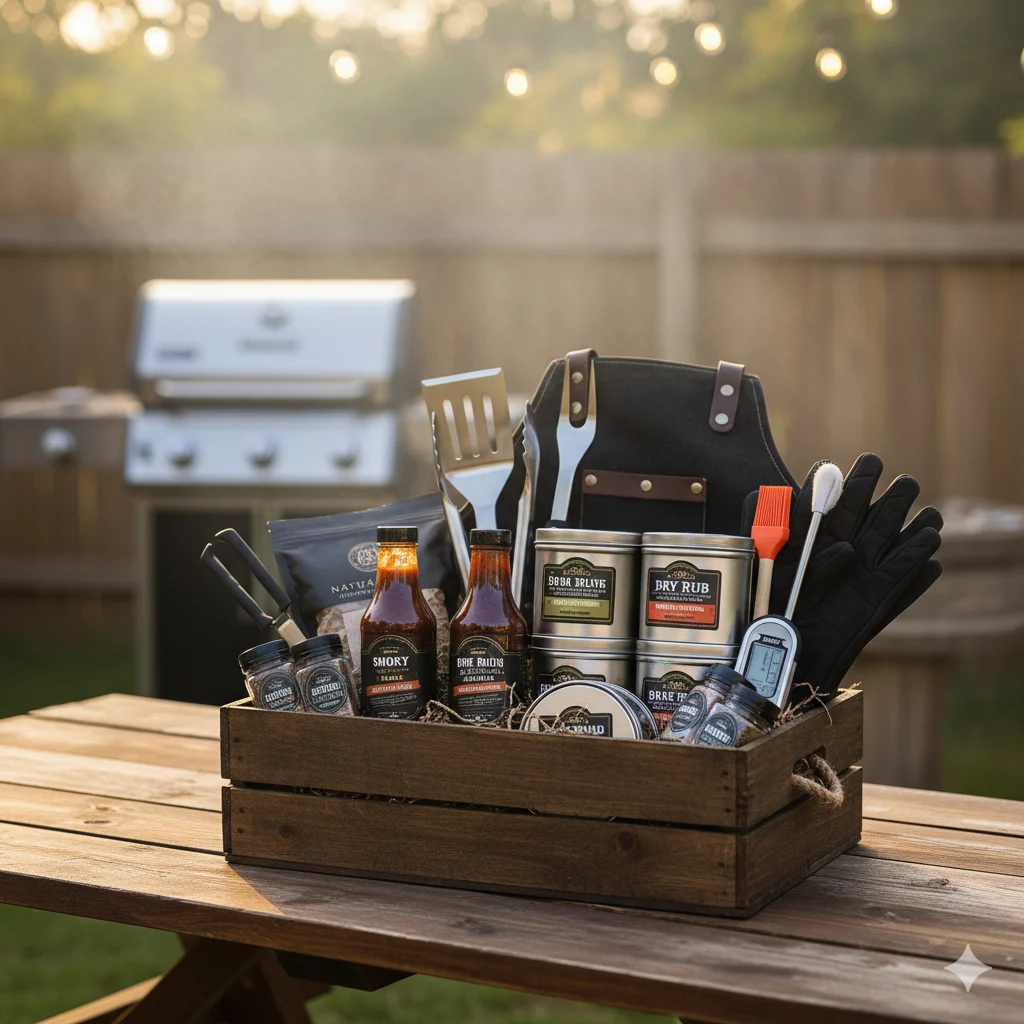 Demographic Gap Filler
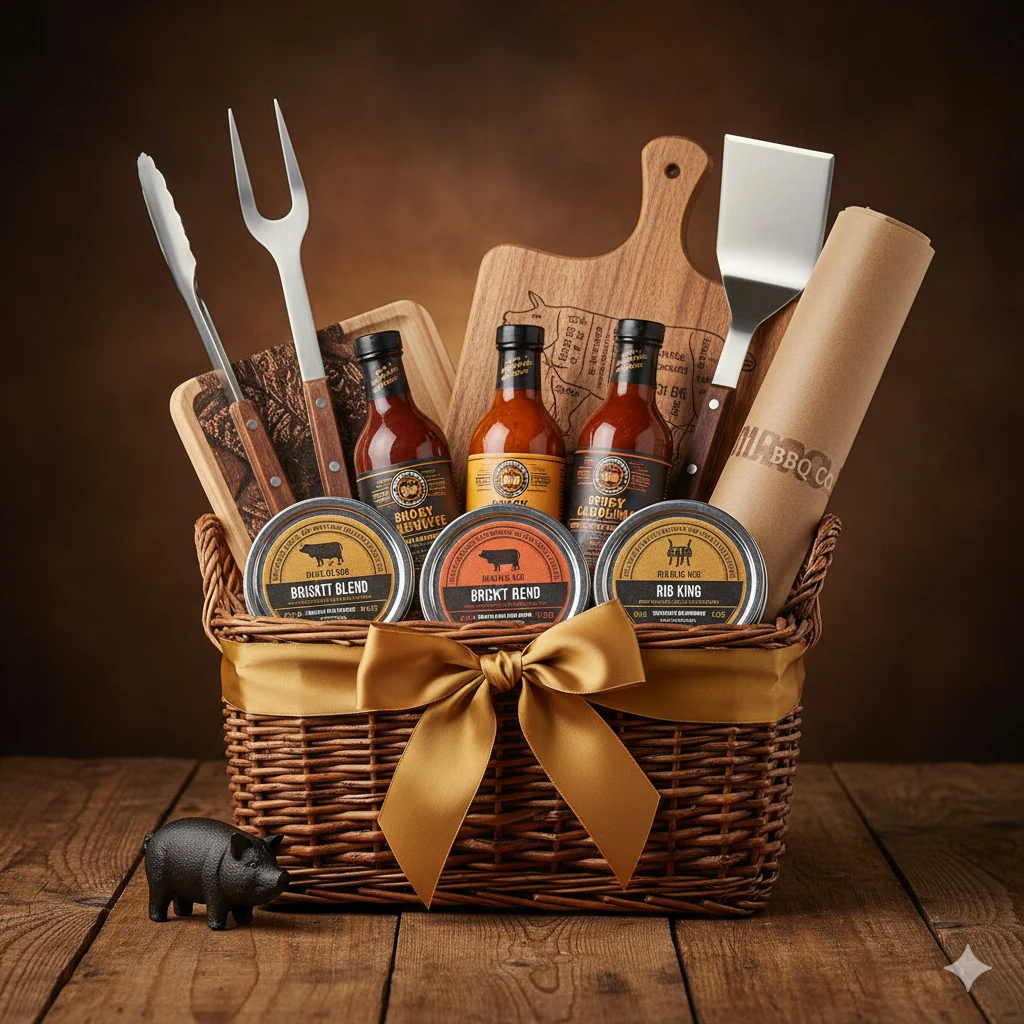
BBQ Master's Weekend Kit
What's Inside
- Branded BBQ toolkit or premium grill accessory set
- 3–4 premium BBQ sauce bottles (variety: sweet, spicy, smoky)
- Artisan dry rub tins (2–3 varieties)
- Specialty seasoning or smoked salt set
- Butcher paper or BBQ-specific accessories
Typical Revenue$450–$1,000
Why it works: BBQ baskets reach a demographic that charcuterie, Italian, and brunch baskets often miss — grill enthusiasts, who skew strongly male and are underserved at most raffle events. At events where 40–50% of the audience are men (community events, fire departments, VFW posts), a well-presented BBQ basket often becomes the top-earning food prize. Source premium sauce bottles from local BBQ restaurants — they respond well to the local audience pitch.
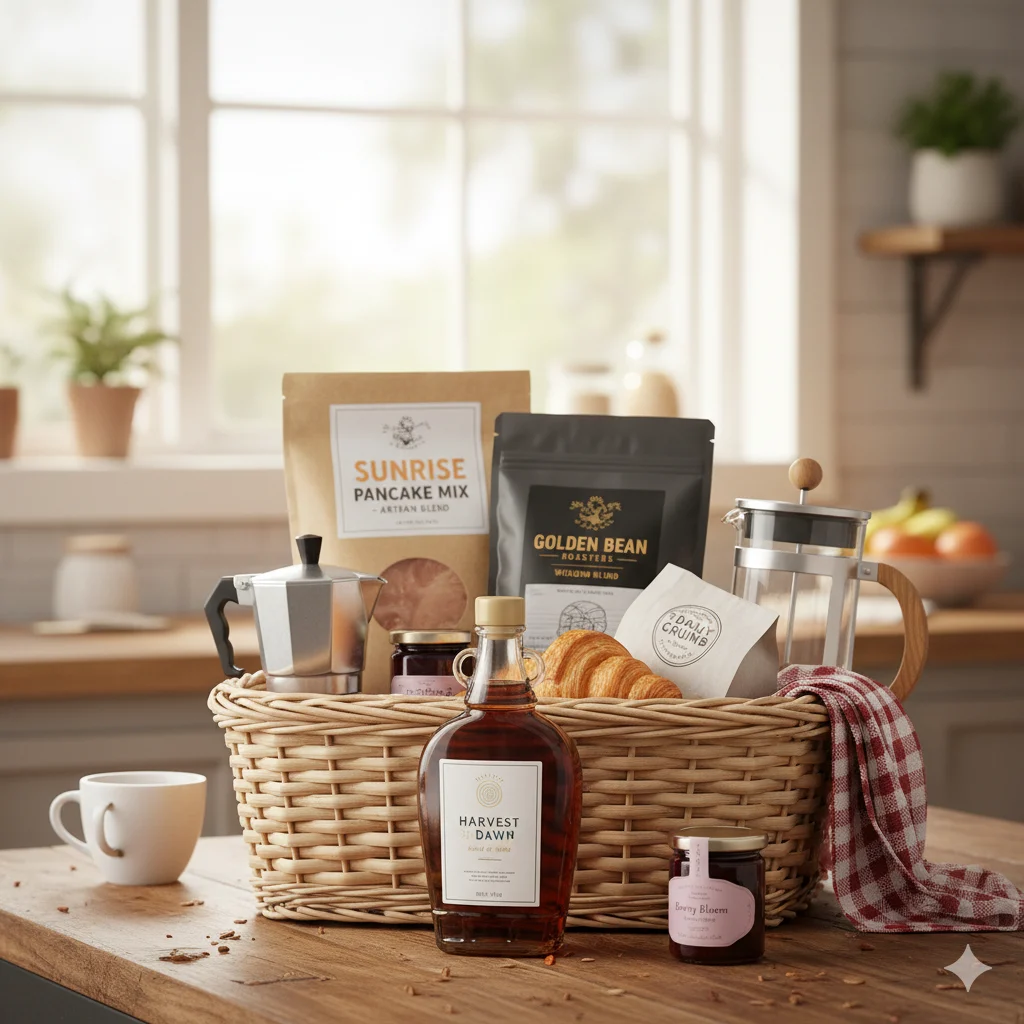 Morning Ritual
Weekend Brunch Kit
What's Inside
- Local café gift card ($30–$50) or premium coffee bag
- Artisan pancake or waffle mix
- Premium maple syrup (Grade A dark or infused variety)
- Local bakery croissants, scones, or pastry box
- Artisan jam or lemon curd (2 varieties)
- Two ceramic mugs or a French press
Typical Revenue$450–$1,000
Why it works: "Weekend Brunch Kit" creates a lazy Saturday morning scene instantly — it's aspirational and relaxed, which is emotionally distinct from a dinner basket. Especially strong at school and church events where the audience includes parents who rarely get unhurried mornings. The local bakery pastries are a powerful addition because they're perishable and feel special — time-sensitive freshness signals real value in a way that shelf-stable items can't.
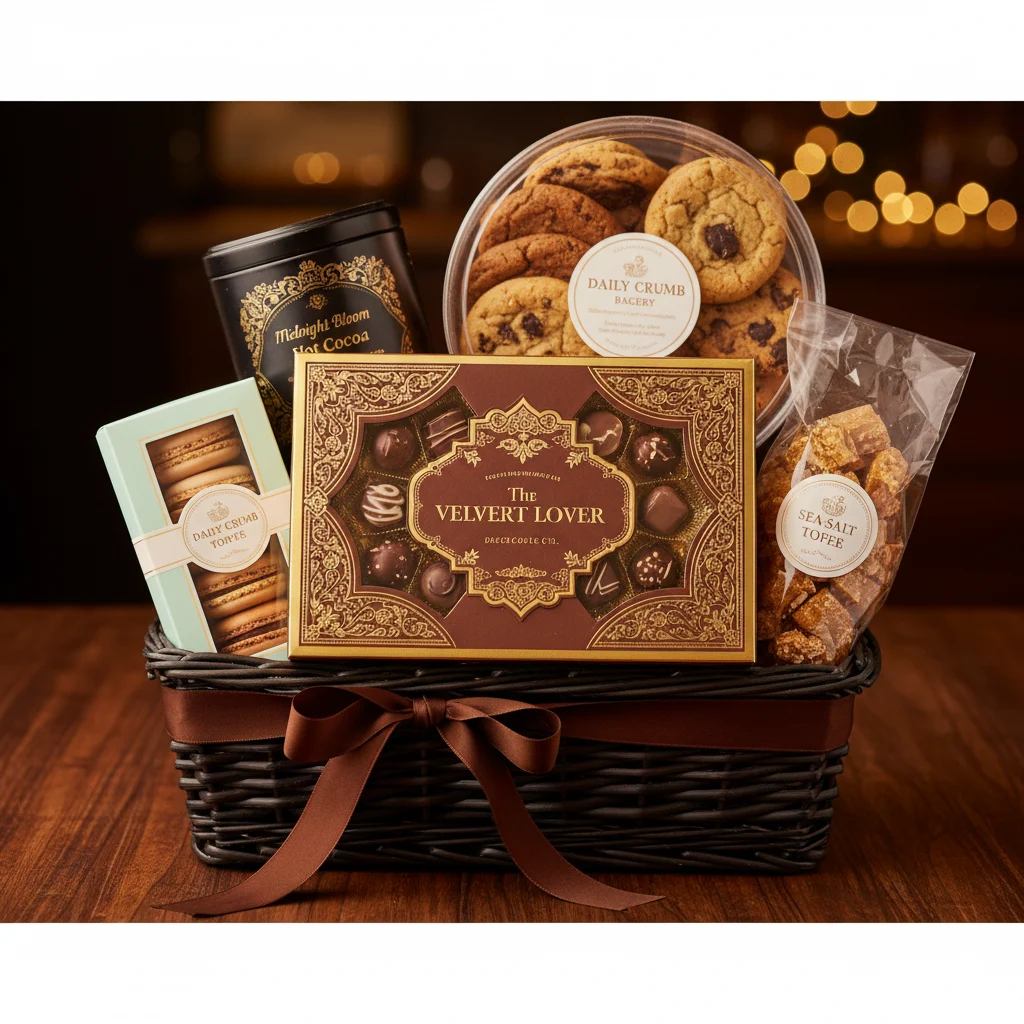 Impulse Draw
The Dessert Lover's Dream
What's Inside
- Local chocolatier or patisserie gift card ($35–$50)
- Premium chocolate assortment box (artisan brand)
- French macarons or assorted pastries (local bakery box)
- Artisan sea-salt caramels or toffee
- Premium hot cocoa mix or flavored coffee for pairing
- Specialty cookie tin or shortbread assortment
Why it works: Dessert baskets have a strong impulse purchase quality — they create an immediate, low-guilt pleasure response in buyers. "Dessert Lover's Dream" is a permission statement as much as a basket name. The local bakery gift card and patisserie box are what elevate this from a candy assortment to a genuine experience. Source from local chocolatiers and bakeries — they donate freely, photograph beautifully, and lend credibility that national brand candy alone cannot.
Food baskets spike with the calendar
Seasonal Timing — When Food Baskets Dramatically Outperform
Food baskets are more sensitive to event timing than almost any other basket category. This is because food baskets activate the gifting motivation — and gifting motivation spikes predictably around holidays and social occasions. A gourmet food basket at a November fundraiser is a Thanksgiving hostess gift. The same basket in April is just a prize. Name it accordingly and time your events to capture the gifting window.
🦃
November
Peak food basket season. "Holiday Entertaining Kit" framing converts at 3–4× spring rates. Every buyer is already thinking about Thanksgiving and holiday gifts.
🎄
December
Gift mode is at maximum. Food baskets framed as "ready to give" gifts — already wrapped, clearly themed — capture the harried shopper who hasn't figured out what to give yet.
🌸
May
Mother's Day positioning. A "Brunch Basket" or "Dessert Lover's Dream" framed as a Mother's Day gift captures buyers who are actively looking for something to give in the next two weeks.
🔥
June–July
BBQ season peak. "BBQ Master's Weekend Kit" timed to summer grilling season captures a motivated, seasonally-primed audience that isn't present in November or May.
The gift-mode pivot that changes everythingThe most effective seasonal food basket pivot is simple: add the words "or as a gift" to the basket description. "Gourmet Charcuterie Night for Two — perfect for entertaining or as a holiday gift." This one phrase converts buyers who were browsing into buyers who are solving a problem they already have. They weren't going to buy tickets for themselves — but they immediately buy tickets because they just found their host gift for Thanksgiving weekend.
Labels visible. Items elevated. Premium displayed.
Presentation Strategy — The Food Basket Rules
Food baskets have a specific presentation challenge that no other category shares: premium food items communicate quality through their packaging — but only when the packaging is visible. An artisan olive oil bottle with a beautiful hand-printed label is worth $18 in perceived value when seen and $5 when hidden. Display is not decoration for food baskets. It is the mechanism through which quality is communicated.
What Works
- Every label facing forward — turn bottles, jars, and boxes so the label is the first thing seen
- Tallest items at back, shortest at front — creates visual hierarchy that reads as abundance
- Anchor item (gift card, premium set) positioned front-center and unavoidable
- Remove outer packaging on generic items — expose the artisan inner packaging
- A serving board or slate displayed partially outside the basket — signals "entertaining set"
- Printed label with the occasion name AND the total estimated value
- Three photos for online events: full basket, anchor item close-up, label of most premium item
What Fails
- Labels facing backward or sideways — quality is invisible, perceived value drops
- Generic grocery-store items mixed with artisan items — undermines the gourmet positioning
- Everything wrapped in cellophane with no items visible through the wrap
- No board or display surface — artisan food items without a serving component look incomplete
- Handwritten label saying "Gourmet Food Basket" — no occasion, no scene, no purchase trigger
- Estimated value omitted — supporters often underestimate artisan food item costs
- Perishable items (fresh bakery) for online events with a week-long ticket window
The revenue lever most food basket organizers miss
Bundle Pricing: Why Food Baskets Respond So Well
Food baskets activate three of the four buyer motivations that favor bundle pricing: shared experience (we'll use it together), gifting (I'm buying this for someone else), and perceived luxury (this feels like a real splurge). All three of these mental frames reduce price resistance — which is exactly what bundle pricing needs to work.
A supporter buying a charcuterie basket as a gift for their host doesn't calculate personal value. They calculate gift value. A $50 bundle of tickets for a $150 gourmet basket is not $50 spent — it's $50 for a chance at a gift that would cost $150 to buy directly. That math is the entire reason food baskets respond so strongly to bundle pricing.
$64
Average order size with bundle pricing — vs ~$11 with single tickets. Food baskets buying in gift mode skew toward the larger bundles.When a supporter is mentally in gift-buying mode — which food baskets activate uniquely — they apply a different value calculation than they would for a personal prize. "It's a gift" removes the standard hesitation around spending. The gifting motivation is why food basket buyers tend to take the 15-ticket bundle rather than the 5-ticket bundle at higher rates than most other categories.
Single Tickets — $5 each
~$100–$200
Supporter buys 2–3 tickets. No bundle option. Gift motivation is fully activated but has nowhere to go — the pricing structure limits investment to single purchases.
Bundle Pricing — 5 for $20 · 15 for $50
$500–$1,200
Gift-mode buyer takes the 15-ticket bundle: "It's for the holidays anyway." Same motivation, same basket — but the bundle option lets them invest at the level the motivation calls for.
The easiest category to source locally
Sourcing Scripts That Get the Yes
Food businesses are the most natural fit for raffle basket donation requests. Local bakeries want people to try their products. Specialty food shops want to reach new customers who don't know they exist. Restaurants want new diners. Every pitch maps directly to what they want from marketing — local audience exposure to a pre-qualified group of potential customers.
The key is framing the ask as a featured placement, not a donation. "We'd love to feature your bakery's pastries in our Gourmet Basket" is a different conversation than "Can you donate something for our raffle." The first is a marketing conversation. The second is a charity request. Most local food businesses respond immediately to the first frame and hesitate at the second.
The Script That Gets the Yes
"Hi, we're running a fundraiser and we were wondering if you'd be willing to donate some items for a food basket?"
"We're featuring a Gourmet Charcuterie Night basket as one of our featured prizes — we expect 300+ local supporters in attendance. We'd love to feature your store's products and include your gift card as the anchor item. We'll put your name on the basket, on our event signage, and in our social posts. You'd be the featured local business in front of 300 people who eat at local restaurants and shop at local stores. Would you be open to a $40–$50 gift card plus a few product samples?"
The difference: the first asks for charity. The second describes a marketing partnership with a concrete audience, a featured placement, and a specific ask. Local food businesses know exactly what "300 local supporters" means — those are their customers. Most say yes on the first call.
🥖 Local Bakeries
Among the most responsive food businesses for donation requests. Bakeries want people to try their products — a raffle basket is a tasting opportunity. Ask for a gift card plus a sampler box. Many bakeries have community donation policies and approve requests quickly.
Hook: "We'd feature your bakery as the pastry provider for our Weekend Brunch basket — your name in front of 300 local families."
🍷 Specialty Food & Wine Shops
Specialty food retailers want new customers to discover artisan products they've never seen at the grocery store. A raffle basket is product discovery at scale. Ask for a gift card plus 2–3 featured artisan items they're trying to promote.
Hook: "We'd love to feature your shop's artisan selections — the basket becomes a discovery moment for every person who sees it."
🍽️ Local Restaurants
Restaurant gift cards are the most powerful food basket anchor. Frame the ask as a first-visit opportunity — you're delivering first-time diners who will potentially become regulars. A $50 gift card costs them one table and could generate a regular customer.
Hook: "Your $50 gift card as the anchor item means your restaurant is the first thing 300+ local diners see when they walk up to the basket."
🧀 Artisan Food Producers
Local cheesemakers, charcuterie producers, jam makers, and hot sauce makers frequently donate product samples in exchange for event exposure. These are exactly the items that elevate a food basket from grocery-bag to gourmet. Ask for samples plus permission to feature their brand name on the basket label.
Hook: "We're building a Charcuterie Night basket and we'd love to feature your products — your brand name on every photo and on the basket label."
Final Takeaway
1
Name the occasion, not the category.
"Gourmet Charcuterie Night for Two" earns 3× more than "Gourmet Food Basket" with identical contents. The name creates the scene. The scene sells the tickets. Change the name before you change anything in the basket itself — it costs nothing and has the biggest single impact.
2
Turn every label outward. Hidden premium is invisible premium.
Artisan food items communicate quality through their packaging — but only when the packaging is visible. Every bottle, jar, and box must have its label facing forward. The supporter standing at your table for 10 seconds needs to be able to read "Extra Virgin Olive Oil — Imported from Tuscany" to feel the value. If they can't read it, it doesn't exist.
3
Time food baskets to the gift-buying calendar.
November is the peak food basket month — gift mode is active and a gourmet basket is an immediate Thanksgiving or holiday gift solution. Add "or as a gift" to your basket description and watch gifting motivation drive ticket purchases from buyers who weren't going to win it for themselves. Seasonal positioning costs nothing and can triple revenue.
4
Source locally. The marketing pitch writes itself.
Local food businesses are the easiest category to source for raffle baskets — because you're not asking for charity, you're offering marketing. "300 local people will see your restaurant's gift card as the featured item in our Gourmet Night basket" is a genuine marketing opportunity at zero cash cost to them. Most say yes on the first ask.
Free Download
Basket Raffle Planning Kit
20-theme build sheet with cost estimates, the ticket pricing calculator, a donor outreach email template, and the 60-day event checklist. Everything your committee needs before the first meeting becomes a spreadsheet emergency.
Download Free →
What's inside
✓ 20 basket theme build sheets
✓ Ticket pricing calculator
✓ Donor outreach template
✓ 60-day event checklist
✓ Common mistakes to avoid
Common questions
Frequently Asked Questions
What should be in a food basket for a raffle?
A food basket needs a clear occasion name ("Italian Dinner for Two," "Gourmet Charcuterie Night") and a strong anchor item — either a restaurant or specialty food store gift card, or a visually premium centerpiece item like an artisan charcuterie board or a premium olive oil set. Supporting items complete the experience: the pasta with the Italian basket, the cured meats and cheese with the charcuterie basket, the BBQ tools with the sauces. Every item should answer "Does this make the occasion more complete?" Build cost runs $65–$120; revenue with bundle pricing runs $450–$1,400 depending on event size.
What food basket themes sell the most tickets?
The consistently top-performing themes are: Gourmet Charcuterie Night (highest perceived value, broad adult appeal), Italian Dinner for Two (universal appeal, easy to source), BBQ Master's Weekend Kit (strong male demographic, seasonal peak in summer), Weekend Brunch Kit (morning emotional connection, Mother's Day positioning), and Dessert Lover's Dream (impulse appeal, easy local bakery sourcing). At holiday fundraisers (November–December), all food basket categories perform significantly better — position them as gifts and name them accordingly.
How much should a food basket be worth?
Most effective food baskets have a perceived value between $75 and $300. The $75–$150 mid-tier range works best at community events and school fundraisers. Higher-value builds ($150–$300) with restaurant gift cards and premium artisan items work well at galas and holiday fundraisers. Always print the estimated total value on the basket label — supporters routinely underestimate what artisan food items cost, and the stated value directly affects how many tickets they buy.
How do you make a food basket look expensive for a raffle?
Turn every label outward so quality packaging is visible and readable from a distance. Use an artisan serving board or slate as a visual centerpiece — even partially visible outside the basket, it signals "entertaining set." Remove generic or grocery-store items that undercut the gourmet positioning. Print a basket label with the occasion name and total estimated value. For online events, photograph each premium item's label close-up — the label is where quality lives for food items. The goal is for a supporter to be able to identify every premium item in your basket from three feet away without needing to read the description.
Can I use perishable items in a food basket raffle?
Yes, with timing caveats. For in-person events, local bakery items (croissants, pastries, macarons) are some of the highest-perceived-value additions — but they need to be delivered day-of or the night before. For online raffles with multi-day ticket windows, stick to shelf-stable artisan items and use a local bakery gift card instead of the actual pastries. For hybrid events, include the bakery gift card in the online-visible basket and hand-deliver a fresh pastry box to the winner when they collect. Never photograph and describe fresh pastries in an online listing if they won't be fresh when delivered — that's a trust problem.
Do food baskets work for corporate and gala events?
Yes — and food baskets often outperform other categories at corporate and gala events because the gifting motivation is highest when disposable income is highest. Frame corporate food baskets as executive entertaining sets or hostess gifts rather than casual meals. "Premium Entertaining Collection — Artisan Charcuterie, Imported Wine, and a Private Dining Experience" positions at a gala price point. The restaurant gift card anchor remains important but should be a fine dining experience rather than a casual restaurant. See the
high-value basket guide for premium-tier builds.
How do I get food basket items donated?
Local bakeries, specialty food shops, and restaurants respond best to: "We're featuring a [Theme Name] basket and would love to feature your products — we'll promote your name to [X] local supporters and include your business prominently on the basket and event materials." Frame every ask as a marketing partnership, not a charity donation. Local food businesses want new customers to discover them — you're offering exactly that. Most will provide a gift card plus samples on the first call when the marketing frame is clear. See the full
basket donation sourcing guide for complete scripts.
The basket alone is not enough
Learn How to Maximize This Basket
You can build the best charcuterie basket anyone has ever seen at a raffle. If the platform is wrong, the pricing is wrong, or the promotion is wrong, it still underperforms. These guides cover the infrastructure around the basket — and they account for most of the revenue gap between good events and great ones.
💰
Basket Raffle Pricing Strategy
The $11 vs $64 analysis. Why food basket buyers in gift mode specifically respond to bundle pricing — and the tier structure that captures their full gifting motivation.
Read the guide →
📋
How to Run a Basket Raffle
Complete 60-day countdown — basket building, pricing setup, promotion calendar, and drawing night logistics for online, in-person, and hybrid events.
Read the guide →
🖥️
How to Run a Basket Raffle Online
Per-basket pool requirements, cash entry support, and how to handle perishable food items in online and hybrid events. Step-by-step setup.
Read the guide →
⚙️
Basket Raffle Software Guide
Eight questions to ask any platform before committing. Most fail at least three — including the per-basket pool requirement that enables your separate food basket draws.
Read the guide →
🤝
How to Source Basket Donations
Full scripts for bakeries, restaurants, specialty food shops, and artisan producers — including the marketing-partnership framing that gets local food businesses to say yes.
Read the guide →
🧺
Basket Raffle Ideas Hub
Browse 100+ basket themes by audience, season, and value tier. Build the right multi-basket lineup around your food baskets to cover every buyer demographic.
Browse all themes →
Complete your event lineup
Pair Food Baskets With These High Performers
Food baskets appeal to virtually every adult demographic but hit hardest with social entertainers and gift-buyers. Pair them with a wine basket, spa basket, and family basket to ensure every buyer segment is covered — including supporters the food basket doesn't specifically target.
Ready to run the real thing?
The only platform built for true per-basket ticket pools
"We didn't add basket raffles to a donation tool. We built the raffle first. And we still answer the phone." — The Chance2Win Team